
When Gold Actually Moves: The Best Hours to Trade XAUUSD
Gold trades almost 23 hours a day. It does not move for 23 hours a day. Learn where the range actually forms and half your gold problems — the fakeouts, the dead trades, the getting chopped in Asia — quietly disappear.

Ask most retail traders when to trade gold and you get a shrug: “it's open all day.” Technically true. XAUUSD runs from the Sunday evening open through Friday's New York close with only a short daily maintenance break. But treating all those hours as equal is the reason so many gold accounts bleed out slowly — not from bad direction, but from trading the wrong hours with the right idea. A breakout that would run for $150 at 14:00 GMT dies in the mud at 03:00 GMT, and the trader blames the setup instead of the clock.
Gold's volatility is front-loaded into a few specific windows. The single most important one is the three hours when London and New York are open together, roughly 13:00 to 16:00 GMT. That block, plus the London open a few hours earlier, is where the overwhelming majority of the daily high and low get set. Everything outside it — the long Asia session especially — is a slower, meaner, more range-bound instrument that punishes the same aggression that works in the overlap.
This is the session companion to our piece on how to trade gold when it swings 300 pips a day. That one is about sizing to the range; this one is about when the range shows up. We use ChartSnipe throughout the way it is meant to be used — a research co-pilot that scores the day and reads the chart, while you own the clock, the size, and the stop.
Key Takeaways
- →The London–New York overlap (roughly 13:00–16:00 GMT) is the best time to trade gold. Deepest liquidity, the day's data, and most of the daily high and low.
- →The London open (~07:00 GMT) is the first real expansion — the Asia range usually breaks within the first hour.
- →The Asia session is thin and mean-reverting. Fade its extremes if you must, but distrust its breakouts and be flat before London.
- →US data (12:30–14:00 GMT) anchors gold's day. Know what's due before you touch the button.
- →Build the schedule around your own time zone — protect the overlap, and don't force trades in your local dead hours.
1. Gold trades almost around the clock — not equally
Gold is a global instrument. It changes hands in Sydney and Tokyo overnight, in Zurich and London through the European morning, and in New York through the afternoon. Because those hubs hand off to each other, XAUUSD is quotable almost continuously. But “quotable” and “worth trading” are two different things. Liquidity — the number of serious participants actually pushing size — rises and falls in a predictable daily rhythm, and gold's range tracks that rhythm almost exactly.
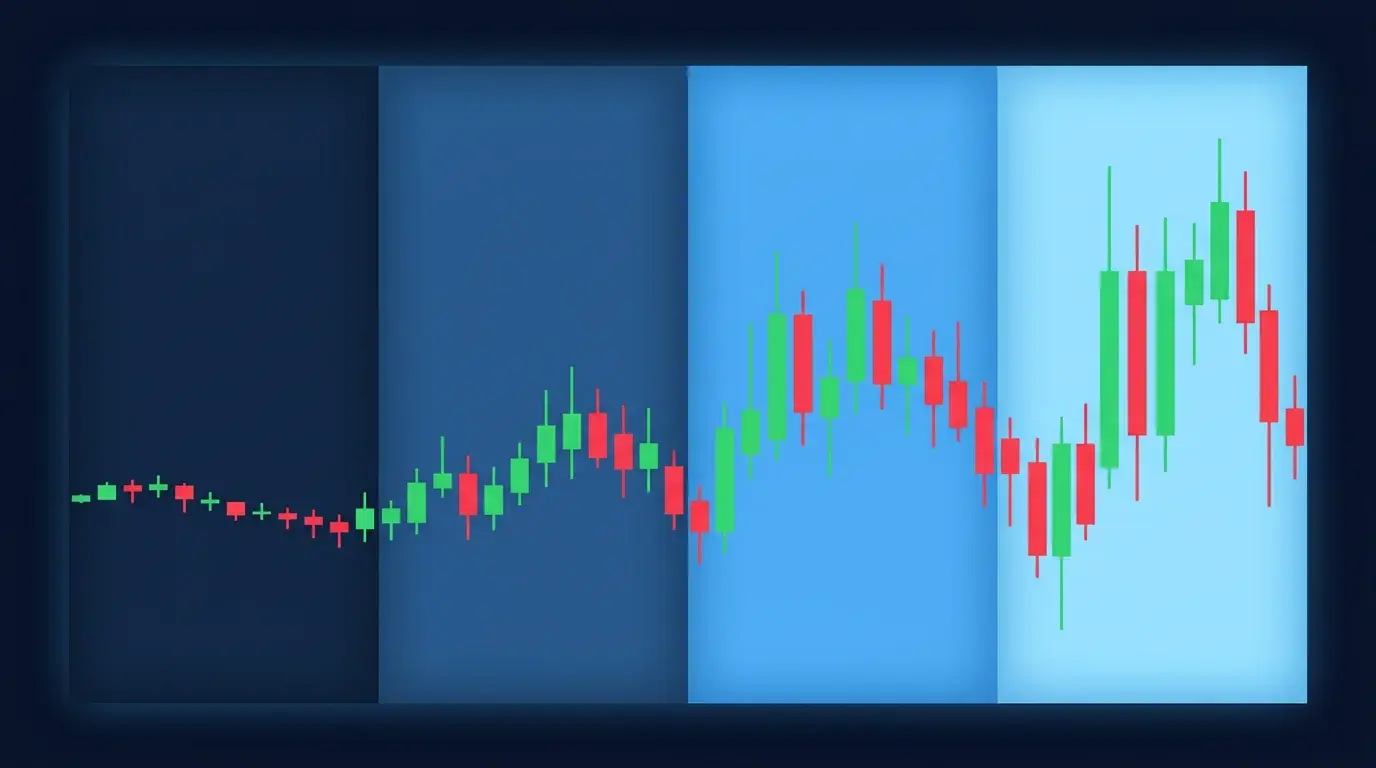
Think of the day as four bands of increasing intensity. Sydney and Tokyo are the dim band: real order flow, but thin, and mostly Asia-Pacific participants with no fresh Western catalyst to trade off. London switches the lights on. New York, arriving while London is still live, turns them up to full. Then the late US afternoon dims them back down into the rollover. The candles literally get taller as you walk left to right across that sequence, and gold's in a regime where the tall ones are very tall.
That regime matters here. Since gold's record near $5,600 in late January 2026 and the sharp correction that followed, daily ranges of 200 to 400+ dollars have been normal rather than exceptional. Almost all of that range is manufactured in the London and New York hours. If your daily range is that wide and it's being built in a six-to-seven-hour window, then when you sit down is not a detail — it decides whether you are trading the part of the day that moves or the part that idles.
2. The Asia session: thin, range-bound, full of fakeouts
The Asia session — broadly Sydney and Tokyo, from around 22:00 GMT through to the European morning — is where most gold day traders lose money without ever taking a big loss. It bleeds them a little at a time. Liquidity is thinner, spreads are a touch wider, and without a fresh Western macro catalyst there is often no reason for price to trend. Gold tends to coil, drift, and mean-revert inside a band that it spends the whole session respecting.
The trap is that thin markets produce clean-looking charts. A tidy little breakout forms at 02:00 GMT, you take it, it runs ten dollars, then it rolls straight back through your entry and stops you on the other side. That is not bad luck. It is the structural nature of a low-participation session: there is not enough committed flow behind the move to sustain it, so it reverts to the range. The break was real; the follow-through was never coming until a bigger session showed up to fund it.
What Asia is good for
- Fading the extremes of a well-defined overnight range.
- Marking the Asia high and low — London often hunts them.
- Reacting to genuine Asia-Pacific catalysts (BoJ, China data).
- Building a bias to trade at the London open.
What gets you chopped
- Chasing breakouts with no catalyst behind them.
- Sizing up because the chart “looks obvious.”
- Carrying an Asia fade into the London open.
- Overtrading a range to stay busy.
The two levels worth drawing in Asia are the session high and the session low. They are not trade signals on their own, but they are reference points London respects — often by sweeping one of them in the first hour to grab liquidity before reversing. Mark them, then wait. The Asia range is most useful as the setup for the London open, not as a market to trade in its own right.
3. The London open: the first real expansion
London opens around 07:00 GMT — 08:00 through British Summer Time — and gold changes character within minutes. European bank desks, refiners, and institutional flow come online all at once, and the overnight Asia range that looked so settled frequently breaks inside the first hour. This is the earliest point in the day a discretionary trader can reliably find a directional move with real participation behind it.
The classic London-open sequence on gold is a stop run followed by the real move. Price pokes above the Asia high (or below the Asia low), triggers the stops resting there, then reverses and trends in the opposite direction for the rest of the morning. If you fade the sweep — short the failed push above the Asia high, long the failed break below the Asia low — with a stop just beyond the sweep's extreme, you are trading with the session's own mechanics instead of against them.
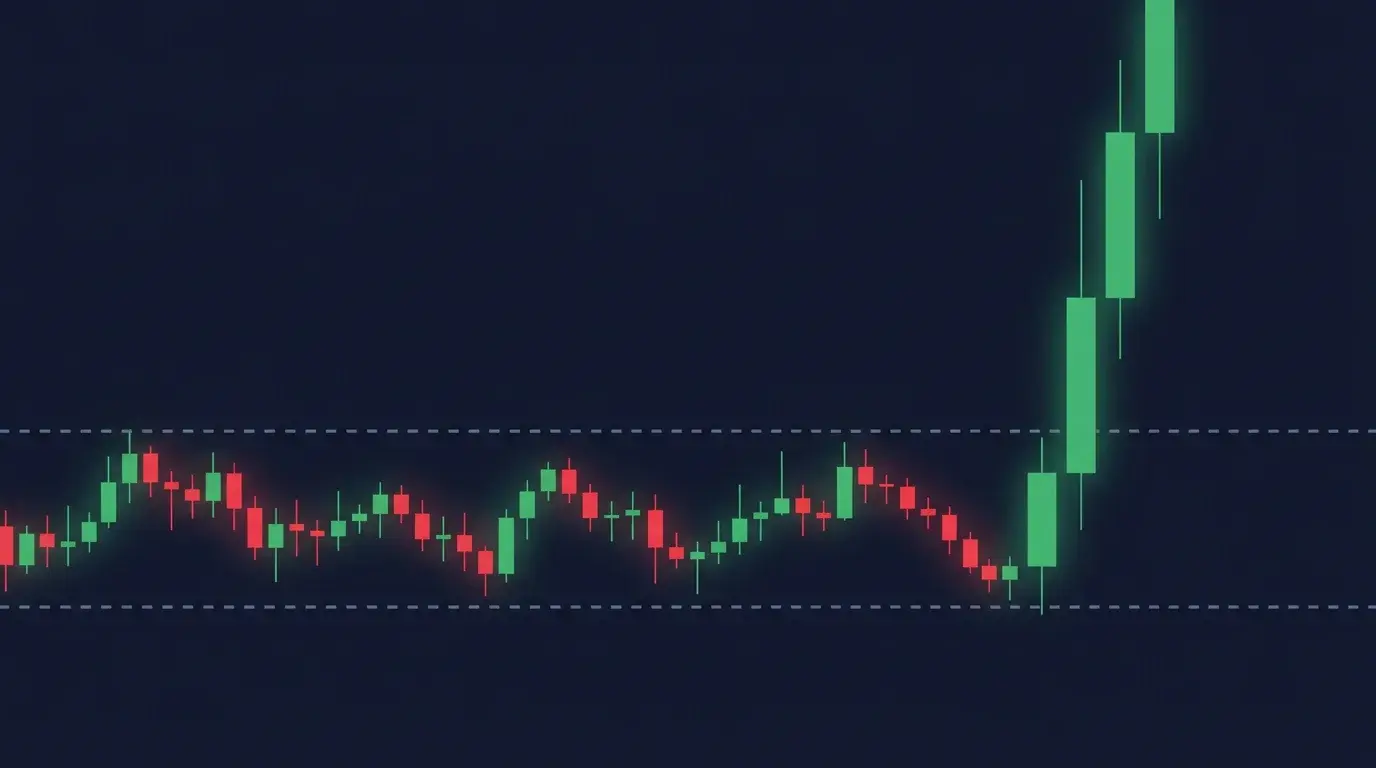
Session mechanics, not magic. The London open is a liquidity event first. Price seeks the resting orders above and below the overnight range before it commits to a direction. That is why the first move is so often a fake, and the second move is the trade. Patience through the first fifteen to thirty minutes is usually rewarded.
For the wider map of how each FX session behaves — and why London is the busiest for the majors too — our forex session times guide lays out the full clock. Gold rhymes with the FX majors here because it is priced in dollars and trades on the same macro flow.
4. The London–New York overlap: where the day resolves
If you can only trade gold for three hours a day, trade these. From roughly 13:00 to 16:00 GMT, London is still open and New York has arrived, so two of the deepest liquidity pools on the planet are active at the same time. It is the highest-volume, highest-volatility window of the entire session, and it is where the day's trend is usually confirmed, extended, or violently rejected. A large share of gold's daily high and low prints inside this block.
Two things make the overlap special, and they compound. First, liquidity: deep books mean big moves can actually be sustained, so a breakout here has the participation to run instead of reverting the way an Asia break does. Second, catalysts: nearly every scheduled US data release lands at the front edge of this window, so the overlap frequently opens with a fresh macro shock that gold — a pure macro instrument — reprices hard against. Deep liquidity plus a scheduled catalyst is the exact recipe for a trending session.
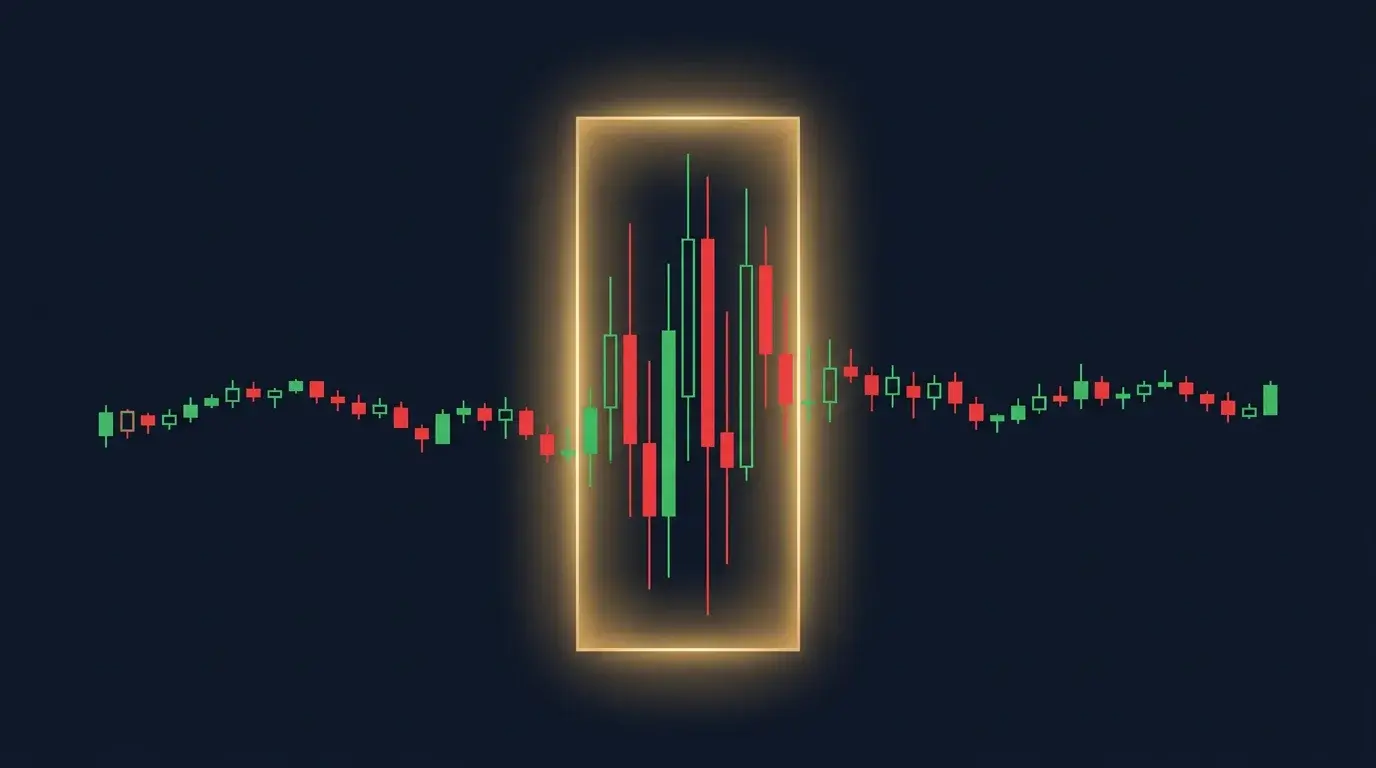
The practical edge from all this is a filter, not a strategy. The same breakout, the same pullback, the same rejection at a level is a materially better trade at 14:00 GMT than at 04:00 GMT, on an identical-looking chart, because the overlap has the flow to carry it. If you run the four setups from the gold volatility guide, weight your risk toward this window and treat everything outside it as lower-conviction by default. Scalpers in particular live here — the scalping setups guide assumes exactly this kind of liquidity to work.
5. US data windows and why they anchor gold
Gold does not care about your trendline when the US prints a hot inflation number. It is a macro instrument tied to real yields and the dollar, and both of those reprice instantly on US data. That is why the overlap is not just about liquidity — it is timed to the calendar. The releases that move gold most cluster in a tight morning window: CPI and most top-tier data at 12:30 GMT, and the biggest scheduled shock of all, the monthly jobs report, at the same time on the first Friday.
In the current tape this matters more than usual. With US CPI running hot into mid-2026 and the Fed leaning hawkish rather than cutting, a single surprise on the inflation or jobs print can send gold tens of dollars in seconds as the market re-prices the rate path. The first candle after the release is often a violent whipsaw in both directions before the real move settles — a spike that traps everyone who chased it, then a reversal into the actual trend. Standing aside for that first minute or two is not caution, it is competence.
The rule that saves accounts: know what is due in your session before you place a trade. Holding full size into a 12:30 GMT CPI print because the chart looked clean is the classic overlap blow-up. The chart cannot see the release coming; the calendar can. Our NFP strategy for gold and forex walks through exactly how to trade the biggest of these events.
This is where a daily read earns its keep. The Daily AI News Impact ranks gold alongside the majors each morning with a conviction score and the specific drivers behind the call — so before the overlap even opens you know whether the day's flow is likely to bid gold as a haven or sell it on firm yields. You still make the trade. You just make it knowing which side of the macro you are on.
6. Late New York and the daily rollover
Once London closes around 16:00 GMT, New York trades on alone and the character shifts again. The afternoon can still deliver a strong move — especially on a genuine trend day, where the US session simply keeps pushing — but with London gone, liquidity thins and moves get choppier and more prone to drift. This is prime time for taking profit into the range rather than initiating fresh breakouts. The best of the day is usually behind you.
Then comes the daily rollover around 22:00 GMT (17:00 New York), when brokers run their short maintenance break and swap is applied. Spreads typically blow out for a few minutes around the changeover, and the thin, wide book there is one of the worst moments of the entire day to be entering a discretionary gold trade. Treat the late-NY-into-rollover stretch as a wind-down: manage what you already hold, but do not go looking for new risk in it.

7. Building a gold schedule around your time zone
All of the above is in GMT because that is how the market thinks. Your job is to translate it into your own wall clock and then protect the good hours instead of trading whenever you happen to be free. The anchor is the overlap: 13:00–16:00 GMT. Convert that block into local time first, and let everything else fall out from it.
For a US Eastern trader that overlap is roughly 09:00–12:00 local — a near-perfect morning session, data included, done before lunch. For a UK trader the London open at 07:00 and the overlap through the early afternoon cover the whole prime window in normal working hours. For most of Asia, the overlap lands in the evening, which is workable but late. And for Australia and New Zealand, the best gold hours fall in the small hours of the morning, which is the hard case.
If the overlap fits your day
- Block 13:00–16:00 GMT (your local equivalent) as your core session.
- Check the news read and the calendar before it opens.
- Let the London open set the bias; execute in the overlap.
- Be done when London closes — don't give it back late.
If the overlap is your night
- Trade the London open instead — it's the earlier expansion.
- Pre-plan set-and-forget orders around your key levels.
- Use higher timeframes so you're not tied to the screen.
- Don't force scalps in your local dead (Asia) hours.
The trap for off-timezone traders is filling the dead hours with trades to feel productive. If the overlap happens while you sleep, the honest answer is that you are a swing trader on gold, not an intraday one — and that is fine. Higher timeframes, wider stops, set-and-forget orders, and a smaller number of better trades beat grinding the Asia range at 2am. Match the style to the hours you actually have.
Whatever your window, get the read before it opens. Pull up the chart analysis tool, screenshot your gold chart, and let it name the structure and the levels that matter; check the news impact for the day's macro lean; then trade your session with a plan already in hand. The clock tells you when to show up. The read tells you what to do when you get there.

Frequently asked questions
What is the best time of day to trade gold?
The London–New York overlap, roughly 13:00–16:00 GMT. Both major sessions are live, liquidity is deepest, and most US data lands in it, so a large share of gold's daily high and low prints there. The London open at 07:00 GMT is second; Asia is thinner and range-bound.
Is gold worth trading during the Asia session?
Only as a different game. Asia gold is thinner and mean-reverting, better suited to fading a defined range than chasing breakouts. Unless there's a live Asia-Pacific catalyst, a 03:00 GMT break usually reverses when London arrives. Use Asia to mark levels and build a bias, not to hunt trends.
When does the London session open for gold?
Around 07:00 GMT (08:00 during British Summer Time). Gold gets its first real volatility expansion here — the overnight Asia range often breaks within the first hour as European desks come in and reprice. It's the earliest window most day traders find a clean directional move.
Why is the London–New York overlap the best time to trade gold?
Two of the world's deepest liquidity pools are open together, so moves can actually be sustained instead of reverting. US data (CPI, NFP, retail sales) also lands at the front of the window, and gold reprices hard on it. Deep liquidity plus scheduled catalysts is why the daily trend usually resolves here.
What time does gold get most volatile?
Volatility builds through the day: it steps up at the London open (07:00 GMT), peaks in the overlap (13:00–16:00 GMT) — especially the first hour after a US release — then fades through the late New York afternoon into the 22:00 GMT rollover. In 2026 those overlap swings routinely cover 200 to 400+ dollars.
How do I trade gold if I live in a different time zone?
Convert the overlap (13:00–16:00 GMT) to local time and protect it. That's about 09:00–12:00 US Eastern, prime European afternoon in the UK, and evening across much of Asia. If it falls while you sleep, trade the London open instead or use set-and-forget orders on higher timeframes — don't force scalps in your dead hours.
Sources & further reading
Show up for the hours that actually move
Live XAUUSD pricing, a daily AI news-impact read for gold, and screenshot chart analysis to build your plan before the overlap opens. Two free snipes to test it on your own chart.