
NFP Trading Strategy: The 2026 Playbook for Forex & Gold
The full NFP playbook: pre-release bias, the three scenarios, the DXY reaction chain, gold's inverse rule, and a minute-by-minute timeline you can actually use.
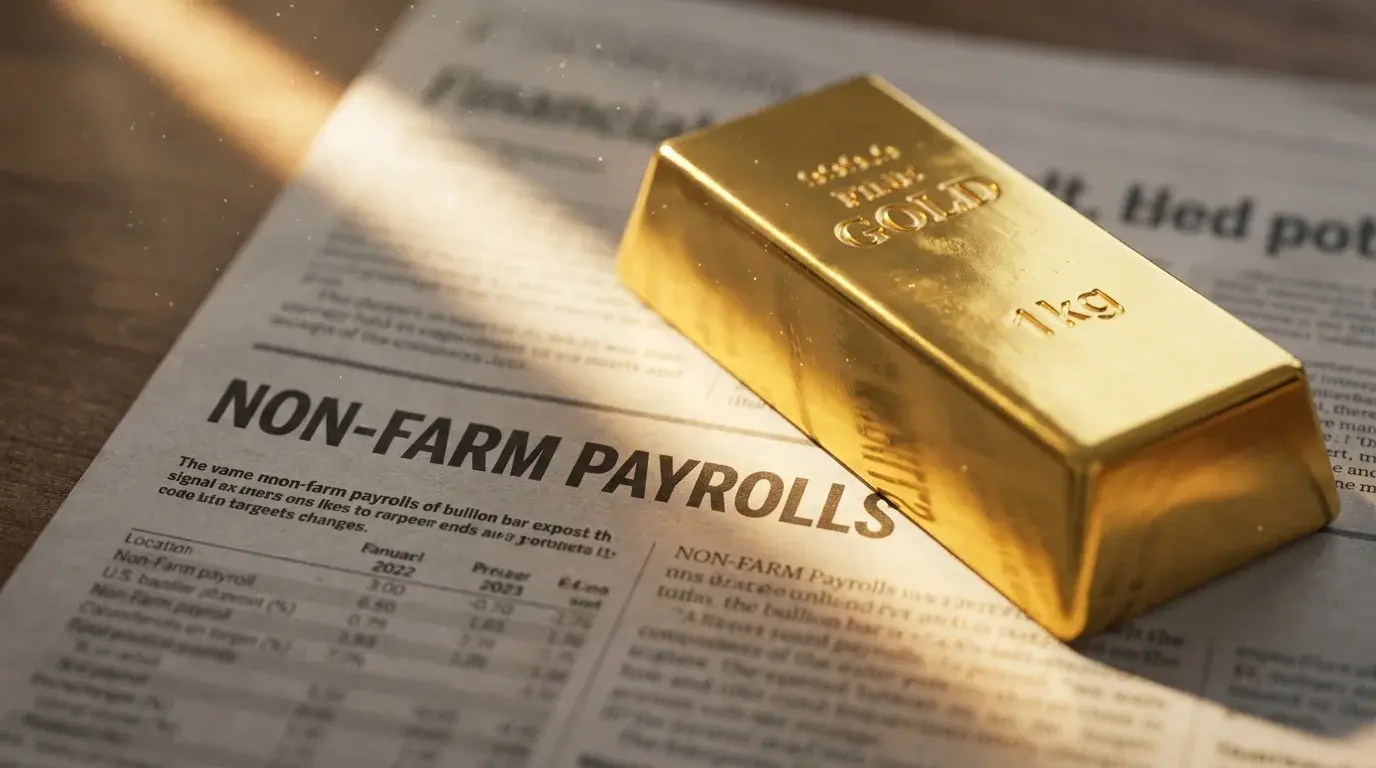
On the first Friday of every month at 8:30 AM New York time, the Bureau of Labor Statistics releases the Non-Farm Payrolls report — and for 60 seconds, the forex and gold markets go completely insane. Spreads widen, liquidity evaporates, stops get hunted, and the price you thought you were getting is not the price that fills. If you have ever wondered why your perfectly planned NFP trade turned into a 40-pip slippage nightmare, this complete NFP trading strategy is for you.
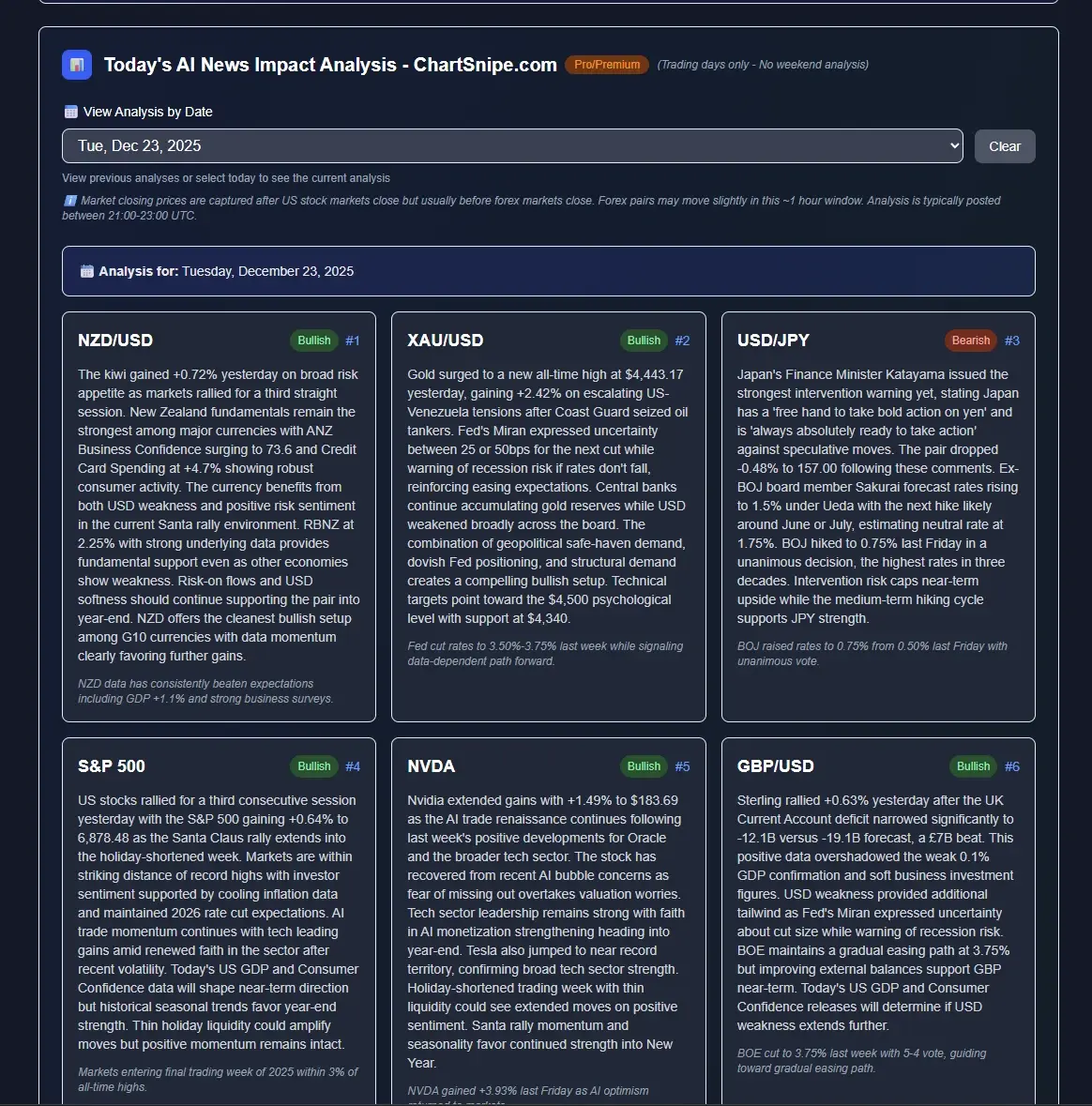
We searched four of the biggest Forex Factory threads on NFP and every trader asks the same three questions: Should I trade before or after the release? How does gold react compared to EUR/USD? And what happens when the headline beats but wages miss? This playbook answers all three — plus gives you the exact minute-by-minute timeline that professional desks use. And at the end, we'll show you how ChartSnipe's AI News Impact pre-ranks the 12 most tradable instruments before every NFP print, so you walk in already knowing which pairs have the cleanest setup.
Key Takeaways
- →NFP is released the first Friday of each month at 8:30 AM NY time and moves all 28 major FX pairs, gold, and indices within the same second — spreads widen violently in the first 60 seconds.
- →Three numbers matter: headline jobs, unemployment rate, and average hourly earnings — in 2026 wage growth often overrides the headline for the dollar reaction.
- →Gold moves inversely to the DXY about 75% of the time on NFP — a strong beat typically pushes XAU/USD down 15-30 dollars within the first hour.
- →The two cleanest execution approaches are the 15-minute spike-fade at a prior level and the 30-minute follow-through close in the direction of the surprise — never market-order the first 60 seconds.
- →ChartSnipe AI News Impact pre-ranks 12 instruments bullish and bearish before every NFP release, so you walk in already knowing which pairs have the cleanest setup for a USD-positive or USD-negative surprise.
Why NFP Is The Biggest Monthly Forex Event
The Non-Farm Payrolls report measures how many jobs the US economy added in the previous month, excluding farm workers, government employees, private household employees, and employees of non-profit organizations. It sounds dry. It is not. NFP is the single most-watched economic data point on Earth because it tells the Federal Reserve one thing: is the US labor market hot enough to keep raising rates, or cold enough to cut?
And because the Fed controls the dollar, and the dollar prices roughly 88% of global FX turnover, NFP indirectly moves every currency pair you trade. It also moves gold (priced in dollars), oil (priced in dollars), the S&P 500 (rate-sensitive), and Bitcoin (risk-on proxy). In 2026, with the Fed still navigating the post-2024 cutting cycle and sticky services inflation, every jobs number is a referendum on the next FOMC meeting.
If you are already using our economic calendar guide, you know NFP is the only release consistently flagged as red-impact on every calendar provider. Nothing else — not CPI, not FOMC minutes, not ISM — moves all 28 major pairs at the exact same second.
Anatomy Of An NFP Release: The Three Numbers
Most retail traders watch only the headline number. Professionals watch three numbers, and in 2026 the second and third often override the first.
Headline Jobs Number
The big number everyone quotes. Consensus in 2026 runs roughly 140k-180k. A ±50k surprise is material. A ±75k surprise is violent. The first 60 seconds of price action almost always follows this one number — even when the other components disagree.
Unemployment Rate
A 0.1 change is a big deal. The Fed watches the direction and the participation rate. A strong headline with a rising unemployment rate is not actually hawkish — it just means more people entered the labor force. This is where the first-minute move gets faded.
Average Hourly Earnings (Wages)
The most important inflation signal in the report. Wages feed services inflation. In 2026 the Fed has been explicit: wage growth above 4.0% year-on-year keeps cuts on pause. A soft headline with hot wages can still push the dollar up. A strong headline with cold wages can still push the dollar down.
Rule of thumb: if the three numbers all point the same direction, the move is fast and holds. If they disagree, the market spikes on the headline and then reverses within 3-10 minutes as the algo desks digest the second and third data points.
How The Market Actually Reacts: Beat / Miss / In-Line
Here is the comparison table every Forex Factory thread asks for but nobody ever posts cleanly. These are the typical reactions across dozens of NFP releases — your mileage varies with the macro regime, but this is your baseline expectation.
| Scenario | EUR/USD | XAU/USD | DXY | Bias Duration |
|---|---|---|---|---|
| Strong Beat (+50k) | -60 to -100 pips | -$18 to -$30 | +0.5% to +0.9% | 1-3 days |
| Mild Beat (+20k) | -20 to -40 pips | -$6 to -$12 | +0.15% to +0.35% | Same session |
| In-Line (±10k) | ±15 pips (noise) | ±$4 (noise) | Flat | Reverts in 15 min |
| Mild Miss (-20k) | +25 to +45 pips | +$8 to +$15 | -0.2% to -0.4% | Same session |
| Large Miss (-50k) | +70 to +130 pips | +$20 to +$40 | -0.6% to -1.1% | 2-5 days |
Two things that surprise most traders the first time they see this table: misses tend to produce slightly larger gold moves than equivalent beats (gold loves dovish surprises more than it hates hawkish ones), and in-line prints are usually negative for the dollar on a second-derivative basis — traders were positioned for a beat and have to unwind.
The DXY Reaction Chain: One Number, Twelve Instruments
Every instrument you trade on NFP ultimately derives its move from one thing: did the dollar go up or down? That is the DXY reaction chain, and it runs like a domino set. Once you internalize it, you stop getting surprised.
USD-Positive Surprise (Beat + Hot Wages)
USD-Negative Surprise (Miss + Cold Wages)
The pairs at the top of each list are the highest-correlation plays. The pairs at the bottom are higher-variance because secondary factors (risk sentiment, commodity prices, yen carry) start to interfere. If you are new to trading NFP, stick to EUR/USD and XAU/USD — they are the cleanest expressions of the DXY move.
Gold On NFP: The Inverse-DXY Rule And When It Breaks
Gold is priced in dollars. When the dollar goes up, gold costs more in every other currency, so demand drops and the price falls. This is the inverse rule, and it holds on roughly three out of every four NFP releases. That's why the most common NFP trading strategy for gold is simply: trade XAU/USD opposite to the dollar.
The Inverse Rule
USD-positive NFP surprise → gold falls.
USD-negative NFP surprise → gold rises.
Gold typically moves 1.2x harder than EUR/USD on a percentage basis during the first hour after release.
When The Inverse Rule Breaks
The rule fails in three specific regimes, and knowing them is the difference between a textbook trade and a stop-out:
- Risk-off crisis: during wars, banking stress, or sovereign debt scares, gold rallies alongside the dollar as traders flee everything else. Both are safe havens.
- Wage-dominant prints: when average hourly earnings are the real story, gold sometimes ignores the headline and trades the yield curve directly. A soft headline with hot wages can push gold down even as the dollar stalls.
- Fed-pivot weeks: when the FOMC is expected to deliver a dovish shift within two weeks, gold front-runs the cut and decouples from the dollar temporarily.
If you want to understand how AI reads these regime shifts, see our deep dive on AI economic calendar analysis — the same logic applies to NFP as to every other red-flag event.
See The Live USD Impact In Seconds After NFP
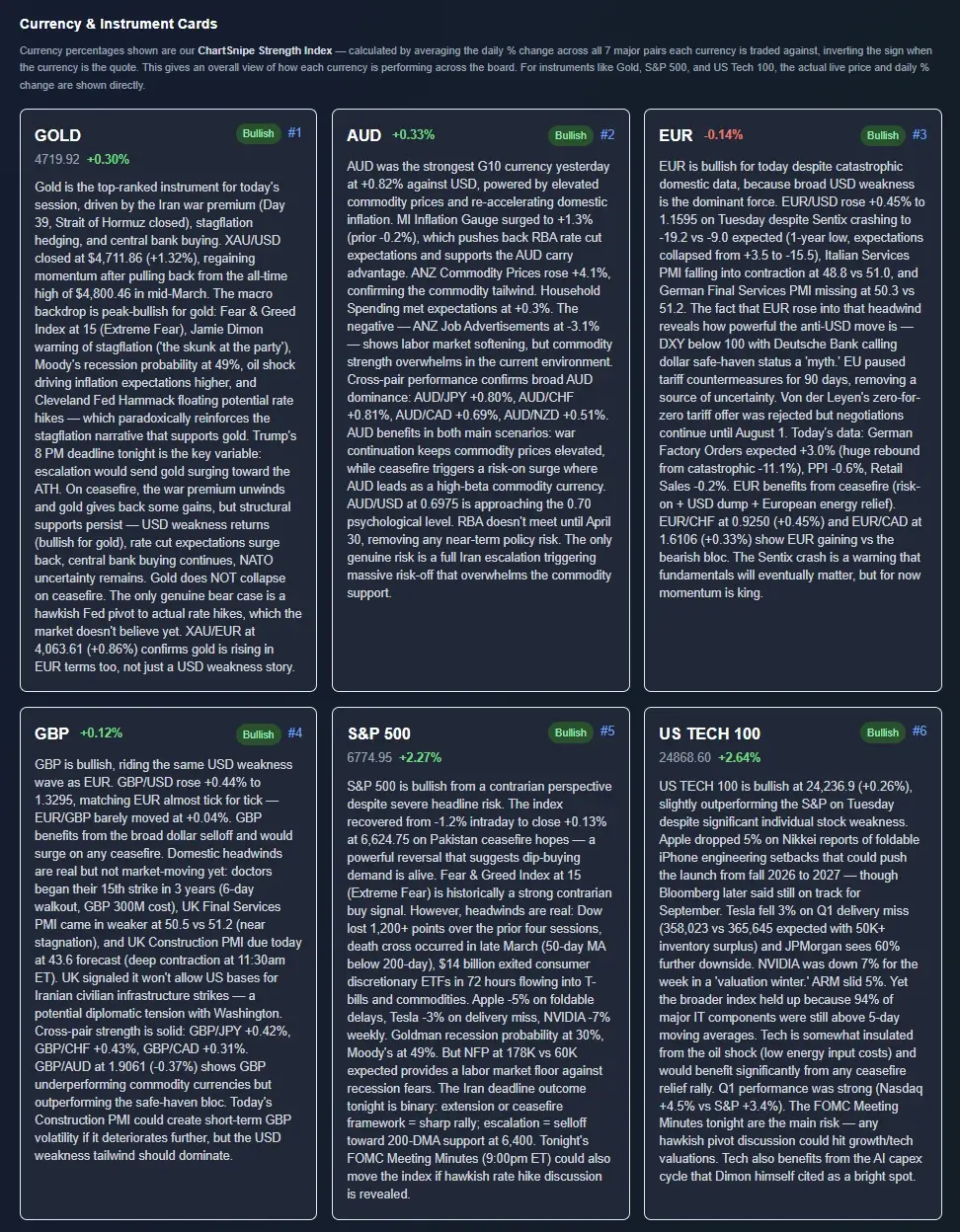
The hardest part of trading NFP is not reading the headline number — it is figuring out what the rest of the FX complex is actually doing in the minutes after the print. EUR/USD might be ripping, but is that because EUR is rallying or because USD is dumping? The answer matters, because it tells you which other pairs you should be looking at. ChartSnipe solves this with per-currency strength cards that update in real time from live prices, not from yesterday's data.
In the example above, the four cards cover GBP, EUR, JPY and AUD — each with a direction label (weakening, firming, falling) and two or three sentences explaining what is moving it. When NFP prints, you can glance across those four tiles and immediately see whether the pound is outpacing the euro, whether the yen is being sold as a funding currency again, and whether the Aussie is responding to the risk-on or risk-off side of the dollar reaction. That tells you whether to play EUR/USD or GBP/USD, and whether a AUD/JPY cross is setting up as a cleaner expression than a plain USD pair.
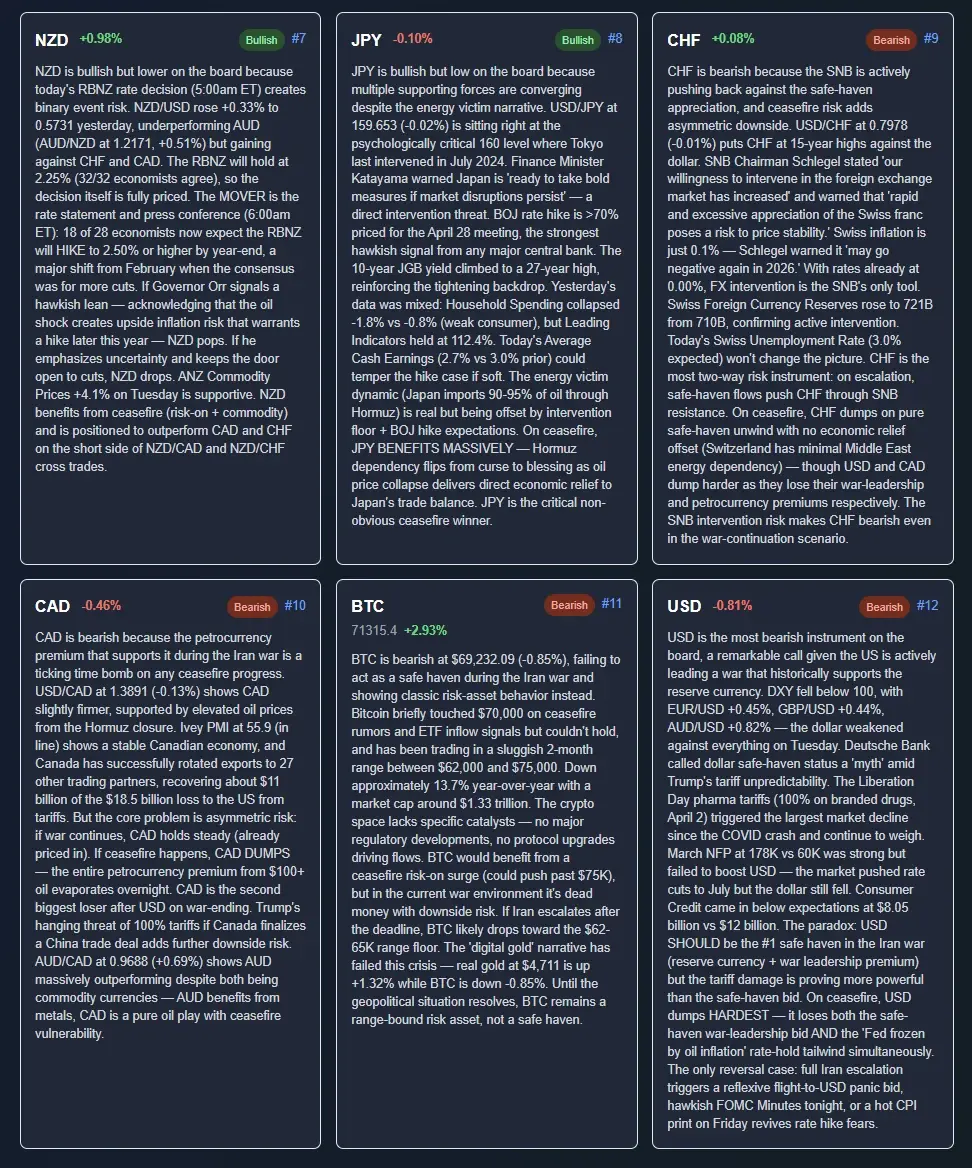
The second row of cards is where the NFP read lives. USD sits on the far right with its own strength verdict. When the non-farm number hits, the USD card updates from live prices within seconds — you can confirm the direction of the dollar without ever opening a DXY chart. Pair that with the CAD card (commodity-linked, sensitive to oil), the CHF card (safe-haven behaviour), and the NZD card (high-beta to risk sentiment), and you get a complete cross-section of how the market has digested the print across very different risk profiles.
This is exactly the information you'd otherwise need four or five TradingView tabs to piece together. By the time a manual trader has tabbed through EUR/USD, GBP/USD, USD/JPY, USD/CHF, XAU/USD and DXY, the first clean entry window has already closed. Having all eight currencies on one page, each with live direction and a written sentence of context, compresses the post-NFP decision into roughly ten seconds.
Pre-NFP Setup: Four Things To Check 24 Hours Before
Most NFP losses happen because the trader walked in blind. A proper pre-release routine takes 20 minutes on Thursday afternoon and saves you from the worst mistakes.
ADP Print On Wednesday
ADP is the private-sector jobs number. It correlates loosely with NFP but sets expectations. A strong ADP typically primes the market for a strong NFP — which means the reaction to an in-line NFP is often negative for the dollar (disappointed).
Jobless Claims On Thursday
The weekly initial claims number is the most recent labor signal before NFP. A sharp jump in claims often presages a weak NFP. Check the 4-week moving average, not just the single print.
Current DXY Technical Bias
Is the dollar in an uptrend, downtrend, or range coming into NFP? The market rarely reverses a strong multi-week trend on a single data point. If DXY has been grinding up for three weeks, a mild miss often gets bought quickly.
Fed Speak And Positioning
What have Powell and voting members said this week? If Fed officials have been leaning hawkish, an in-line print is bullish USD (they confirm the story). If they have been leaning dovish, an in-line print is bearish USD.
You can do all four checks manually, or let ChartSnipe News Impact compile them into a single directional view with pre-ranked instruments. Either way, never walk into NFP without knowing your three scenarios.
The 3 NFP Trading Strategies That Actually Work
There are dozens of NFP strategies on Reddit and Forex Factory, and most of them are garbage — pending-order straddles, 10-pip stops into red news, martingale scalping. These are the three approaches that consistently survive contact with real NFP prints.
Strategy A — Pre-Release Positioning (ChartSnipe Ranking)
This is the lowest-stress approach. You enter 30-60 minutes before the release with a small position in the direction your pre-ranked bias says, a wide stop (50+ pips on EUR/USD, $25+ on XAU/USD), and let the release resolve it. The edge comes entirely from being right about which direction the data will favor — which is where AI ranking carries its weight.
- Entry: 30-60 min before release at market
- Size: Half your normal position (volatility risk)
- Stop: Wide, beyond the last 4-hour swing
- Target: 1.5x to 2.5x the stop, or trail on a clean 15-min close
- Edge source: directional conviction from AI ranking
Strategy B — Spike Fade (Wait 15 Minutes)
The initial spike on NFP is almost always overdone. Algos pile in, retail chases, and then the price runs out of buyers around the first major level. The spike fade waits patiently for 15 minutes, identifies the first decent pullback structure, and trades the reversal back toward the pre-release mean.
- Entry: 15-25 min after release on a clear reversal candle
- Works best: after moves of 70+ pips on EUR/USD or $20+ on gold
- Stop: Beyond the spike high/low
- Target: Pre-release price or the 50% retracement of the move
- Risk: false reversals on follow-through days — size down
Strategy C — Follow-Through (Wait For A Clean 30-Min Close)
When all three NFP components align in the same direction, the move extends for hours — sometimes days. The follow-through approach waits for a clean 30-minute candle close in the direction of the surprise (no long wicks rejecting) and enters with trend on the first pullback.
- Entry: after a clean 30-min close in the surprise direction
- Pullback: buy the first 15-min pullback to VWAP or the 21 EMA
- Stop: Below the 30-min candle low (long) or high (short)
- Target: Prior day high/low, then next major level, then trail
- Works best: on extreme prints where all three data points agree
Honest answer to "which is best?" Strategy A combined with Strategy C is the professional approach — pre-position small, let the print resolve, and scale in on follow-through. Strategy B (fade) is the highest-skill approach and will stop you out during trending NFP weeks.
The Mistakes That Blow Up Accounts On NFP
Every Reddit NFP post-mortem has the same five complaints. Here they are, plus the specific fix for each one.
Mistake 1: Tight Stops Into Red News
Your 15-pip stop on EUR/USD will get hit by the initial spread widening alone. Fix: minimum 40-pip stop on EUR/USD, $15 on gold, during the first 5 minutes.
Mistake 2: Market Orders In The First 60 Seconds
Spreads can blow out to 8-15 pips on EUR/USD in the first minute. Your market buy fills 10 pips above the quoted price. Fix: use limit orders, or wait 90 seconds for spreads to normalize.
Mistake 3: Revenge Trading After A Stopout
You get stopped on the initial spike, then re-enter in the reversal, get stopped again, then chase the second reversal. You just lost 3R in 20 minutes. Fix: one NFP trade per release. If it's wrong, walk away.
Mistake 4: Trading The Same Pair Every Month
Some months EUR/USD is the cleanest setup. Other months it's XAU/USD or USD/JPY, depending on which pair has the cleanest technical structure going in. Fix: rank the pairs every month, don't force the same ticker.
Mistake 5: Ignoring Wage Growth
Trading the headline and missing the average hourly earnings footnote that moved the Fed needle. Fix: read all three numbers before entering any post-release trade.
Your Complete NFP Day Timeline
Here is the minute-by-minute timeline we run on every NFP Friday. Use it as a template — adjust for your timezone and broker spreads.
How ChartSnipe AI Pre-Ranks The 12 Instruments Before NFP
Every trader says "be prepared for NFP." Almost nobody tells you how to actually be prepared across 12 different instruments at once. That is the specific problem ChartSnipe News Impact solves.
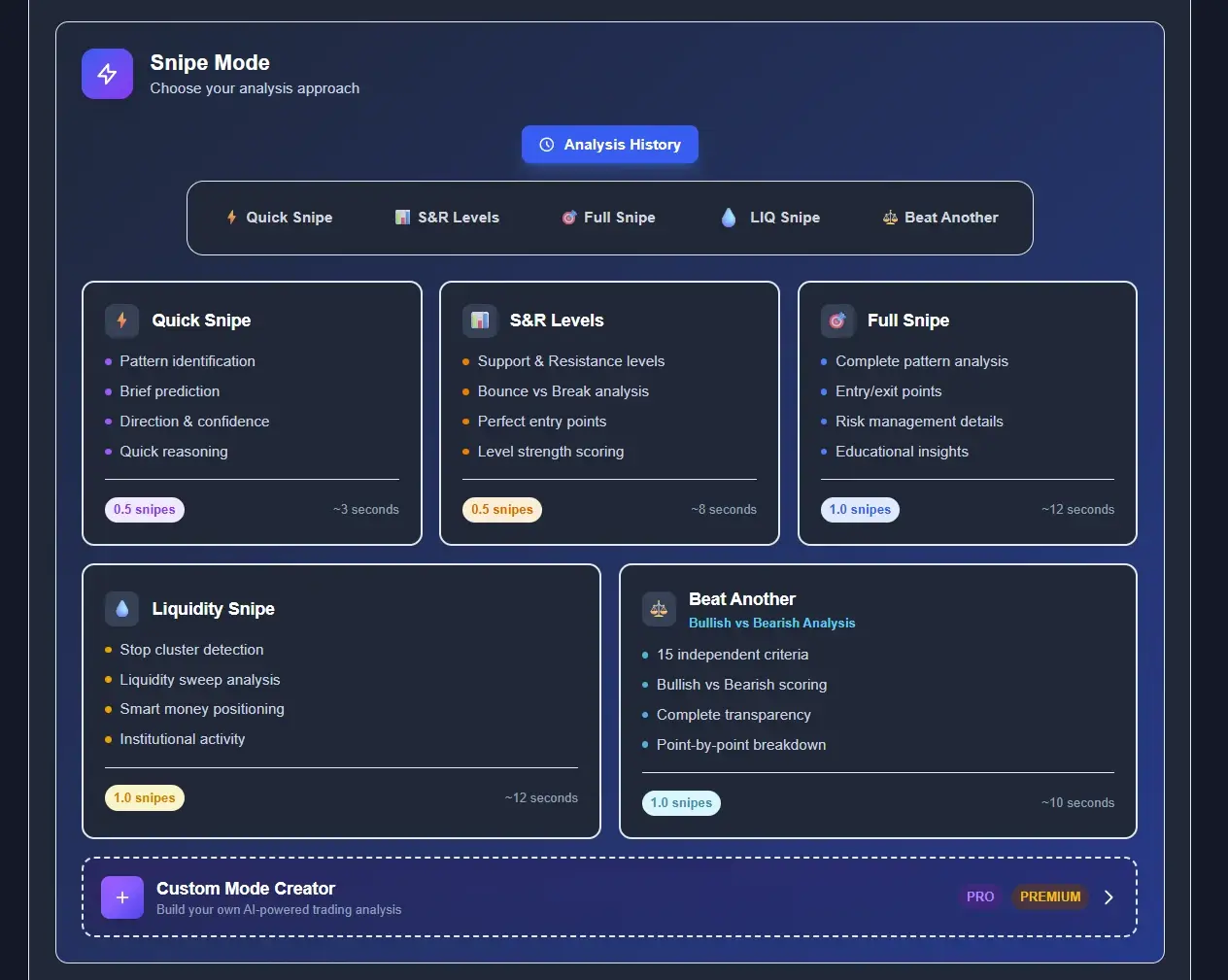
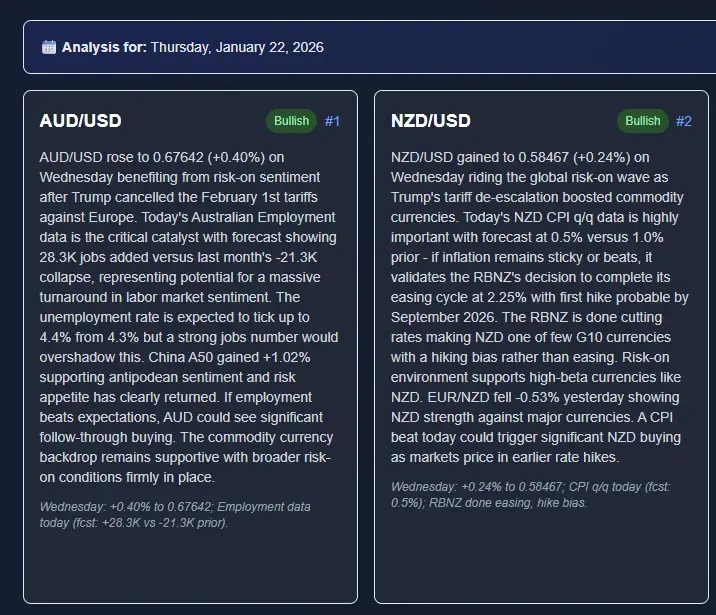
Before every major release — NFP, CPI, FOMC, central bank meetings — the AI runs a 5-phase analysis pipeline: broad news coverage, deep-dive on specific stories, price-data integration, ranking of the 12 most-tradable instruments (28 FX pairs + gold + BTC + S&P 500 + US Tech 100), and finally the "How AI trades today" narrative. The output is a single page showing:
Top Bullish Pairs
The instruments most likely to move UP if the data prints in favor of a specific scenario. Ranked by conviction score.
Top Bearish Pairs
The instruments most likely to move DOWN. Includes reversal risk flags for pairs near major levels.
Currency Strength Index
Live percentage change per FX currency across 7 pairs, so you can see which currency is actually leading the move.
How AI Trades Today
A narrative breakdown of the scenarios, the DXY chain, and the cleanest expressions to trade — in plain English.
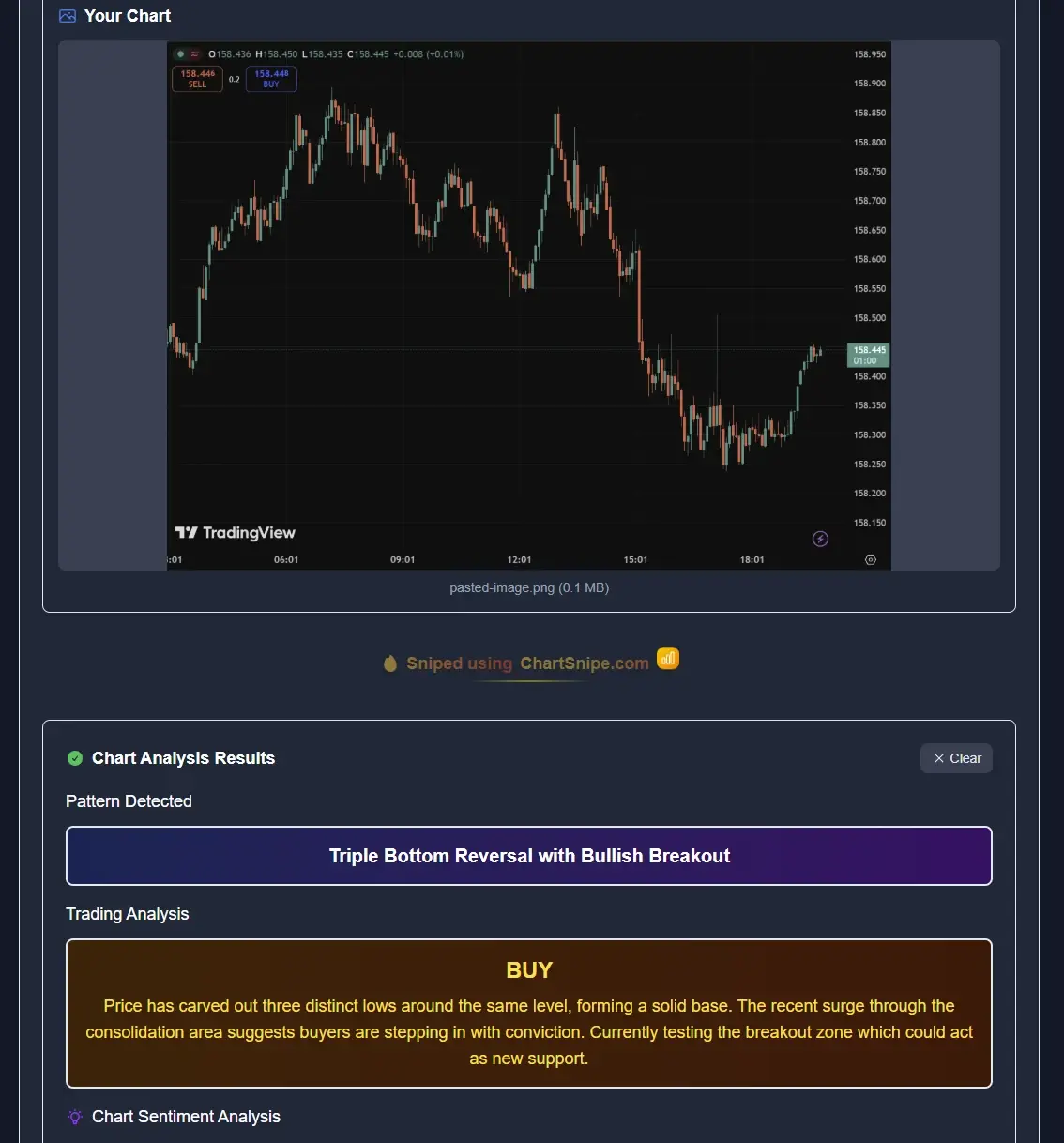
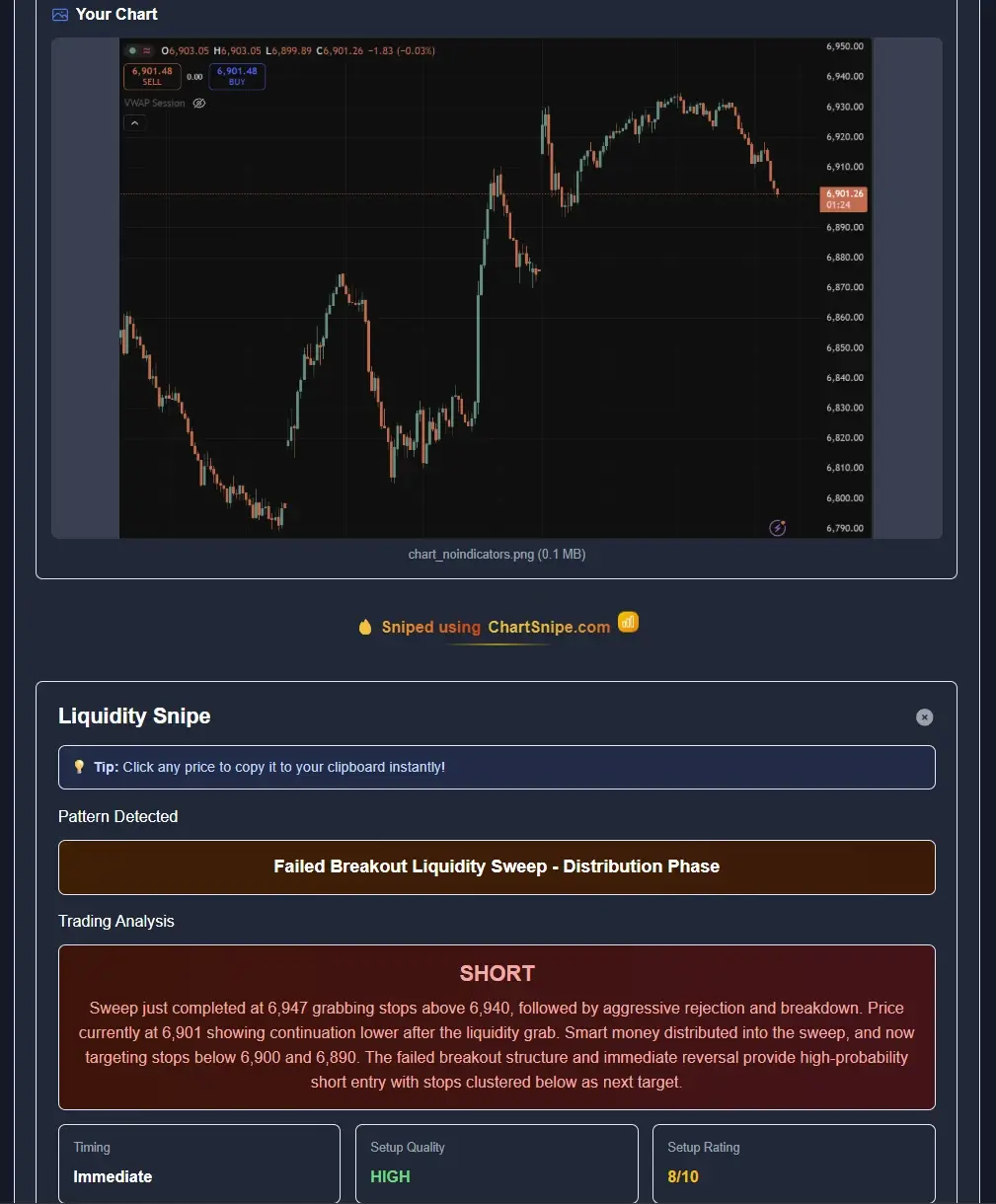
You can pair this ranking with a chart-level setup using the ChartSnipe chart analysis tool: once the AI tells you "EUR/USD is top-2 bearish for a beat scenario," you upload the EUR/USD 15-min chart and get a full technical read — support levels, pattern detection, entry zones. Together, the News Impact ranking plus the chart tool form the exact workflow described in our AI forex chart analysis 2026 guide.
This is a genuinely different workflow from the usual "wait for the print, panic, click buy" retail approach. If you want to see how it compares to using ChatGPT for the same task, read our breakdown of whether ChatGPT actually works for trading charts — spoiler: it doesn't, because ChatGPT has no real-time price data and no pre-ranking layer.
Frequently Asked Questions
What is the best NFP trading strategy in 2026?
Combine pre-release positioning (using AI-ranked bullish/bearish pairs) with post-release execution via either a spike fade (wait 15 minutes) or a follow-through entry (wait for a clean 30-min close). Always check the DXY reaction first — if the dollar surges, EUR/USD, AUD/USD, and XAU/USD move the opposite way.
How does NFP affect gold (XAU/USD)?
Gold moves inversely to the dollar on NFP about 75% of the time. A strong beat pushes DXY up and gold down ($18-$30 in the first hour). A miss pushes gold up. The inverse rule breaks during risk-off regimes (war, credit stress) where gold rallies alongside the dollar, or when wages override the headline.
How many pips does NFP typically move forex pairs?
EUR/USD moves 40-80 pips in the first 15 minutes on a typical release. A large surprise (±75k) can move 100-150 pips. GBP/USD usually moves 60-120 pips, USD/JPY 50-100 pips, and XAU/USD 10-25 dollars. Spreads widen dramatically in the first 60 seconds.
Should you trade NFP or sit it out?
Most retail traders should either position before the release with a defined-risk approach, or wait 15-30 minutes after the print before entering. Trading the first 60 seconds with market orders is dangerous due to widened spreads, slippage, and stop hunts.
What are the three NFP components that matter?
Headline jobs number, unemployment rate, and average hourly earnings (wage growth). In 2026, with the Fed focused on sticky services inflation, wage growth frequently overrides the headline. A strong headline with soft wages can actually weaken the dollar.
How does ChartSnipe help with NFP trading?
ChartSnipe AI News Impact pre-ranks 12 instruments (28 FX majors and crosses, gold, BTC, S&P 500, US Tech 100) bullish or bearish before every NFP release based on positioning, the DXY chain, and scenario analysis. You walk into the release already knowing which pairs have the cleanest setup for both USD-positive and USD-negative outcomes.
Conclusion: Walk In Prepared, Not Reactive
Trading NFP is not about having a crystal ball. It is about walking into the release with pre-ranked instruments, pre-defined scenarios, and a minute-by-minute timeline. The traders who consistently make money on NFP Fridays are not the ones with the fastest fingers — they are the ones who already knew their top 2 bullish and top 2 bearish pairs, already knew which strategy (A, B, or C) fit the macro regime, and already had their stops placed wide enough to survive the spread widening.
Use the DXY reaction chain as your mental model, use the inverse-dollar rule as your gold compass, use the timeline as your execution checklist, and use AI ranking to remove the emotional guesswork about which pair to focus on. Combine the four, and NFP becomes a disciplined monthly playbook instead of a coinflip.
And when in doubt on any release, remember the one rule that saves more accounts than any other: one NFP trade per release. If it's wrong, walk away.
Sources & Further Reading
- • U.S. Bureau of Labor Statistics — Current Employment Statistics — the official source of the monthly Non-Farm Payrolls release
- • Federal Reserve — Monetary Policy — FOMC statements and how the Fed reads labor data
- • Forex Factory — consensus forecasts and community NFP threads
- • Investopedia — Non-Farm Payrolls — background on how the report is constructed
- • Reuters Markets — real-time NFP coverage and market reactions
Related Articles

How to Read a Forex Economic Calendar
Decode red-impact events, consensus, and the release priorities that move the FX market every day.

High-Impact Forex News Events
The complete list of news releases that consistently move FX — and how to trade each one.

Currency Strength Meter Guide
The math behind strength meters, the strong-versus-weak rule, and how to pair it with news events.

Written by the ChartSnipe Team
ChartSnipe is an AI-powered chart screenshot analysis tool and daily AI news impact analysis platform for forex, gold, Bitcoin, S&P 500, and Nasdaq traders. Our team combines deep experience in technical analysis, AI vision models, and live market data across 32+ instruments to deliver actionable trading insights.
Never walk into NFP blind again
Get the 12-instrument bullish/bearish ranking before every major release, plus full chart analysis on any pair.
Or see pricing plans — free tier gets you 2 analyses per month.
Written by the ChartSnipe Team — building AI-powered tools for traders who take news events seriously.