
Multi-Timeframe Analysis: The Complete Forex Guide (2026)
Trade in the direction of the higher timeframe, time the entry with the lower one — the full four-chart framework, ten worked examples, and the single most important rule in forex technical analysis.
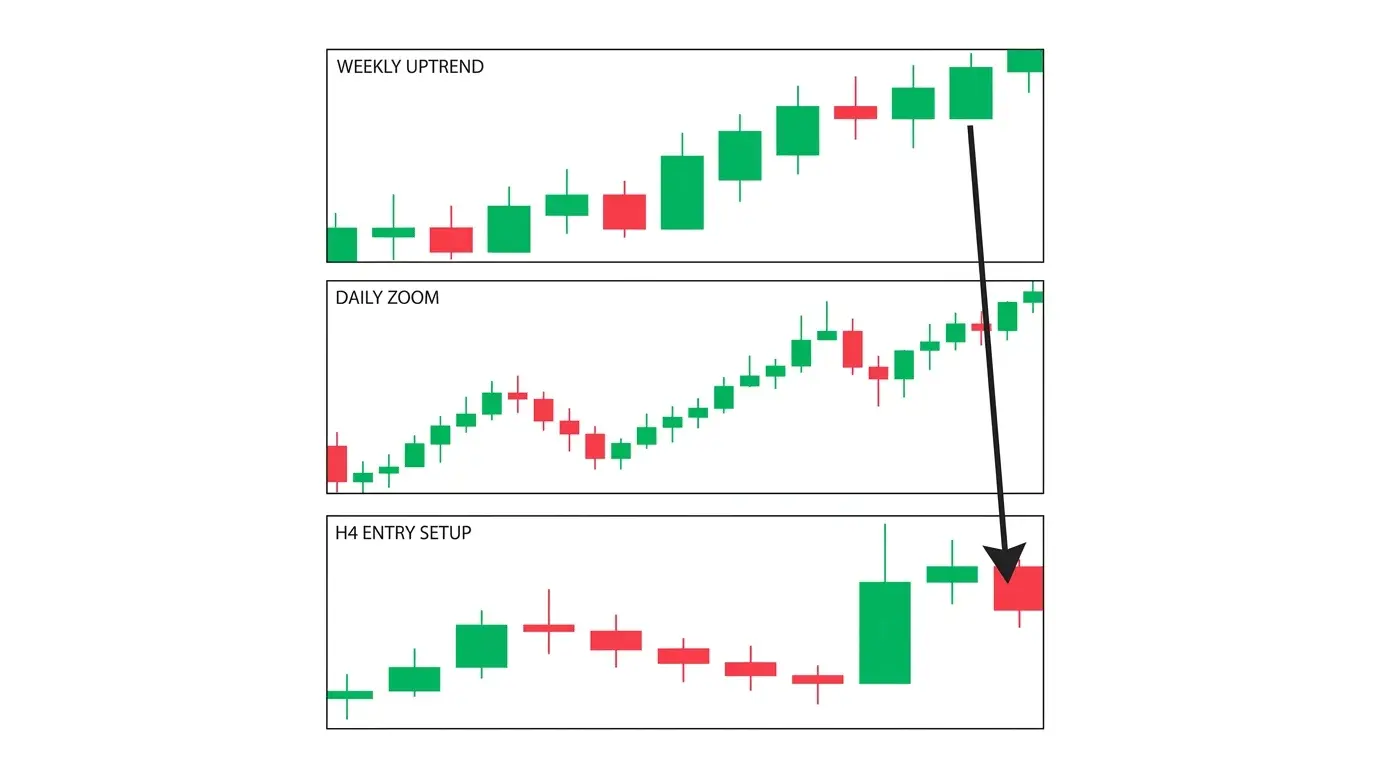
The single most common mistake in retail forex is trading a single timeframe. Traders pick H1 or M15, build a system around it, and then wonder why their win rate collapses every time they catch a setup that "looked perfect" on their chart but turned out to be a counter-trend retrace on the daily. The clean entry pattern they spotted was real. The timeframe context around it was missing.
Multi-timeframe analysis (MTF) fixes this. The golden rule is brutally simple: trade in the direction of the higher timeframe, and use the lower timeframe only to refine the entry. This is the top-down framework that institutional traders have used for decades and that separates professionals from retail — not the patterns they read, but the sequence in which they read them. This guide walks through the complete MTF playbook: the four-chart cascade from W1 down to M15, the two-timeframe rule for busy traders, the stacked-entry templates that actually work, and the critical question of what to do when your higher and lower timeframes disagree.
Key Takeaways
- →The golden rule: trade in the direction of the higher timeframe, use the lower timeframe only to refine the entry.
- →Most traders only need two timeframes — one for bias, one for execution — not four. The two-timeframe rule is enough for 80% of setups.
- →The standard cascade is W1 → D1 → H4 → H1 → M15. Pick the two adjacent charts that fit your style.
- →HTF resistance plus LTF rejection, and HTF support plus LTF engulfing, are two of the highest-edge setups in forex.
- →When higher and lower timeframes disagree, the HTF wins — or you stay out. Never force a trade against the dominant bias.
1. Weekly to Daily — Setting the Macro Bias
The first question in any serious forex analysis is not "is this a good setup" — it is "what is the macro trend?" That question is answered on the weekly chart. One look at W1 tells you whether a pair has been grinding higher for six months, rolling over after a multi-year rally, or locked in a sideways range that intraday traders have been fading for weeks. Nothing on H1 or M15 overrides that context.
The weekly-to-daily cascade works like this: open the weekly, identify the dominant trend (up, down, or range), mark the two or three most significant structural levels, then drop to the daily chart and look for recent behaviour that either confirms or challenges the weekly read. A pair making higher weekly highs should be making higher daily lows; if the daily is printing lower highs while the weekly still looks bullish, the macro move is losing momentum and you treat long setups with caution.
For position traders, the weekly-to-daily pairing is the entire system. A clean weekly engulfing bar at a multi-year level, confirmed by a daily pin bar two or three sessions later, is one of the highest-conviction signals in forex. Stops are wide and targets are hundreds of pips, but the win rate and R-multiple of these setups justify the patience required.
2. Daily to H4 — Narrowing the Setup
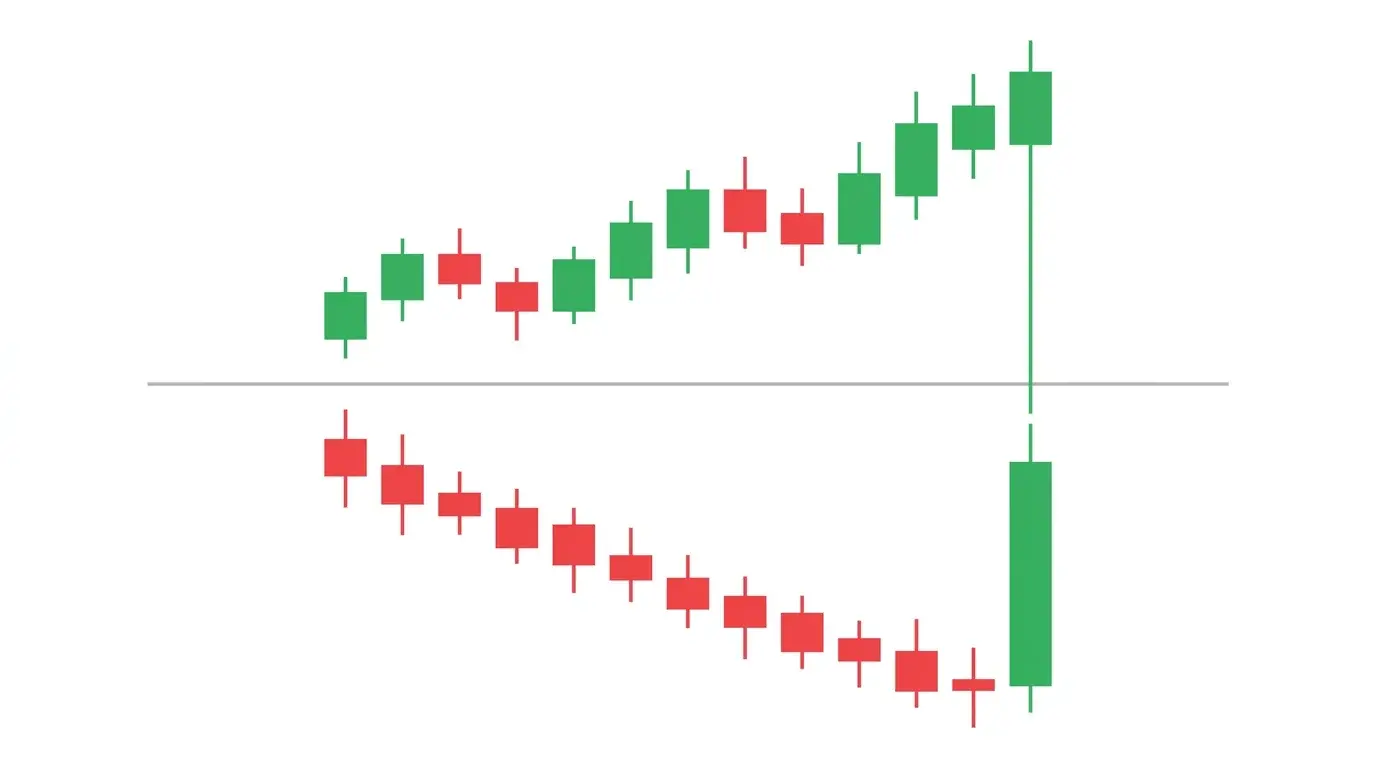
The daily-to-H4 pairing is the working-trader's default. It is the cleanest ratio in multi-timeframe analysis — one D1 candle equals six H4 candles, giving you enough resolution to see the structural breakdown of each day without drowning in noise. Daily defines bias; H4 defines setup. Most profitable swing traders operate exclusively in this zone.
The workflow: open D1, confirm trend direction and identify the most relevant swing high or swing low, then drop to H4 and look for a pullback into that level. The H4 gives you six candles per day to watch the pullback develop, letting you see whether buyers are defending a prior breakout zone or whether the pullback is becoming a full reversal. Classic H4 entry triggers inside a D1 uptrend include engulfing bars at prior resistance-turned-support, pin bars off the 20-period EMA, and break-and-retest formations of recent intraday highs.
This pairing is also ideal for traders who want to keep calendar risk manageable. A daily-to-H4 swing typically lasts two to five sessions, which is long enough to let the trend work but short enough to avoid most multi-week event exposure. Stops sit 50–120 pips away and targets run 200–500 pips, giving R-multiples that compound meaningfully over time.
3. H4 to H1 — Refining the Entry Zone
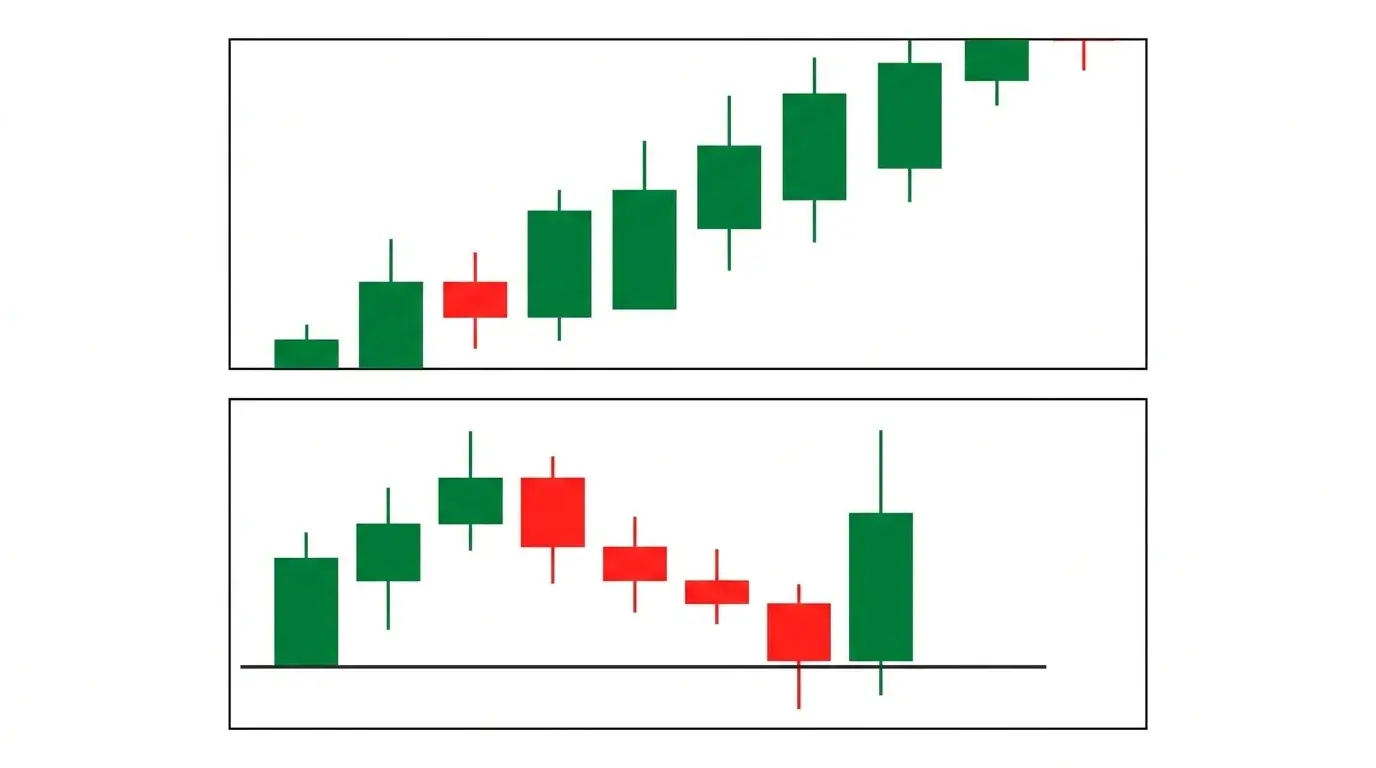
The H4-to-H1 pairing is where active day traders live. It gives you a readable bias chart (H4, six candles per day) and a precise execution chart (H1, twenty-four candles per day) without dropping into the noisy zone below. The ratio is clean — four H1 candles per H4 bar — and the pairing covers almost every intraday swing that retail traders realistically want to catch.
The process: on H4, identify the direction and mark the most recent demand or supply zone. On H1, wait for price to reach that zone and produce a confirmation signal — a pin bar, an engulfing candle, or a failed-auction reversal at the level. The H1 confirmation is your trigger; the H4 zone is your risk. Stops typically sit on the far side of the H4 swing, giving 40–80 pips of room and a clear invalidation point.
This pairing suits traders who check the chart three or four times per session rather than continuously. You evaluate on H4 first thing in the morning, set up alerts at the entry zone, and when the H1 triggers, you take the trade. Most prop-firm challenges are passed on exactly this workflow because it balances win rate, screen time, and R-multiples better than any other combination.
4. H1 to M15 — Precision Execution
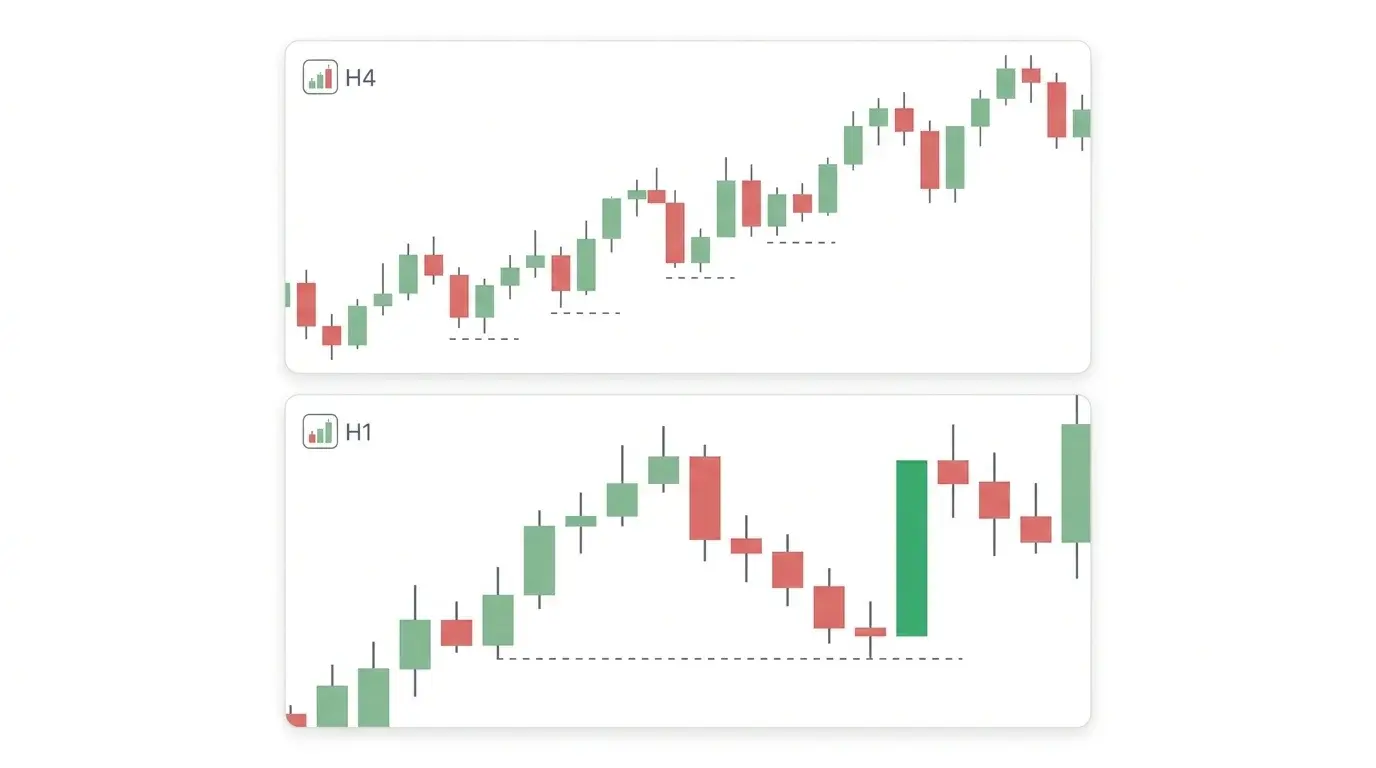
The H1-to-M15 pairing is the short-horizon scalper's version of multi-timeframe analysis. H1 sets the intraday bias — is London buying or selling this pair today? — and M15 gives you the resolution to time the entry inside a specific session. The ratio (four M15 candles per H1 bar) is the same as H4-to-H1, just compressed into one session rather than one day.
The workflow is aggressive: evaluate H1 at session open, identify the direction, mark the first M15 consolidation or pullback, and enter on the M15 break or rejection with a stop 15–30 pips away and a target at the next H1 swing. Setups last between thirty minutes and four hours. This pairing is well suited to London-open and New-York-open breakout systems, liquidity-sweep reversals, and trend continuations after session pullbacks — see our risk-reward ratio examples for the R-multiples that justify these tighter execution windows.
The catch is that H1-to-M15 requires more screen time than any other pairing. The H4-to-H1 trader checks in three times a day; the H1-to-M15 trader needs to be watching for the full two to three hours of the session in play. For traders with the time and focus, this combination delivers the highest number of setups per week — but also demands the highest discipline to avoid overtrading.
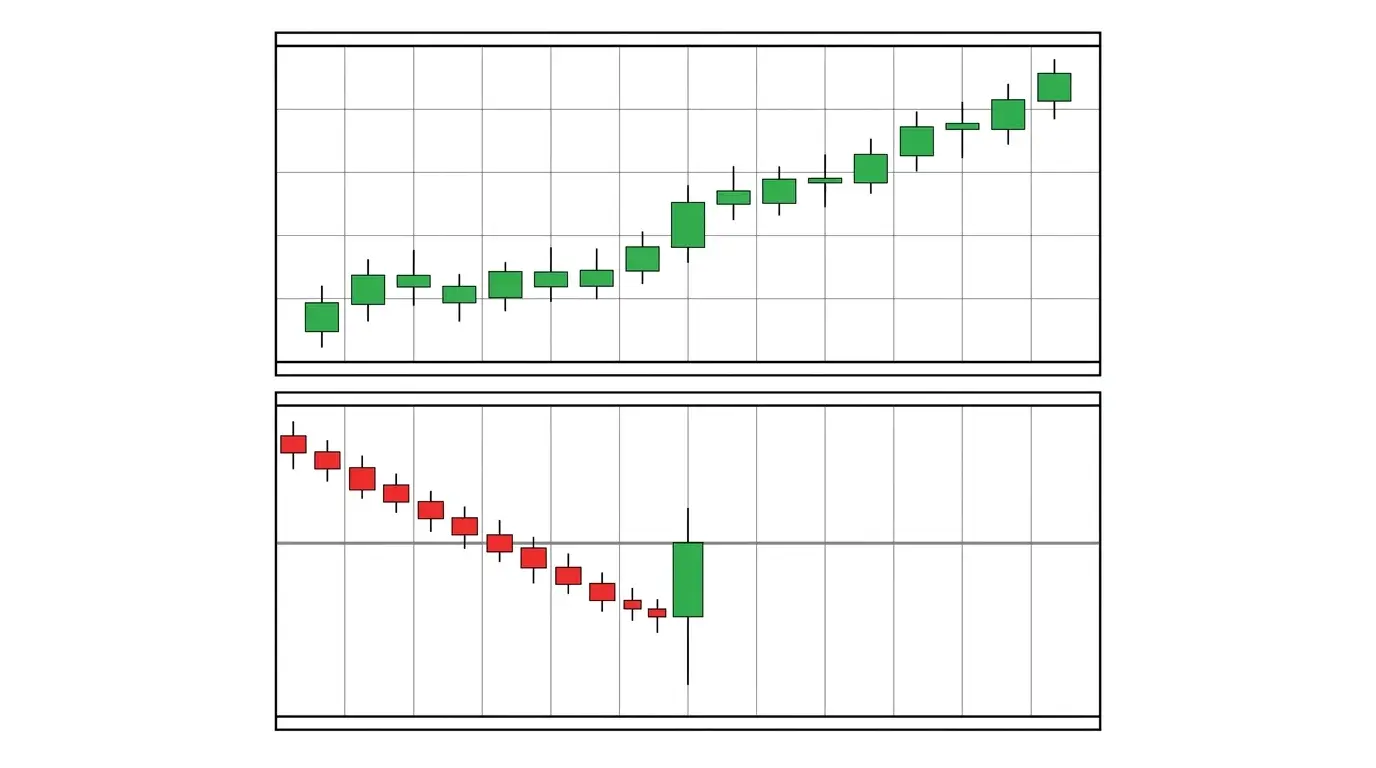
5. The Top-Down Analysis Framework (4-Step Flow)
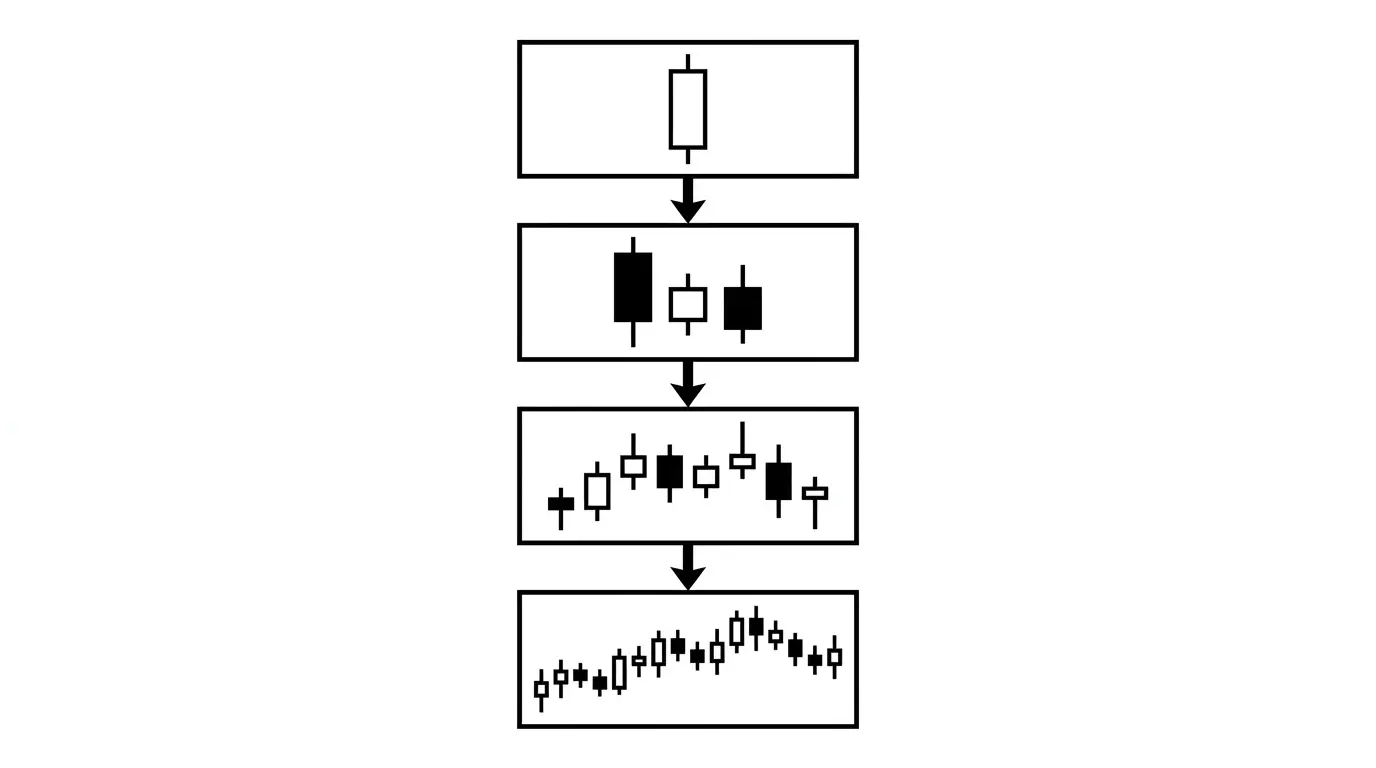
Everything above distills into a repeatable four-step workflow that you run every single session, in the same order, on every pair you intend to trade. The order matters: skip a step and you are gambling; do them out of sequence and you will anchor to bias from the wrong timeframe. This is the single most important habit in multi-timeframe analysis.
Macro bias — Weekly / Daily
Open W1. Identify trend, range, or reversal. Drop to D1. Confirm or challenge. Write down one word: bullish, bearish, or neutral.
Setup zone — Daily / H4
On D1/H4, locate the specific supply or demand zone where the bias-direction trade actually exists. Mark it. If there is no zone within reasonable reach, there is no trade today.
Trigger — H1 / M15
Drop to H1 or M15. Wait for price to arrive at the zone. Require a confirmation candle (engulfing, pin, break-and-retest) before clicking.
Risk — HTF-defined
Place the stop on the far side of the HTF zone, not the LTF candle. Size the position to risk a fixed percentage. Target the next HTF structural level.
The two-timeframe rule applies if you are short on time: pick one HTF for bias (D1 or H4) and one LTF for entry (H1 or M15). You can skip the other two charts entirely. Most retail traders overcomplicate MTF by stacking four charts when two would do.
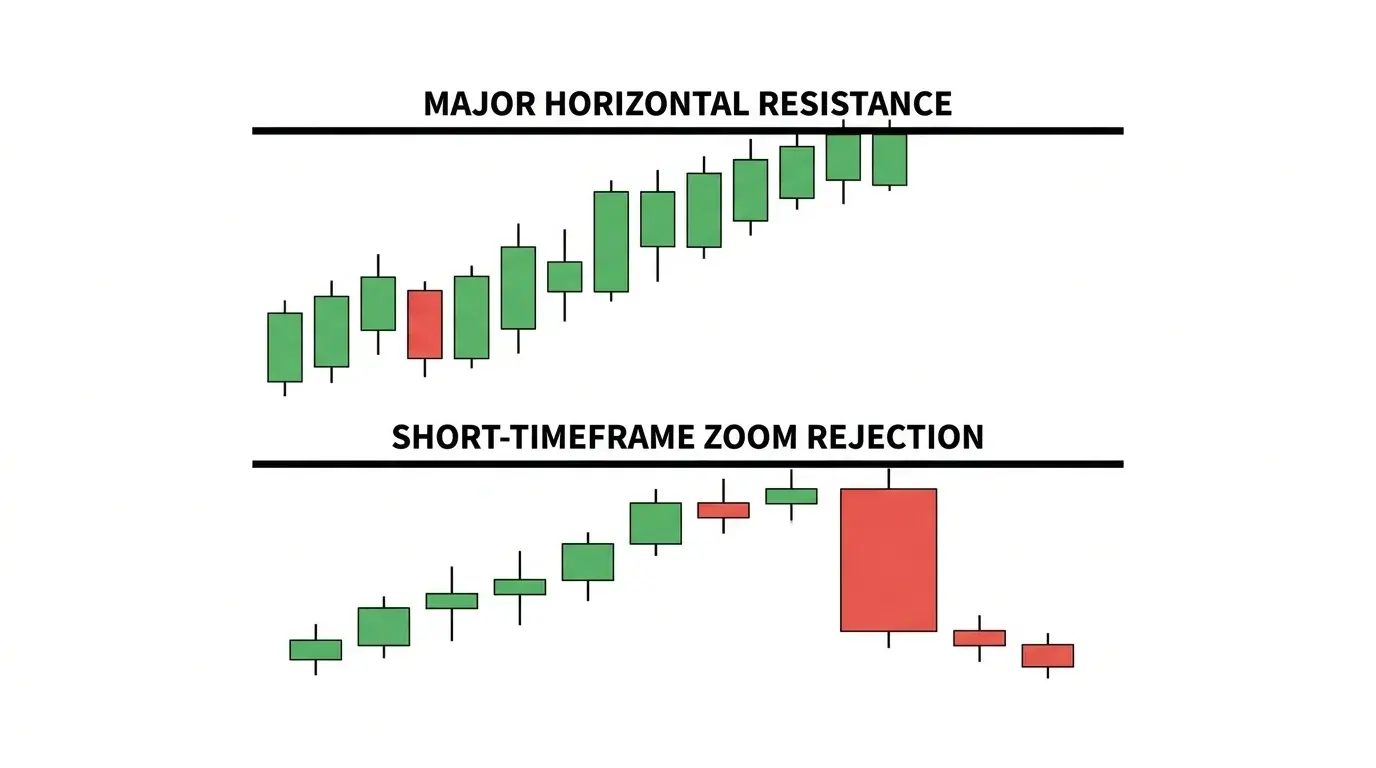
6. HTF Resistance + LTF Rejection Entry
The first of the four high-edge stacked entries. Higher-timeframe resistance — a daily or H4 swing high that has been tested and held at least once before — sets up a short. Price rallies back into the level; on the lower timeframe you wait for a clear rejection candle (pin bar, shooting star, or bearish engulfing) to confirm that sellers are defending the zone. Then you short, stop above the HTF high, target the most recent swing low.
What makes this setup powerful is the alignment of two separate behaviours. The HTF resistance means institutional size is sitting above the level waiting to sell; the LTF rejection shows you they have started selling. You are not guessing where the turn will be — you are waiting for the turn to print and then joining. Stop placement matters as much as the trigger; our stop-loss placement guide covers how to size the stop on the far side of the HTF level without giving up R-multiple. Win rates on well-formed HTF-resistance / LTF-rejection trades tend to run in the 55–65% range with R-multiples of 2 to 3 on winners.
The key filter is quality of the HTF level. A swing high that has been touched three or four times is lower-edge — each touch weakens it — while a first or second retest is where the real money lives. If the HTF level looks tired, skip the trade and wait for a cleaner one.
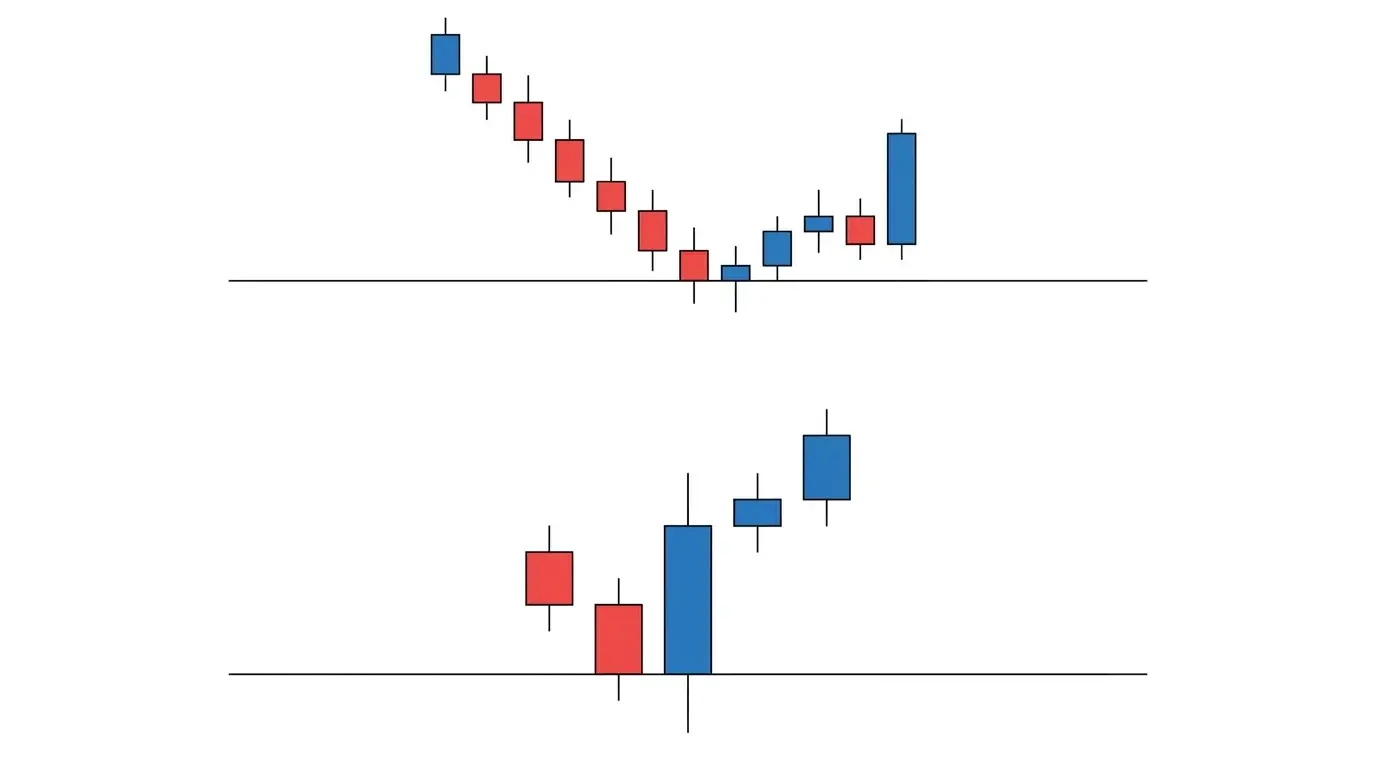
7. HTF Support + LTF Engulfing Entry
The bullish mirror of the previous setup, and arguably the single cleanest buy pattern in forex. Daily or H4 support — a prior swing low where buyers have stepped in before — sets up a long. Price pulls back into the zone; on H1 or M15 you wait for a bullish engulfing candle to confirm the defence. Entry on the engulfing close, stop below the HTF low, target the most recent HTF swing high.
The engulfing candle matters more than a pin bar here because engulfing bars require genuine two-sided flow — sellers driving price below the prior candle's open, then buyers overwhelming them and closing above the prior candle's high. That is not a rejection wick; it is a reversal. Combined with a strong HTF support level, this pattern has historically been one of the higher-edge bullish setups across every major pair.
The filter: check that the HTF support sits in an uptrend context. Buying support in a raging downtrend is counter-trend trading and the edge collapses. The same engulfing pattern in an aligned HTF uptrend, however, is the kind of setup serious swing traders build entire systems around.
8. HTF Trend + LTF Pullback Entry
This is the pure trend-following version of multi-timeframe entry. On the HTF — usually D1 or H4 — a clear directional move is in place, with price making higher highs and higher lows (or lower highs and lower lows). You do not trade the initial breakout; you wait for the inevitable pullback on the LTF and enter in the direction of the HTF trend when the pullback exhausts.
Typical execution: on a D1 uptrend, drop to H1 and watch for a pullback into the rising 20-period EMA or the most recent H1 swing low. When the pullback produces a higher low on H1 and the first bullish candle closes above the prior bar's high, enter long. Stop below the most recent H1 swing low, target the prior HTF swing high. This is one of the most psychologically comfortable setups because you are trading with the dominant direction rather than fighting it.
The key is patience during the pullback. Most traders enter too early, before the LTF has actually reversed, and get stopped out on continuation of the pullback. Wait for the higher-low structure to print on the LTF before clicking. The reward for waiting is cleaner risk and a higher win rate than almost any other entry type.
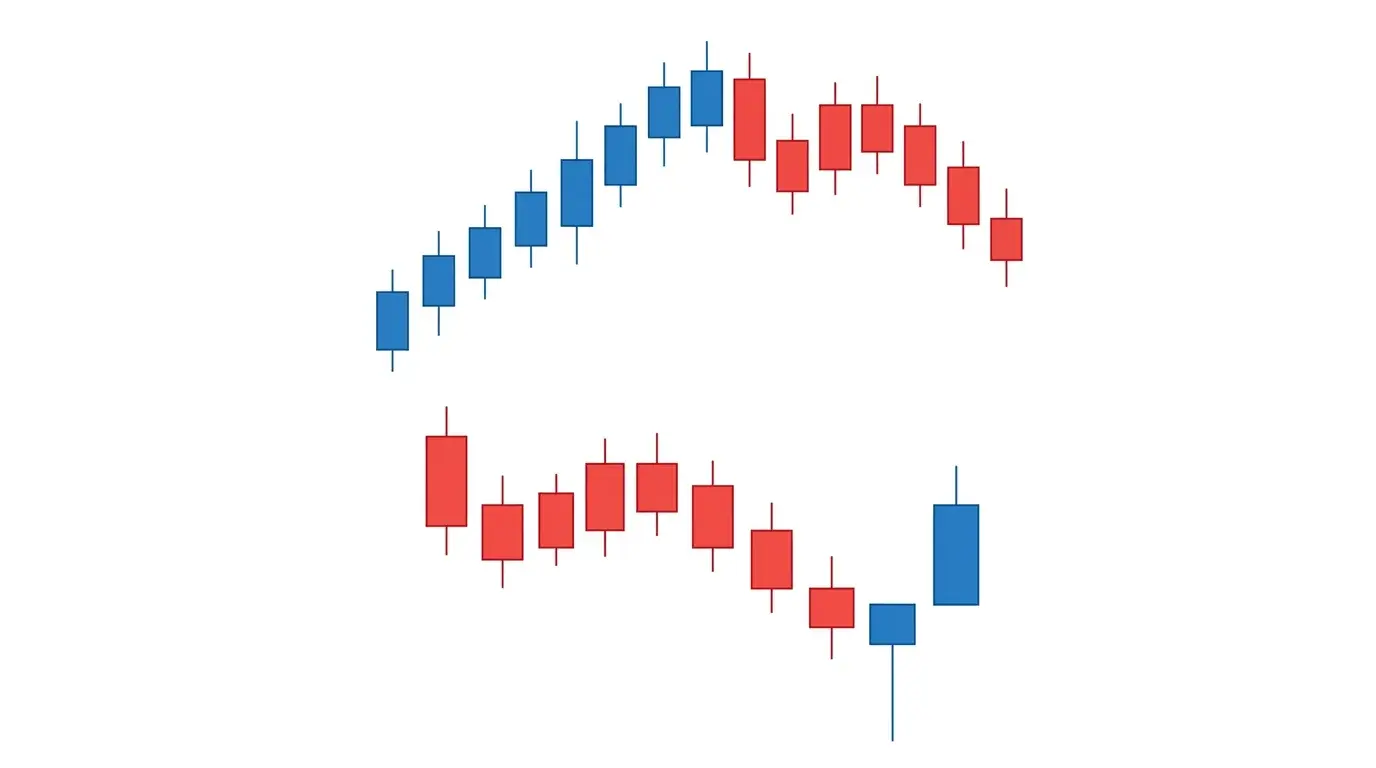
9. HTF Range + LTF Reversal at Extreme
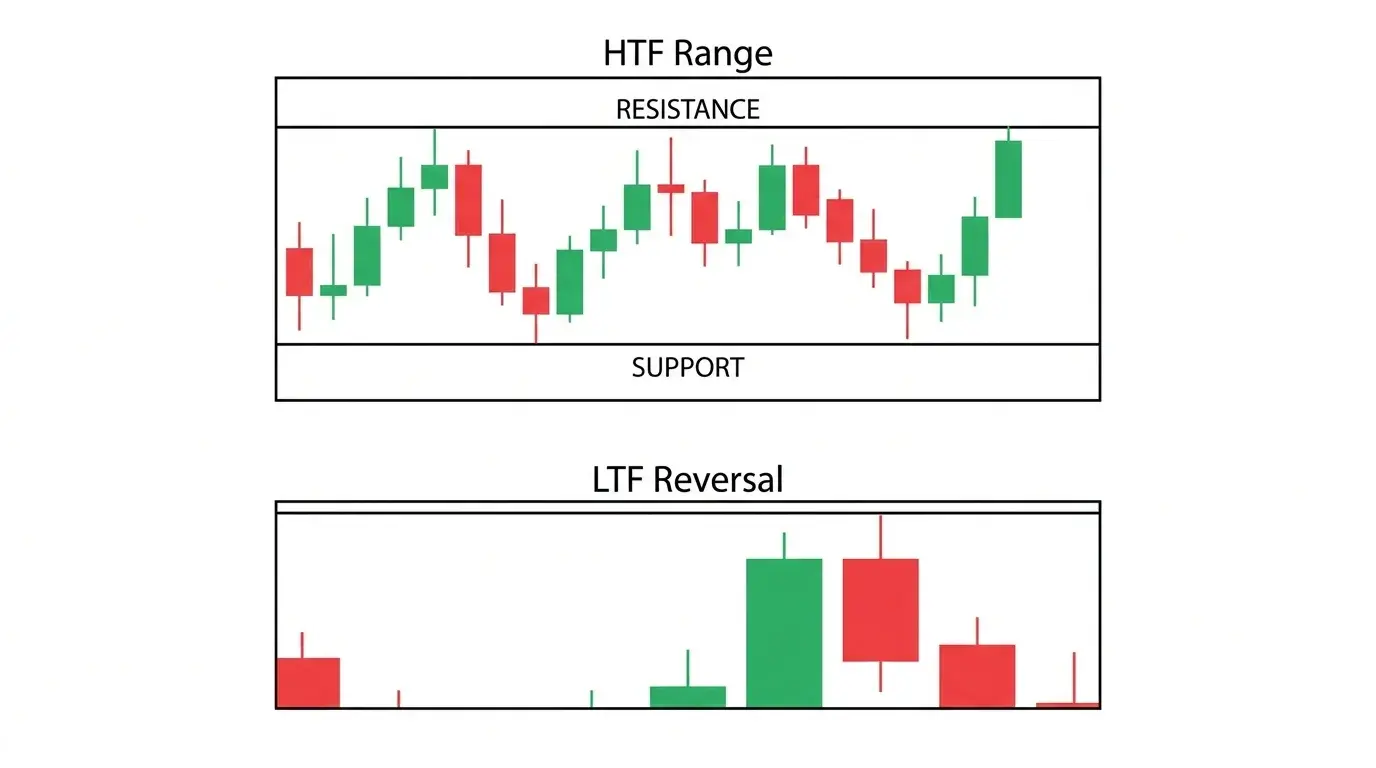
Not every market trends. In fact, most forex pairs spend the majority of their time in ranges — consolidation zones between a clear HTF high and a clear HTF low. The HTF-range / LTF-reversal setup is the range-trader's answer to multi-timeframe analysis: identify the HTF range boundaries, wait for price to reach one extreme, and use the LTF to time a reversal back into the middle of the range.
On the HTF, the range must be obvious — at least two touches of both the high and the low, preferably three or more, with price spending most of its time inside the zone. On the LTF, you wait for price to reach the extreme and print a reversal candle (pin bar at the top, engulfing at the bottom). Entry is on the close, stop beyond the range boundary, target either the mid-point or the opposite extreme depending on R-multiple preference.
The critical filter: make sure the range is intact. If HTF price action has recently made a higher high or lower low, the range is likely breaking out, and fading the boundary is the worst possible trade. When a range breaks, it usually breaks with conviction, and LTF reversal signals at the extreme become fake-out traps for traders who did not check the HTF context first.
10. Conflict Resolution — HTF vs LTF Disagreement
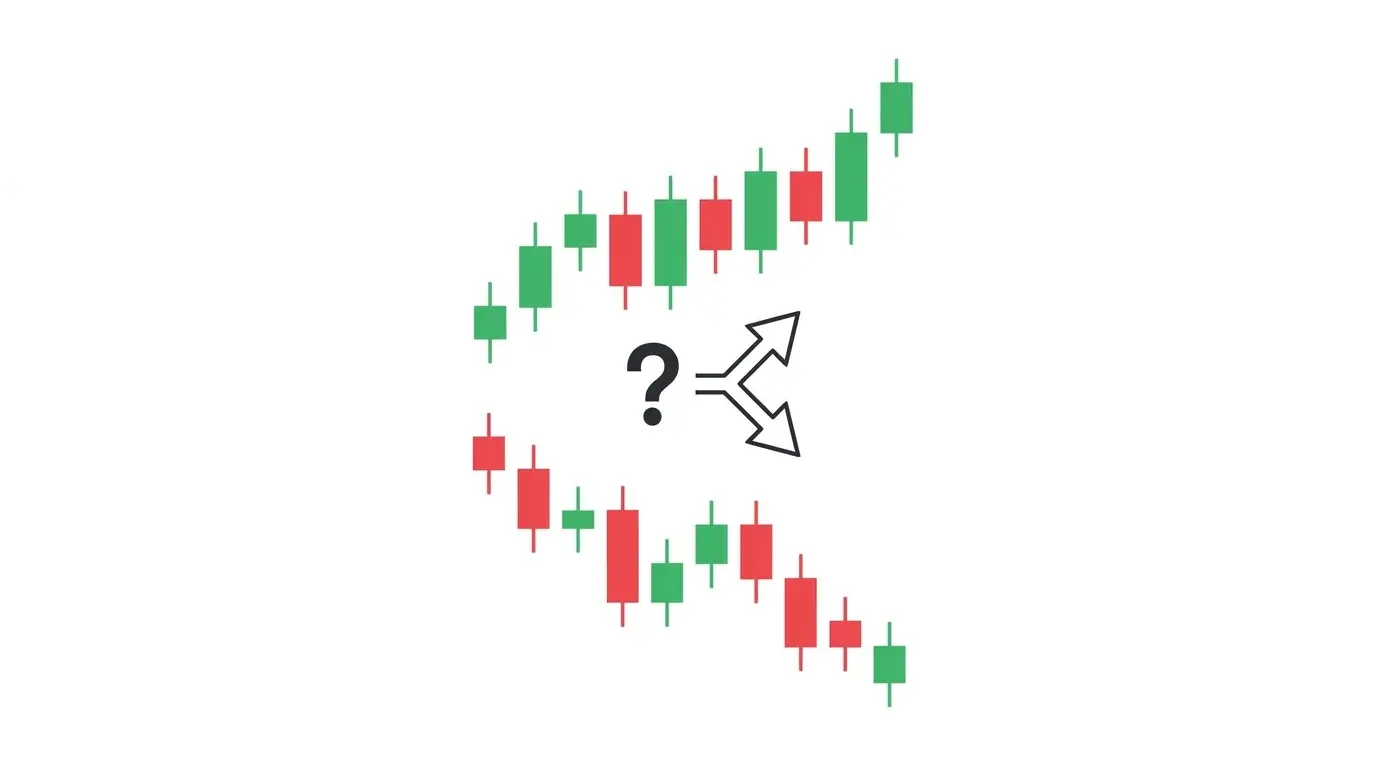
The hardest part of multi-timeframe analysis is not reading aligned timeframes — it is deciding what to do when they disagree. The daily is clearly bullish, but your H1 is printing a crisp bearish head-and-shoulders. The weekly is sideways, but the daily broke out yesterday. These conflicts appear constantly and they are where undisciplined traders lose most of their money.
The rule is simple but hard to follow: the higher timeframe wins. Always. If D1 is bullish and H1 is bearish, the H1 bearish move is a pullback, not a reversal — do not short it. Either wait for the H1 pullback to complete and re-enter long in line with D1 bias, or stay out entirely. Trading against the HTF is a low-edge, high-stress game that even professionals try to avoid. If you are unsure which timeframe is dominant, the answer is always to step back and ask which chart represents more aggregated flow. That is your HTF.
The second rule: when conflict persists for more than a day or two, the HTF is in the process of shifting. A D1 uptrend that repeatedly fails to make new highs while H4 starts printing lower highs is the early warning of a reversal. This is when you flatten exposure and wait for the new HTF bias to confirm before re-engaging. There is no shame in being flat during a regime change — the shame is being fully invested in the old bias when the new one has already started.
The Bottom Line
Multi-timeframe analysis is not complicated. It is one rule applied consistently: the higher timeframe sets the direction, the lower timeframe times the entry, and the two must agree or you stay out. Traders who internalise this principle stop fighting the market and start flowing with it. Traders who do not spend their careers being right on a single timeframe and broke in real terms.
Pick your pair of timeframes. Run the four-step top-down flow every session. Respect the HTF when it disagrees with the LTF. Use the stacked-entry playbooks when your setup actually qualifies. That is the entire game.
The ChartSnipe edge: upload screenshots of your HTF and LTF charts in sequence — our AI reads the top-down structure, flags HTF/LTF alignment, and calls out the exact zones and triggers so you can execute the setup with confidence instead of second-guessing the context.
Related Articles
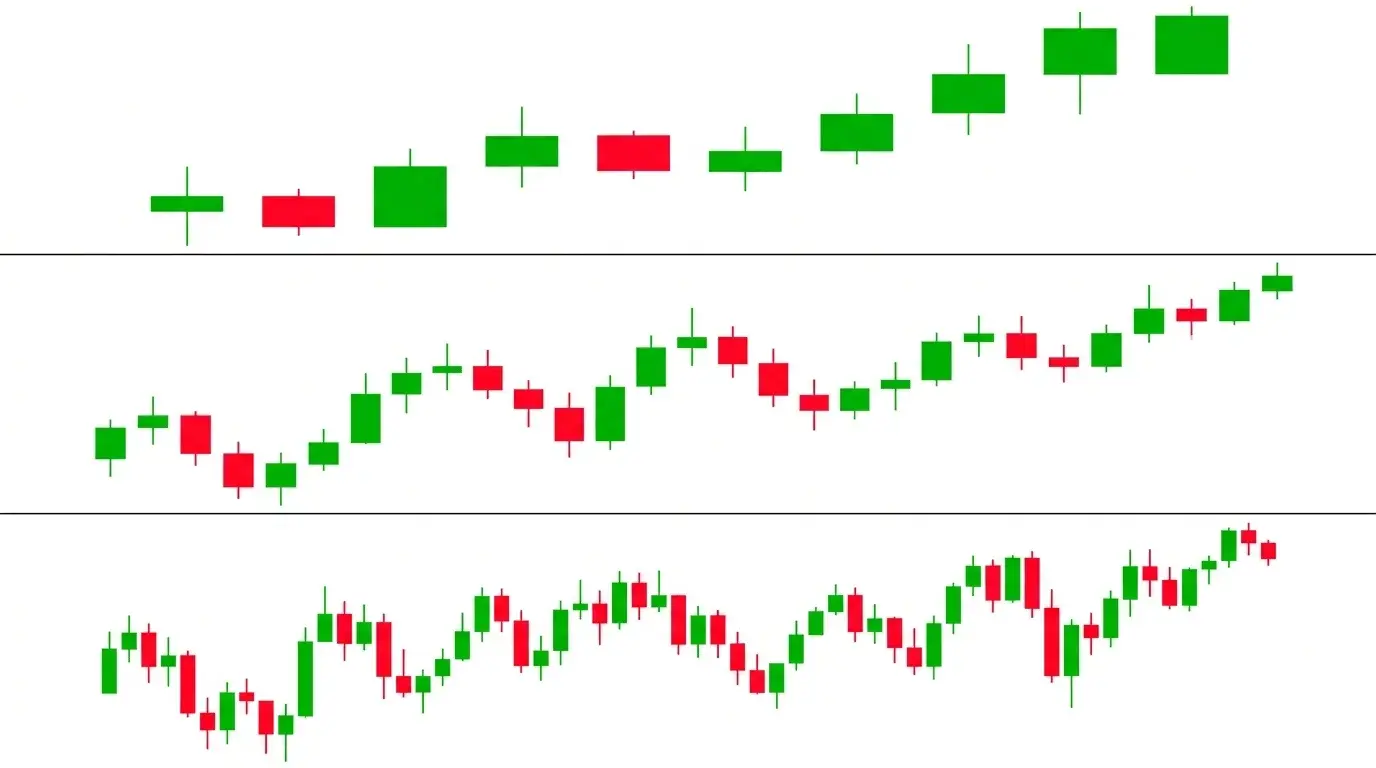
Best Forex Timeframe Guide
M1 through W1 plus Heikin Ashi and Renko — what each timeframe is good for and how to pick yours.
Forex Entry Strategy Setups Guide
The entry triggers that pair cleanly with multi-timeframe context — engulfing bars, pins, break-and-retest.
Support and Resistance Types Guide
Horizontal, diagonal, dynamic, round-number, and structural S/R — the levels that actually matter per timeframe.

Written by the ChartSnipe Team
ChartSnipe is an AI-powered chart screenshot analysis tool and daily AI news impact analysis platform for forex, gold, Bitcoin, S&P 500, and Nasdaq traders. Our team combines deep experience in technical analysis, AI vision models, and live market data across 32+ instruments to deliver actionable trading insights.
See today's HTF bias across every major forex pair
Daily AI news impact analysis across 32 instruments — macro context, live prices, and the top bullish and bearish pairs aligned for top-down execution.
Open News Impact Dashboard