
Forex Entry Strategy: 10 Setups That Actually Work in 2026
Pin bars, break-and-retest, failed breakdowns, liquidity sweeps, order block taps, FVG fills, engulfing candles, trendline bounces, moving average pullbacks, and level flips — each with the order-flow logic and the false positive to avoid.
Most retail forex traders do not lose because their bias is wrong. They lose because their entry is sloppy. They see a level, they see a green candle, and they click. Three hours later the stop is hit, the move goes without them, and they blame the market. The market is fine. The entry was bad.
A good forex entry does three things: it defines exactly where you are wrong, it times the move so you are not paying for dead chop, and it gives you a stop that makes sense relative to the structure. This ChartSnipe guide walks through the ten entries our team and our best users actually take — with the order-flow reason each one works, the classic false positive, and the stop-loss rule for each.
Key Takeaways
- →Every good forex entry starts with a reason price should reverse or continue from that exact zone — not just a candle.
- →Pin bars, engulfing candles, and break-and-retest entries work because they mark where liquidity flipped, not because the shape is magic.
- →Liquidity sweeps, order block taps, and FVG fills are smart-money entries — they exploit the fact that stops and imbalances are where price returns.
- →Stop-loss placement is part of the entry. If your stop rule is "20 pips," you do not have an entry strategy — you have a coin flip.
- →Pick two or three of these setups. Master them. Ignore the rest. Nobody trades all ten.
1. Pin Bar Rejection Entry
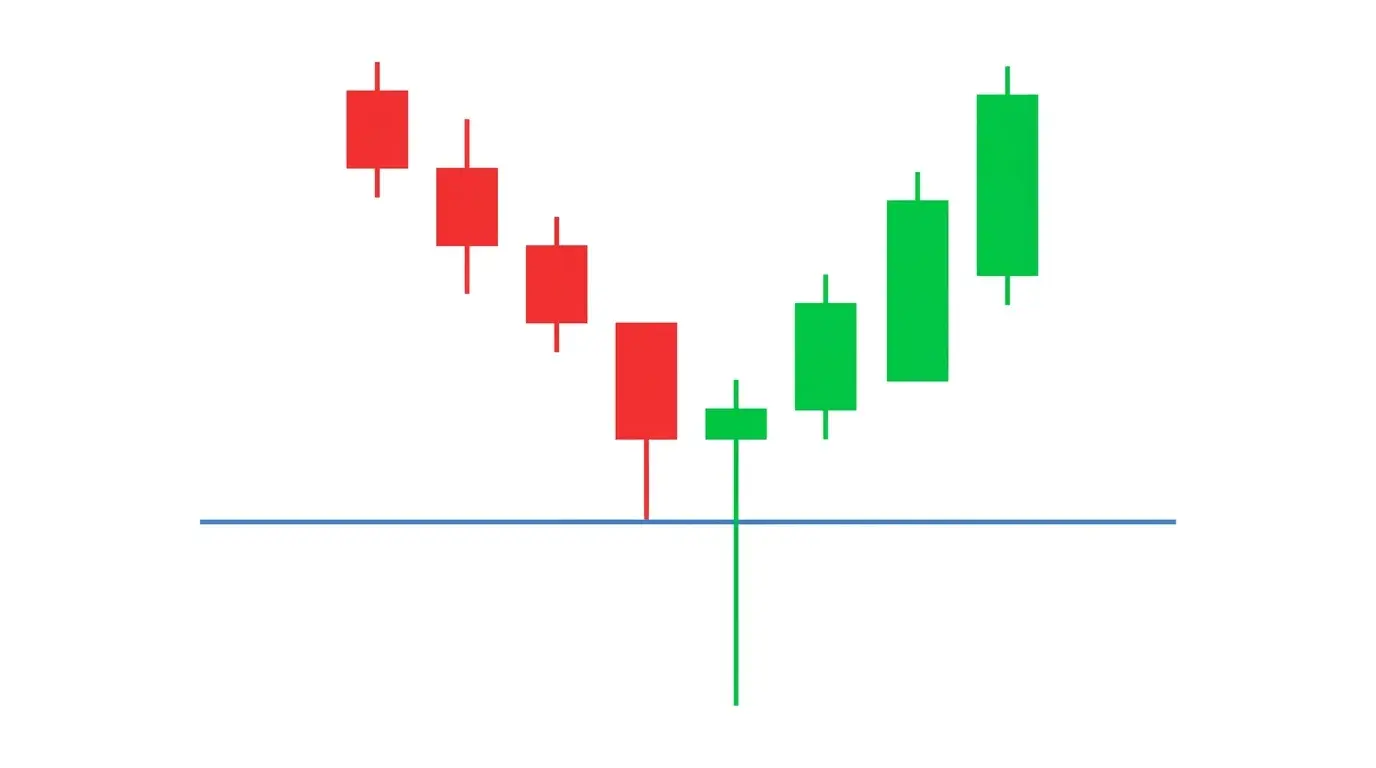
A pin bar is a candle with a tiny body and a long wick pushed into a level, closing back near the open. On a 1-hour EURUSD chart, you see price spike into a prior swing high, reject sharply, and close red in the lower third of its range. That wick is the footprint of aggressive sellers absorbing the spike. You enter on the next candle's open in the opposite direction of the wick, with your stop just beyond the wick's extreme.
The reason pin bars work is pure order flow: the long wick means buyers pushed up into supply, liquidity absorbed them, and the market rejected that price. The classic false positive is a pin bar in the middle of a range with no structure behind it — those are noise, not signal. Confirmation: the wick must pierce a real level (swing high, weekly high, prior day high) and the body must close in the bottom third (for a bearish pin) or top third (for a bullish pin). Stop goes 2-3 pips beyond the wick extreme, never inside it.
2. Break and Retest Entry
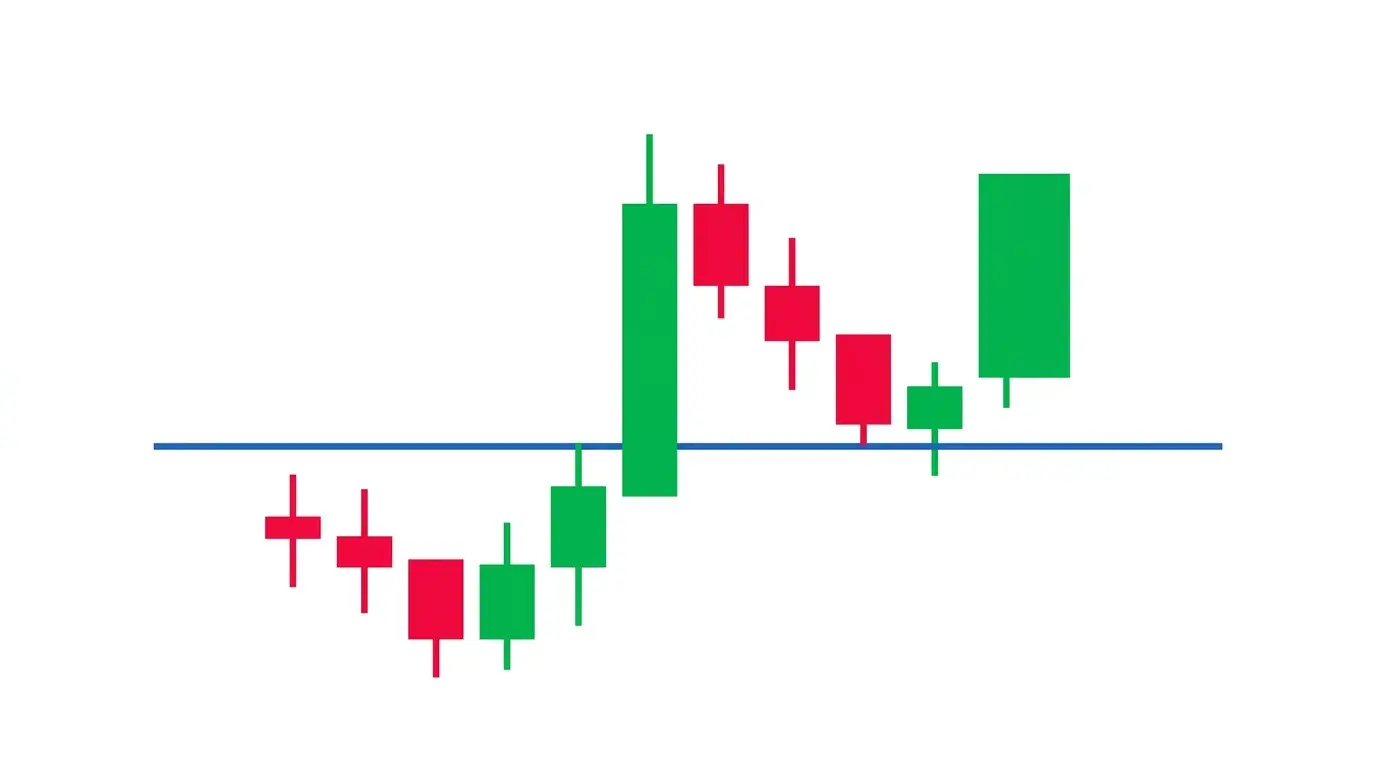
Price breaks a clear resistance level with a strong impulse candle, drifts back down, and retests the broken level from above. If the retest holds — meaning price does not close back below the old resistance — that old ceiling is now a floor. You enter on the retest candle that confirms the hold, with the stop below the retest low.
The mechanical reason this works: market makers and institutional desks left unfilled buy orders underneath that resistance. When price broke through, those orders became stranded above the current price. The retest is the market returning to fill them. The classic false positive is a shallow retest that never actually touches the level — those moves usually fail because the fuel was not refilled. Confirmation: the retest must tag the breakout candle's open or close area, and you want to see a rejection wick or bullish engulfing at that zone before pulling the trigger. No rejection, no trade.
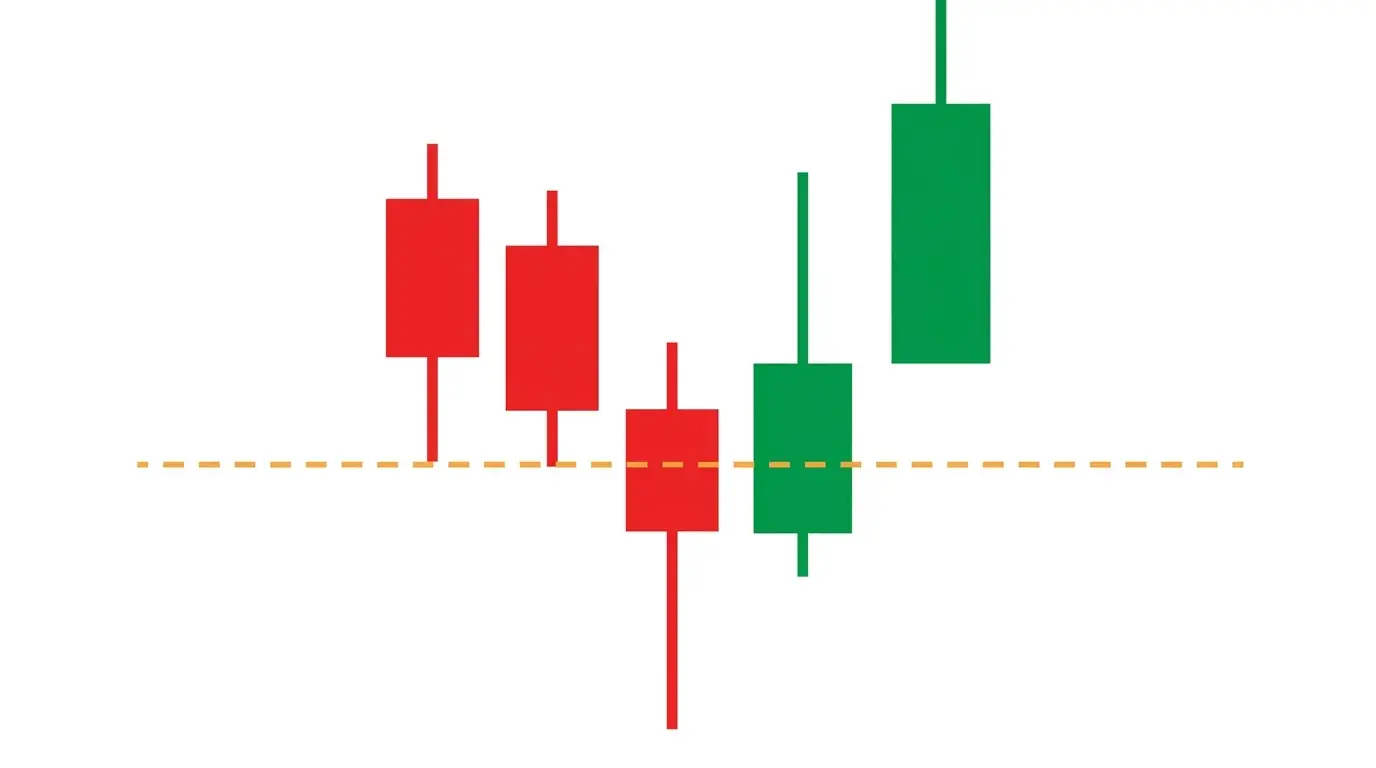
3. Failed Breakdown (Long) Entry
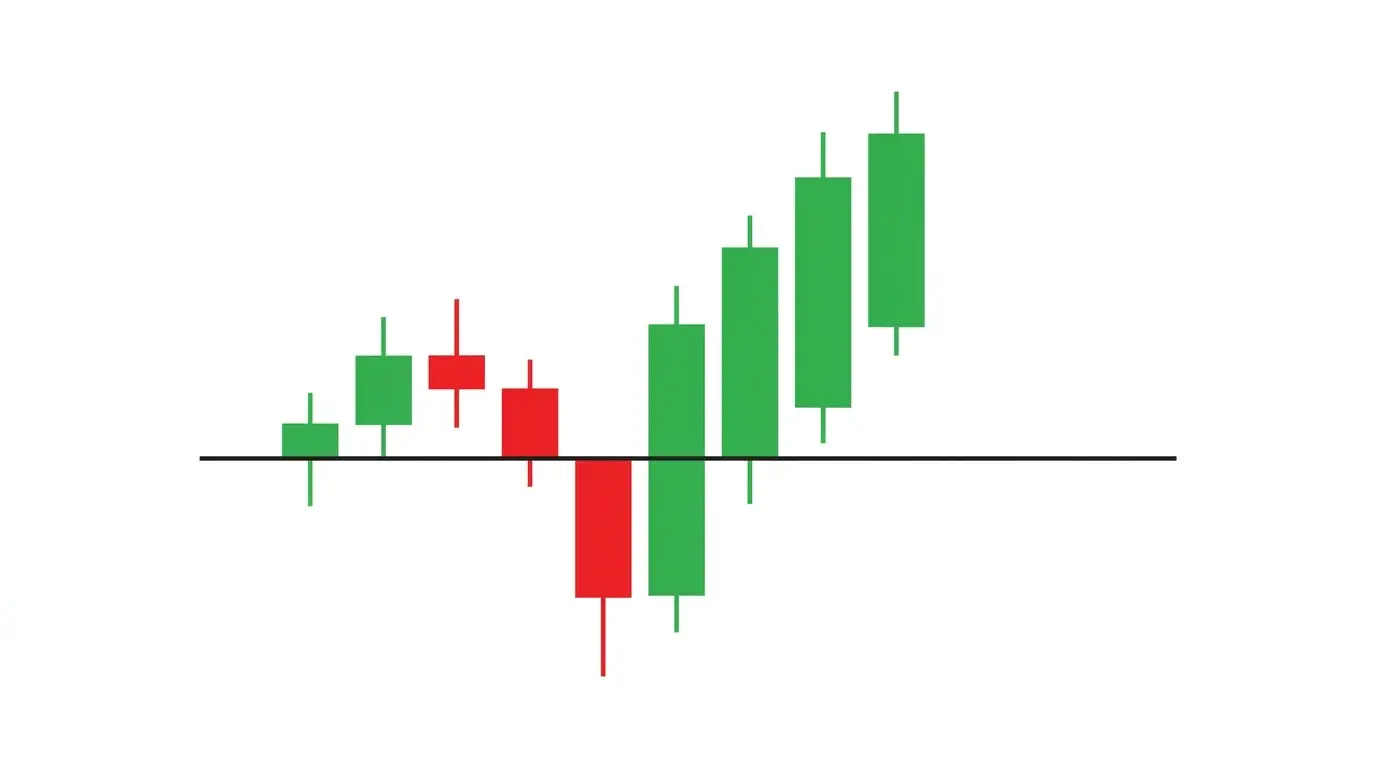
A failed breakdown happens when price slices cleanly below obvious support, triggering sell stops and inviting shorts, then snaps back inside the range within one or two candles. That snap-back is one of the most reliable reversal signals in forex because it means the breakdown had no follow-through — every seller who joined the break is now offside. You enter on the reclaim candle that closes back above the broken level, stop below the failed-breakdown low.
Why it works: smart money often engineers these breakdowns specifically to harvest retail stops, then fills their long orders at the flush low. The classic false positive is a slow, grinding reclaim with no impulse — those tend to roll back over. Confirmation: the reclaim candle should be a strong-body bullish candle closing in the upper third, ideally a bullish engulfing that swallows the breakdown candle. Stop goes 2-3 pips below the flush low, never at round numbers.
4. Liquidity Sweep Reversal Entry
A liquidity sweep is when price runs a cluster of equal highs or equal lows — the zones where retail stop-losses stack — then reverses within the same hour. On GBPJPY you see price trade sideways under a pair of obvious equal highs, rip through them on an impulse, tag liquidity, and immediately dump back inside. Every breakout buyer gets trapped. You enter on the rejection candle that closes back below the swept level, stop above the sweep wick.
The order-flow logic: institutions need liquidity to fill large positions, and equal highs/lows are where retail conveniently parks it. They push price through, absorb the stops as fills, and then let gravity do the rest. The classic false positive is a sweep that keeps going — if the rejection candle cannot close back inside the range, that was not a sweep, that was a real breakout. Confirmation: the rejection must happen on the same or next candle, and ideally you want a liquidity sweep that aligns with a higher-timeframe level. For deeper reading on this mechanic, see smart money concepts.
5. Order Block Tap Entry
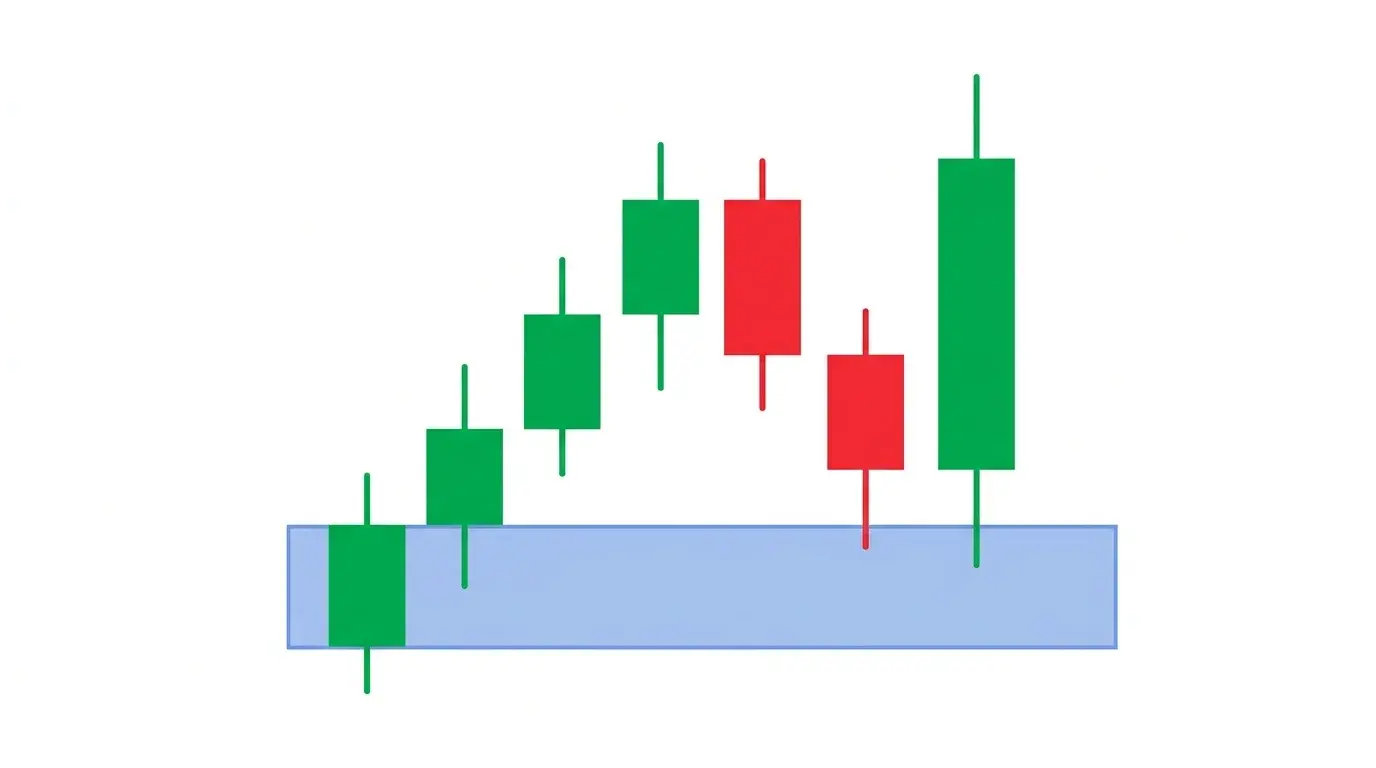
An order block is the last opposite-colour candle before a strong impulsive move away from a zone. In a bullish structure, it is the last bearish candle before a big up-move. When price returns to tap that candle's body, it is revisiting the zone where institutional longs were filled. You enter on the first confirmation candle inside the order block, stop just below the order block's low.
Why order blocks work: big orders cannot be filled at a single price — they leave a footprint of partially filled resting bids. When price retraces to that zone, unfilled interest absorbs sell pressure and flips direction. The classic false positive is tagging a stale order block that has already been mitigated on a prior leg — once a block has been revisited, its edge is spent. Confirmation: the return to the block must happen inside the first pullback, ideally within the same trend leg, and you want to see a clear rejection candle before entering. Blind limit orders at order blocks get wicked out constantly.
6. Fair Value Gap (FVG) Fill Entry
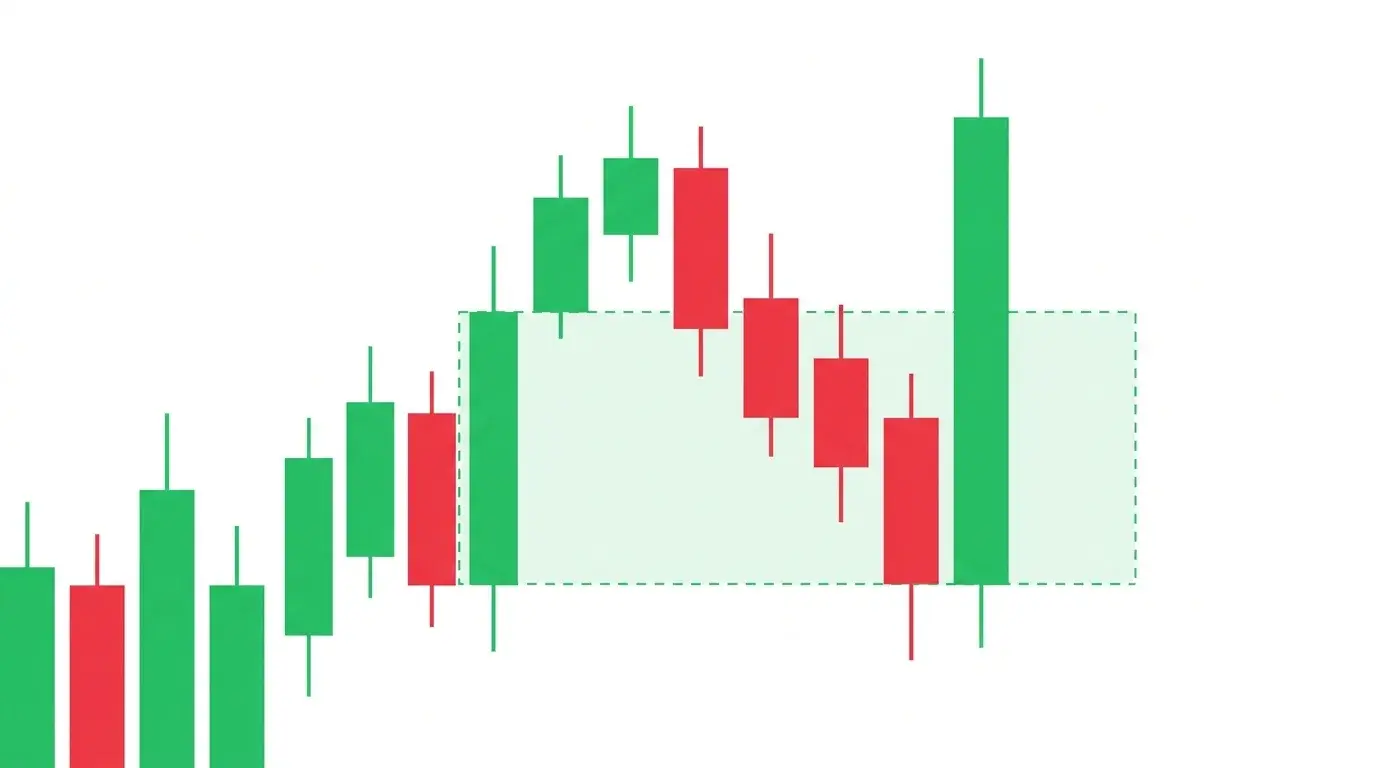
A fair value gap is a three-candle pattern where the wick of candle one does not overlap the wick of candle three, leaving a clean price void on the middle candle. The market treats those voids as inefficient — price tends to return and rebalance them before the trend continues. You enter as price fills into the gap zone, with a stop beyond the imbalance's outer edge.
The mechanical reason FVGs fill: strong impulsive moves happen when one side overwhelms the other so fast that no two-sided trading happens through that range. Eventually the market returns to do price discovery in the skipped zone, fill the orders that never got a counterparty, and continue the original direction. The classic false positive is an FVG in a dying trend — if momentum has already flipped on the higher timeframe, the fill becomes a trend break instead of a continuation. Confirmation: the FVG should form inside a clear higher-timeframe trend, and you want a rejection candle inside the gap before entering. For the full pattern logic, see gap trading patterns.
7. Bullish Engulfing Entry
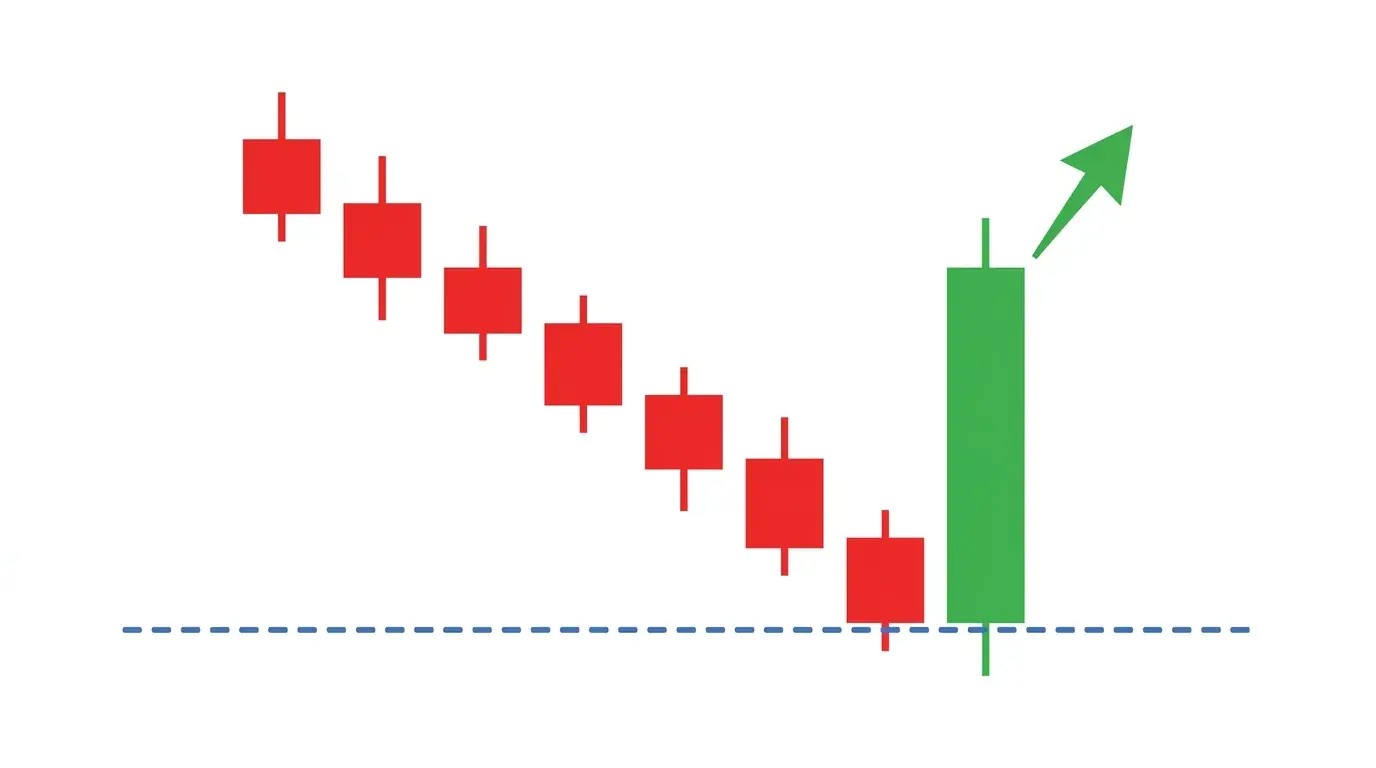
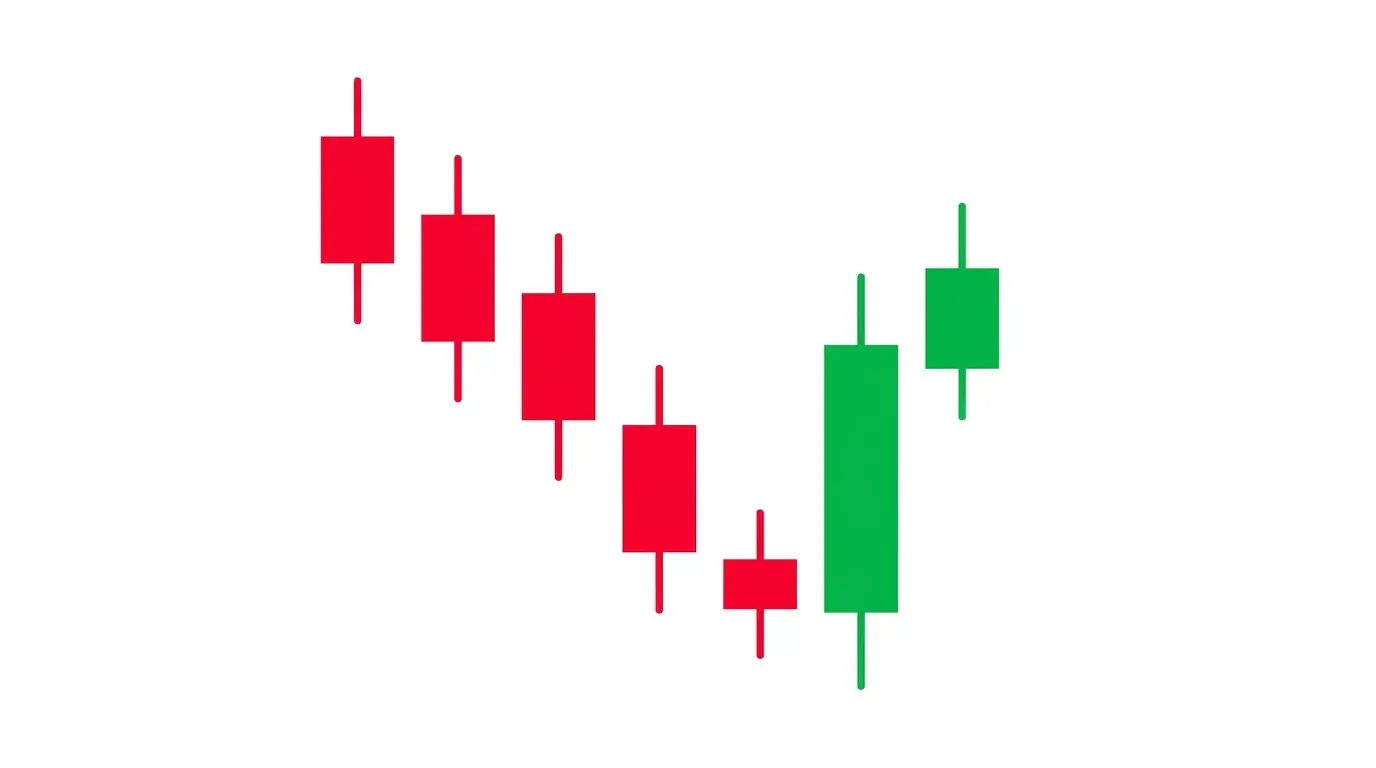
A bullish engulfing is a two-candle pattern: a small-body bearish candle followed by a large-body bullish candle whose real body completely swallows the prior one. The second candle opens at or below the first's low and closes above its high. At a key support level, this pattern is one of the cleanest directional commitments you can find on a chart. You enter at the close of the engulfing candle or on the next open, stop below the engulfing candle's low.
Why engulfing works: the pattern shows a decisive handoff of control. Sellers were driving the small red candle, then buyers stepped in with enough size to erase the entire prior session. That is not accidental volume — that is a positioned bid. The classic false positive is an engulfing in the middle of a range with no level behind it; it just gets eaten by the next swing. Confirmation: the engulfing must happen at a pre-identified support, ideally with higher-timeframe confluence (a daily swing low, a weekly round level, or a prior order block). No level, no trade.
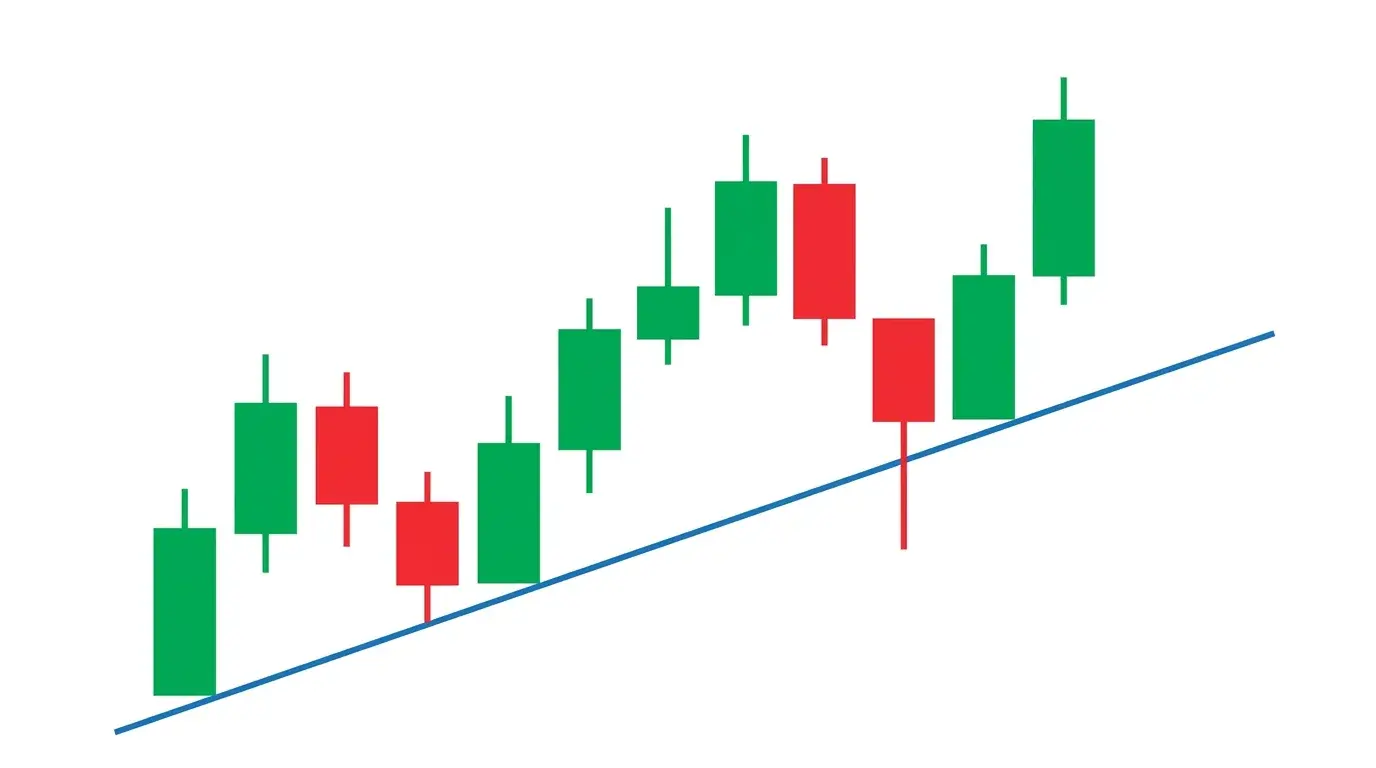
8. Trendline Bounce Entry
A trendline bounce is the simplest momentum entry on the board. Draw a line connecting at least two prior swing lows (for uptrend) or swing highs (for downtrend). When price returns to touch that line and prints a rejection candle, you enter in the direction of the trend with a stop beyond the touch. The more times the line has already been respected, the more eyes are on it, the cleaner the bounce.
The reason trendlines work has nothing to do with geometry and everything to do with the behavioural clustering of orders. Traders see the same slope, draw the same line, and stack bids on touches. The classic false positive is a trendline with only two touches — those are drawings, not structures. A real trendline needs three or more confirmed touches before you trade it. Confirmation: you want a clean rejection wick or small reversal candle exactly on the line, not a violent break-and-close beyond it. If price slices through with an impulse candle, the trendline is done — do not fade the break.
9. Moving Average Pullback Entry
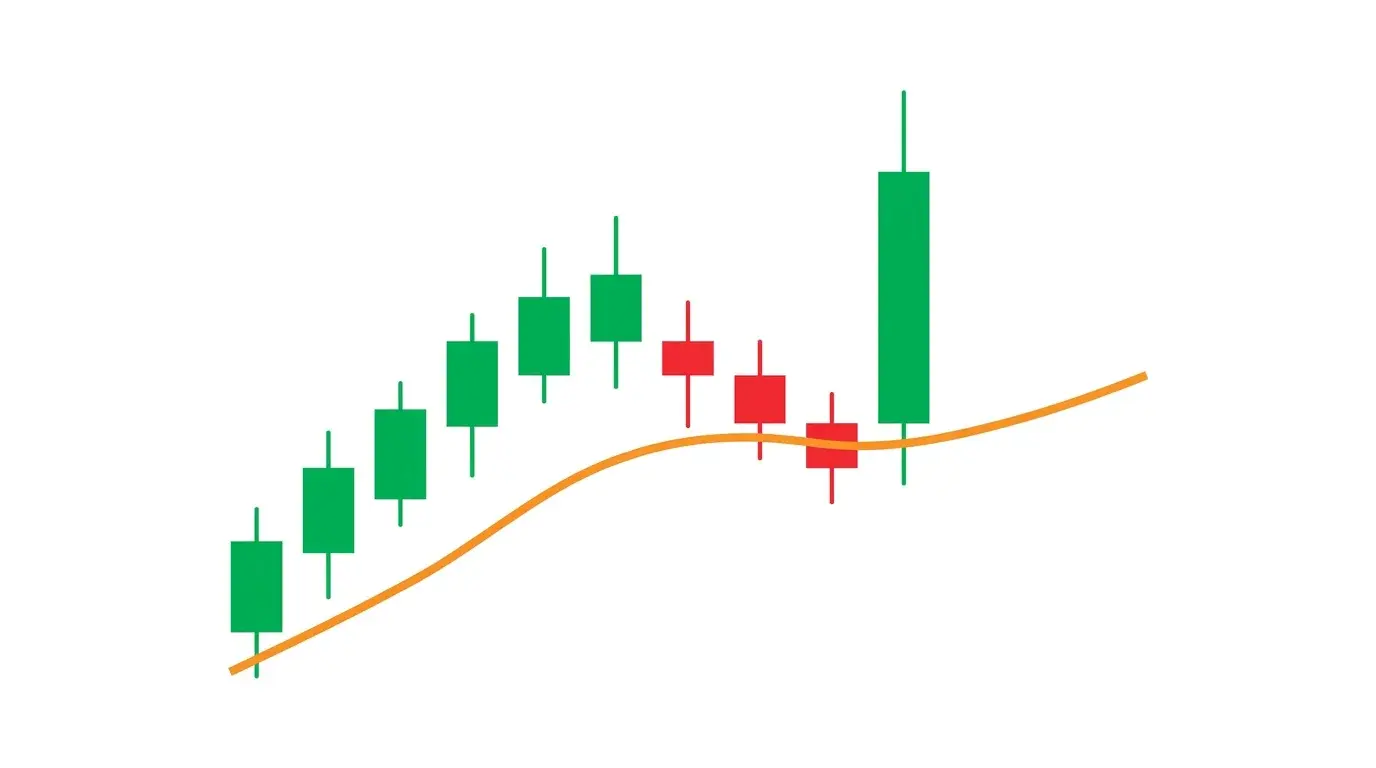
A moving average pullback is the institutional version of a trendline bounce. On a 1-hour or 4-hour chart, a clean trend will repeatedly pull back to a major moving average — the 21 EMA for fast trends, the 50 SMA for medium, the 200 SMA for macro. You wait for price to touch the MA from above (uptrend) or below (downtrend), see a rejection candle, and enter with the trend. Stop goes beyond the MA by one ATR.
Why MA pullbacks work: the major moving averages are among the most-watched dynamic supports in the world. Systematic funds, algos, and retail traders all lean on the same lines, which turns them into self-fulfilling order magnets. The classic false positive is chasing an MA touch in a sideways regime — if the MA is flat, it is not a trend, and the "pullback" is just chop. Confirmation: the MA must be clearly sloping in your trade direction, the trend must have a structural bias (higher highs and higher lows), and the touch should coincide with a rejection candle. Blind limit orders at the MA get filled and then chopped.
10. Level Flip (Resistance-Turned-Support) Entry
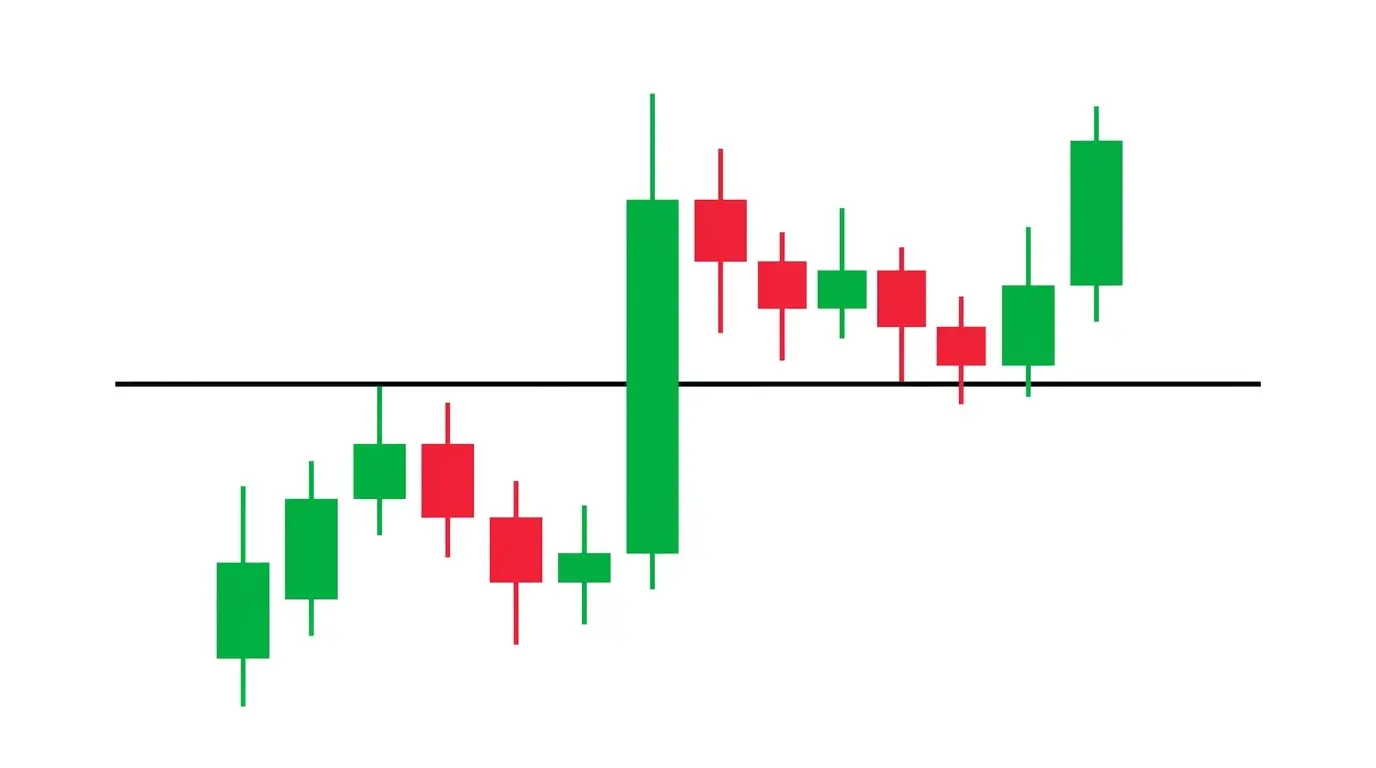
A level flip is the structural cousin of the break-and-retest, but it plays out over a longer timeframe and often around psychologically significant round numbers — 1.1000 on EURUSD, 150.00 on USDJPY, 2000 on gold. Price breaks above a multi-week resistance, consolidates above it for days, and eventually pulls back to test it as support. If the flip holds, you enter on the first bullish rejection candle with a stop below the flip low.
The logic is simple: once a level is broken with real time spent above it, every trader who shorted the old resistance is now underwater and every long who missed the break is waiting to buy. When price returns to that level, both groups pile in simultaneously — shorts cover, longs initiate. The classic false positive is trading a flip too quickly, within the same session as the break — those often fail because the level has not been psychologically absorbed yet. Confirmation: wait for price to spend at least a few sessions above the broken level before trading the first flip-test, and require a rejection candle on the retest. For deeper stop-placement work, see stop-loss placement methods.
The Bottom Line
Ten entries, ten different order-flow stories, one rule that holds for all of them: every good forex entry is a reason before it is a candle. The pin bar at random support is noise. The pin bar at a swept liquidity high at a higher-timeframe resistance is a trade. The break-and-retest without a rejection is a bet. The break-and-retest with a bullish engulfing on the retest is a setup.
Pick two of these setups. The pin bar and the break-and-retest are a great starting pair — one reversal, one continuation, both work on any pair and any timeframe. Spend three months trading only those two. You will learn more about forex entries than you would from ten years of chasing every new indicator on YouTube.
And when you want to see which pairs the macro calendar is actually favouring for these setups on any given day, the ChartSnipe AI News Impact dashboard ranks all 28 majors and crosses by directional conviction every morning — so you stop hunting pin bars on a pair the news flow is already writing off.
Related Articles
Smart Money Concepts: Order Blocks & Liquidity
The ICT and smart-money framework behind order blocks, liquidity pools, and institutional entries.
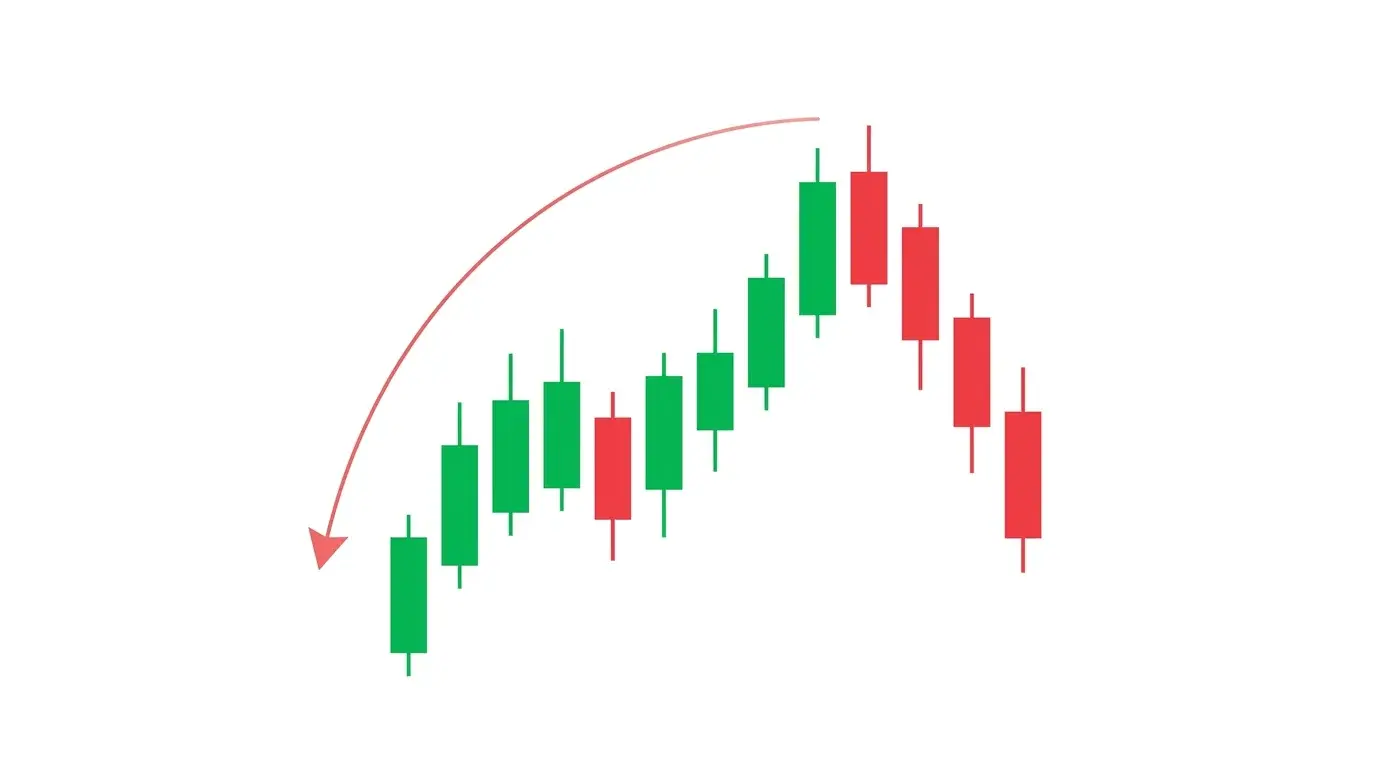
12 Signs the Market Is About to Reverse
The 12 signals that reliably precede reversals — divergences, volume climaxes, failed breakouts, and more.
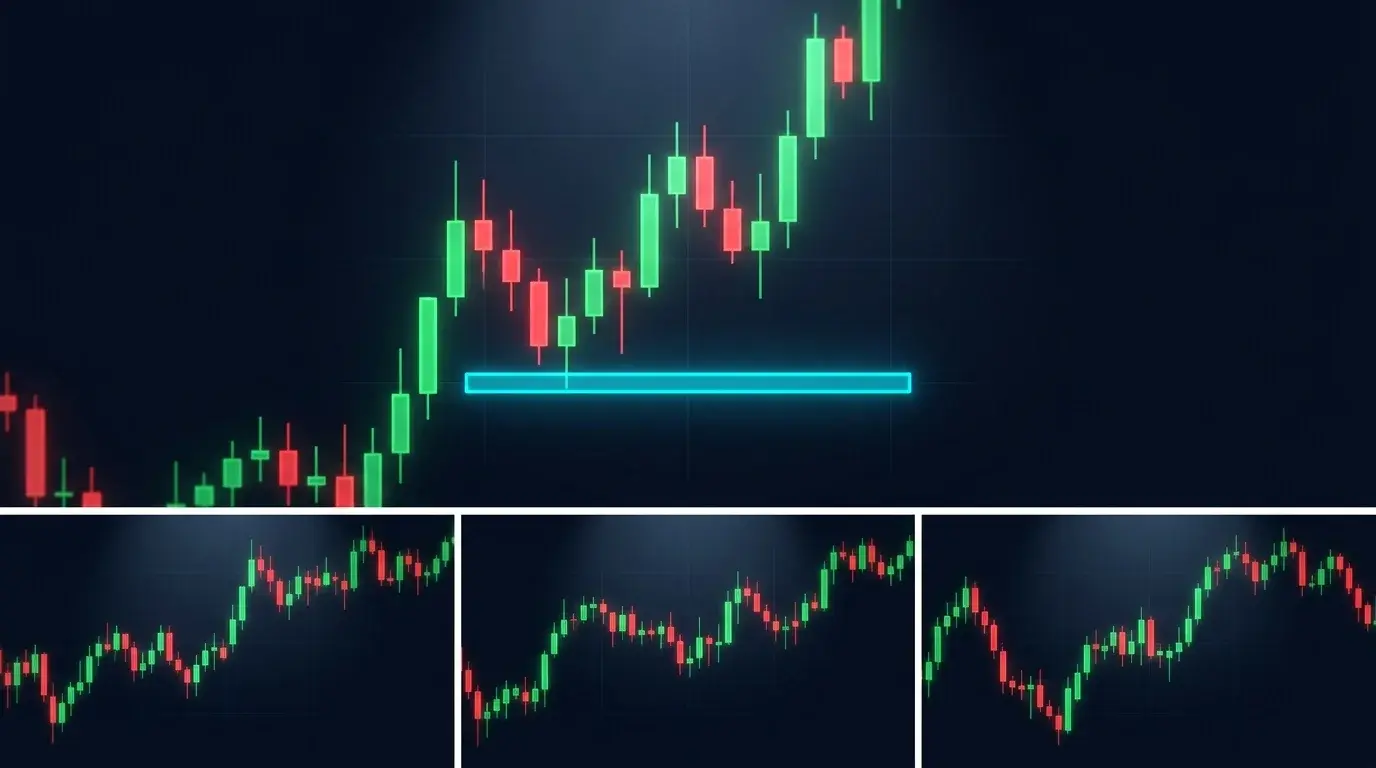
10 Stop Loss Placement Methods
The ten stop-loss methods real traders use — ATR, structural swing, order blocks, liquidity pools, and more.
See which pairs the news flow is favouring today
Daily AI news impact analysis across 28 FX pairs, gold, BTC, and indices — ranked by directional conviction every morning.
Open News Impact Dashboard