
Gap Trading Patterns: Fair Value Gaps & Gap Strategies
How institutional order flow creates price imbalances and how to trade 12 essential gap patterns with precision entries, stop losses, and profit targets.
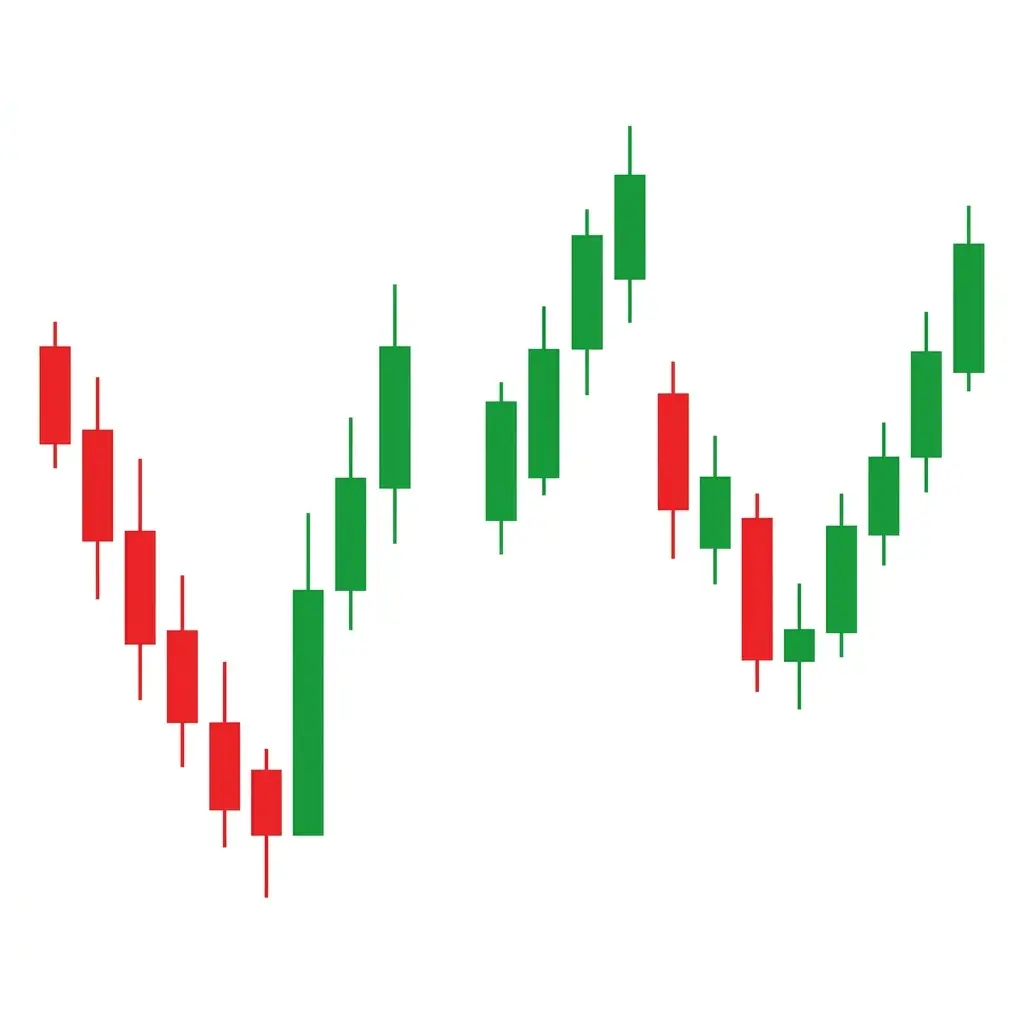
Gaps are among the most revealing structures on any price chart. When price opens significantly higher or lower than the previous close, it exposes a window into institutional order flow, unfilled liquidity, and aggressive directional commitment that no other pattern can match. Every gap tells a story about what happened between sessions: overnight earnings releases, macroeconomic data surprises, central bank decisions, or large block orders executed in pre-market.
Fair value gaps (FVGs) take this concept further. Popularized by smart money concepts (SMC) and ICT methodology, a fair value gap represents a three-candle imbalance where the market moved so aggressively that it left behind an unfilled zone of orders. These zones act as magnets for price, often providing the highest-probability entries available to retail traders who understand institutional mechanics.
In this guide, we break down 12 essential gap trading patterns with real chart examples. You'll learn the difference between common gaps, breakaway gaps, runaway gaps, and exhaustion gaps. More importantly, you'll understand how to identify each pattern, what it signals about the balance between buyers and sellers, and exactly how to structure your trades around these powerful imbalance zones.
Why do gaps form? Gaps appear when institutional participants execute large orders between sessions or when overnight catalysts shift the supply-demand balance so dramatically that market makers must reprice the asset immediately at the open. Every gap represents unfilled orders and trapped traders on the wrong side of the move.
1. Bullish Fair Value Gap (FVG)
What It Looks Like
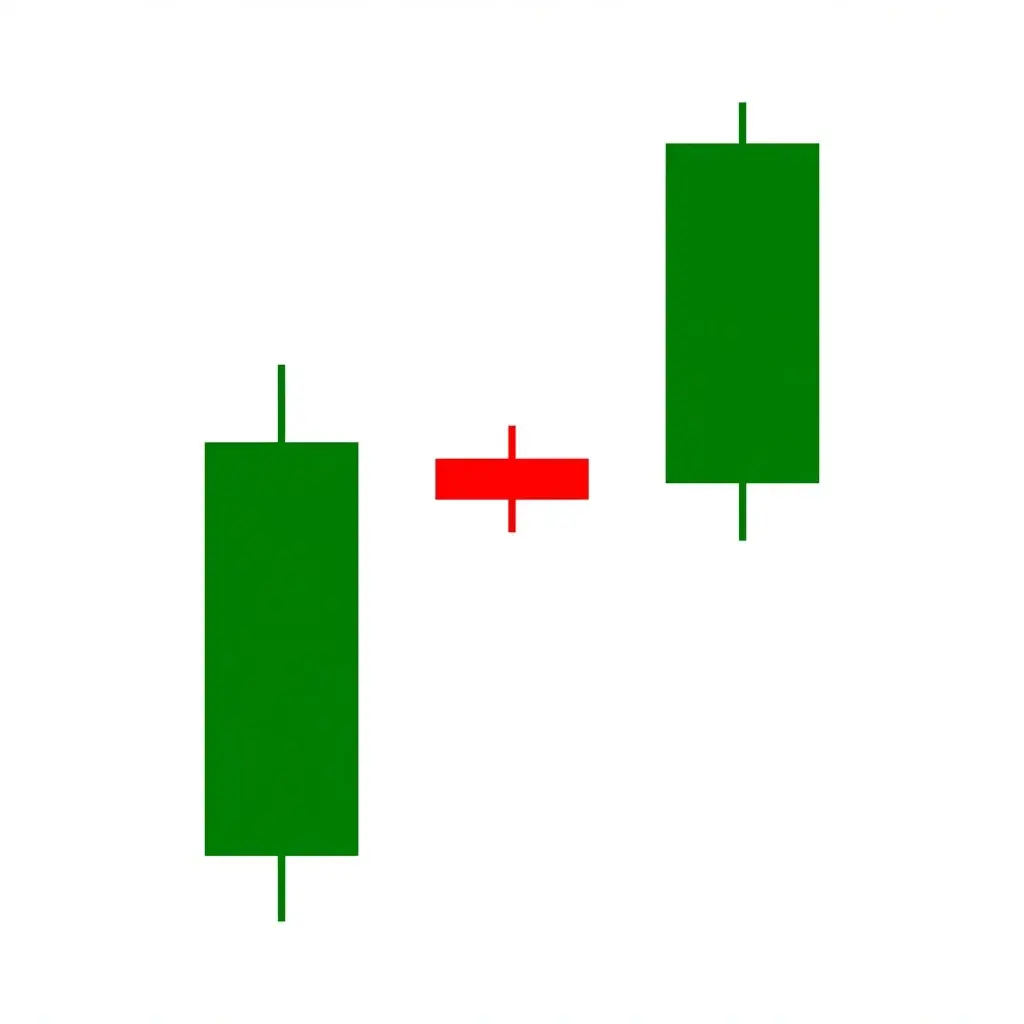
A bullish FVG forms across three consecutive candles where the middle candle is a large bullish displacement candle. The key identifier is that the high of candle one does not overlap with the low of candle three, creating a visible gap zone on the chart. This zone between the first candle's high and the third candle's low represents the fair value gap where no trading actually occurred.
What It Signals
The bullish FVG reveals aggressive institutional buying that overwhelmed all available sell-side liquidity. Smart money moved price so rapidly that not all buy orders could be filled during the displacement move. This creates an imbalance zone where institutions have unfilled orders waiting, which is why price tends to retrace into these zones before continuing higher. The larger the FVG, the stronger the institutional commitment to that price level.
How to Trade It
Wait for price to retrace back into the FVG zone before entering long. The ideal entry is at the midpoint or lower boundary of the FVG, which represents the 50% equilibrium of the imbalance. Place your stop loss below the low of the FVG zone (below candle one's high) and target the next significant swing high or liquidity pool above. Risk-to-reward ratios of 1:2 or better are common with clean FVG entries because the institutional level provides a well-defined invalidation point.
2. Bearish Fair Value Gap (FVG)
What It Looks Like
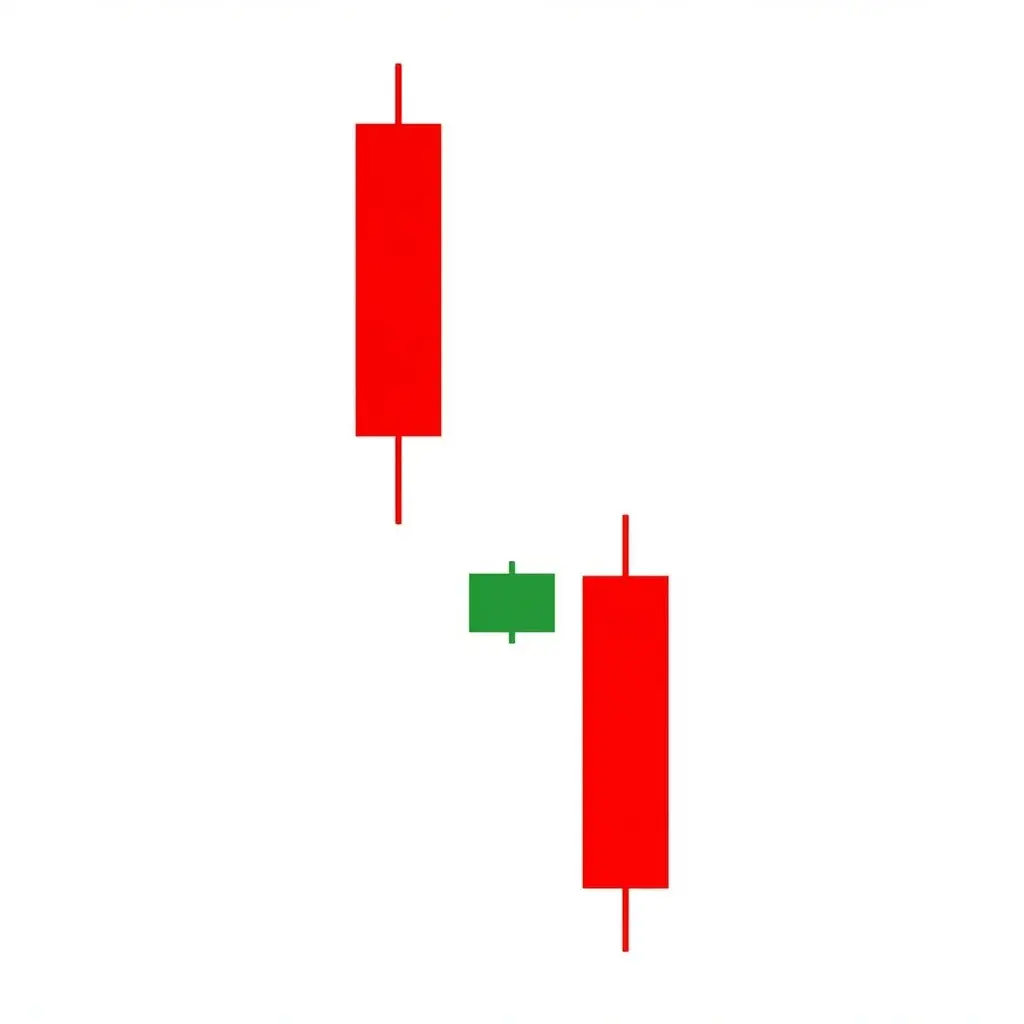
The bearish FVG is the mirror image of its bullish counterpart. It forms when a large bearish displacement candle drives price down so aggressively that the low of candle one sits above the high of candle three. The resulting gap between these two levels is the bearish fair value gap. This pattern is often accompanied by increasing volume and wide-range candle bodies, confirming that real institutional selling is behind the move.
What It Signals
Bearish FVGs indicate that smart money aggressively distributed positions, overwhelming buy-side liquidity in the process. The institutions that initiated the sell-off have unfilled sell orders remaining in the FVG zone. When price retraces up into this zone, these resting sell orders activate, creating selling pressure that pushes price back down. This is why bearish FVGs act as resistance zones and are respected on retests, particularly when they align with higher-timeframe bearish structure.
How to Trade It
Enter short when price retraces into the bearish FVG zone, ideally at the 50% level or upper boundary. Place your stop loss above the top of the FVG (above candle one's low) to give the trade room to breathe while maintaining a clear invalidation level. Target the next swing low, demand zone, or buy-side liquidity pool below. Bearish FVGs on higher timeframes (4H, daily) tend to hold more reliably than those on lower timeframes.
3. Gap and Go
What It Looks Like
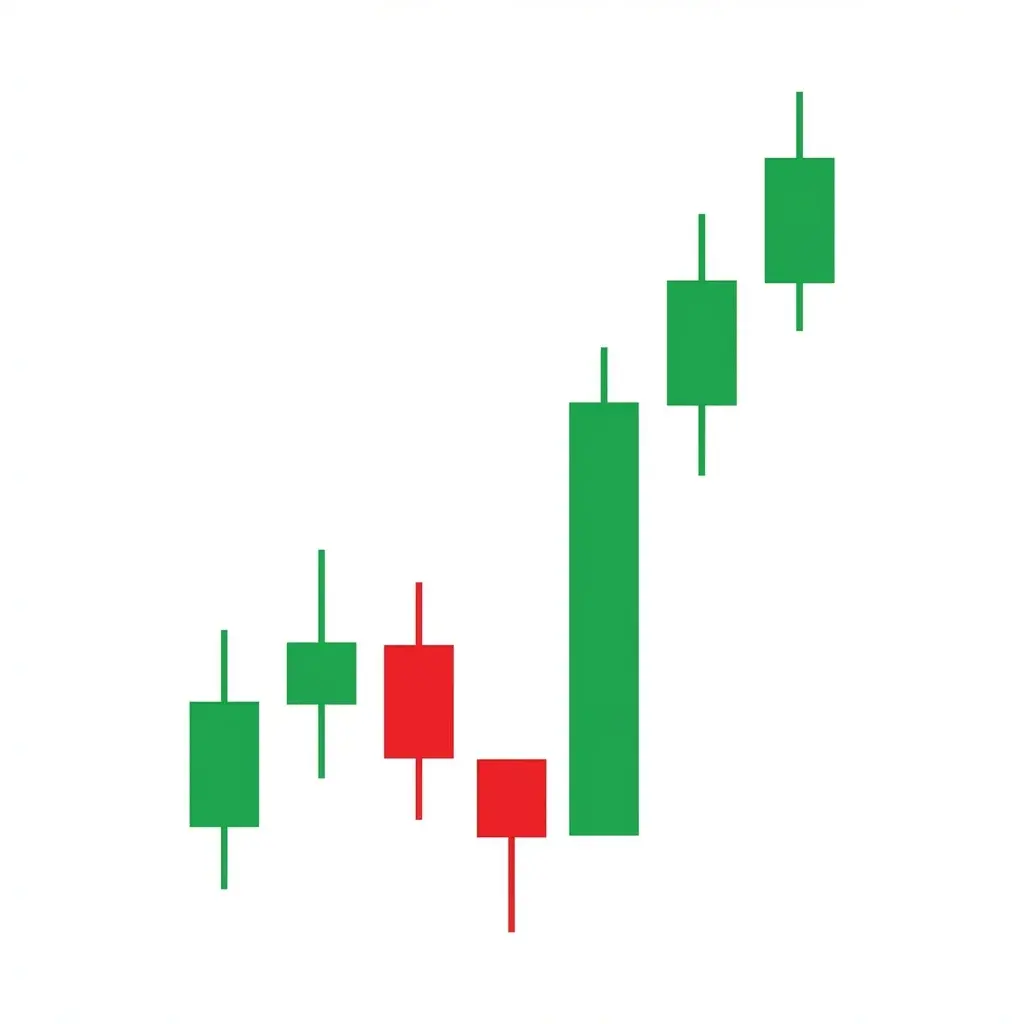
The gap and go is one of the most explosive intraday patterns in trading. Price gaps up significantly at the open, typically above a key resistance level or prior day's high, and instead of fading back toward the gap, it consolidates briefly and then drives higher. The hallmark of a valid gap and go is that the first few candles after the open hold above the gap level, with volume expanding as price pushes to new highs.
What It Signals
A gap and go signals overwhelming demand. When an instrument gaps up and refuses to fill, it tells you that buyers at the open are joined by more buyers who see the gap as confirmation of a new bullish thesis. Short sellers who were positioned overnight get trapped and forced to cover, adding fuel to the rally. This pattern is strongest when driven by a fundamental catalyst like earnings beats, analyst upgrades, or sector-wide news that shifts the narrative.
How to Trade It
Enter long on a break above the opening range high (first 5 to 15 minutes of consolidation after the gap). Place your stop loss below the low of the opening range or just below the gap level, whichever provides a tighter risk profile. Target 1.5x to 2x your risk on the first move, then trail your stop using the low of each 5-minute candle if momentum continues. Volume confirmation is essential; avoid gap and go entries that lack above-average volume.
4. Gap Up Fade
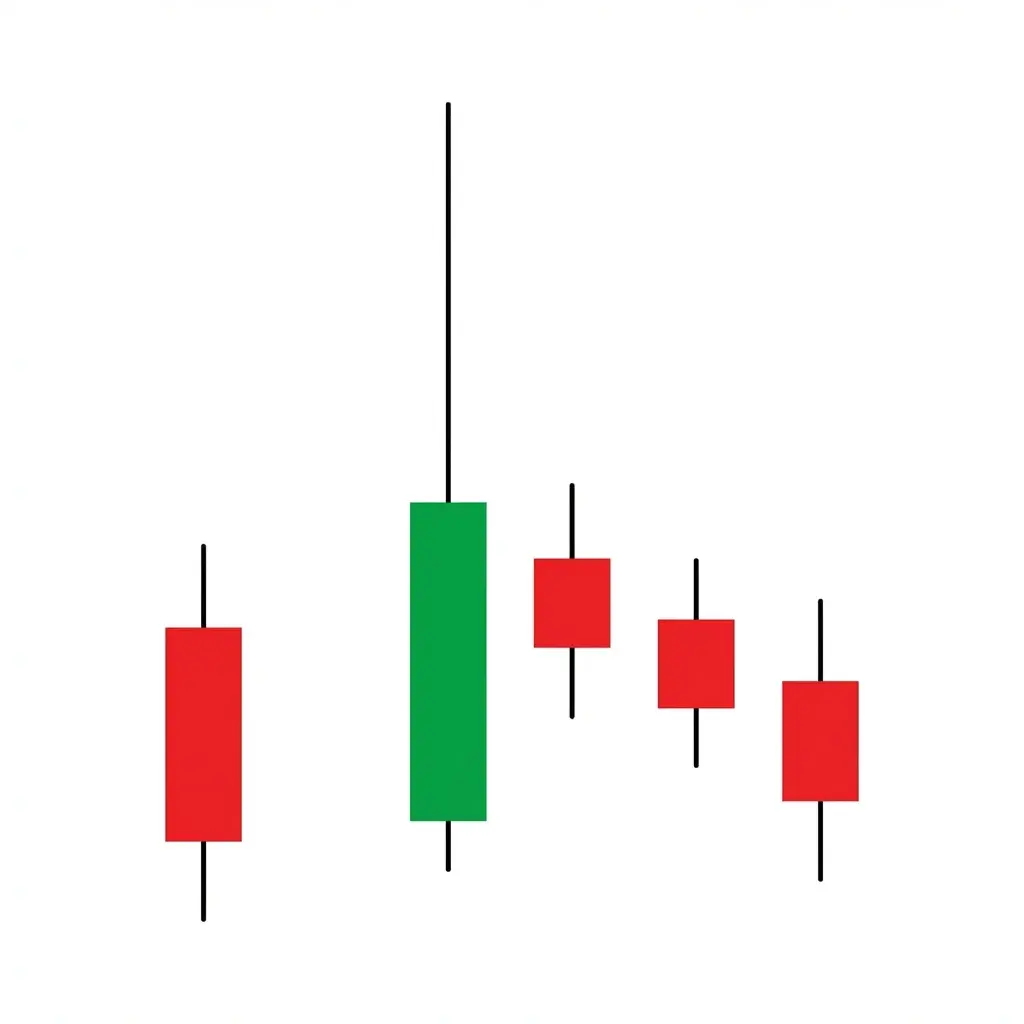
What It Looks Like
The gap up fade begins with an impressive gap higher at the open, often luring retail traders into buying. However, within the first 15 to 30 minutes, price begins to roll over and sell off aggressively, filling the gap and sometimes continuing lower. You'll typically see the opening candle form a bearish reversal pattern (shooting star, bearish engulfing) and volume increase as selling pressure overwhelms the initial gap-up buyers.
What It Signals
The gap up fade reveals distribution by smart money. Institutions that accumulated positions at lower prices use the gap up as an opportunity to sell into the liquidity created by retail buying. The gap effectively becomes a liquidity trap where retail traders buy the excitement while institutions distribute their positions. This pattern is particularly common at major resistance levels, at the end of extended rallies, or when the gap-up catalyst lacks substance.
How to Trade It
Wait for confirmation that the gap is failing. Enter short when price breaks below the opening range low or the first 15-minute candle low. Place your stop loss above the high of the gap-up candle. Target the previous day's close (full gap fill) as your first target, with the option to hold for further downside if selling volume increases. Look for bearish consolidation patterns forming below the gap as additional confirmation.
5. Gap Down Reversal
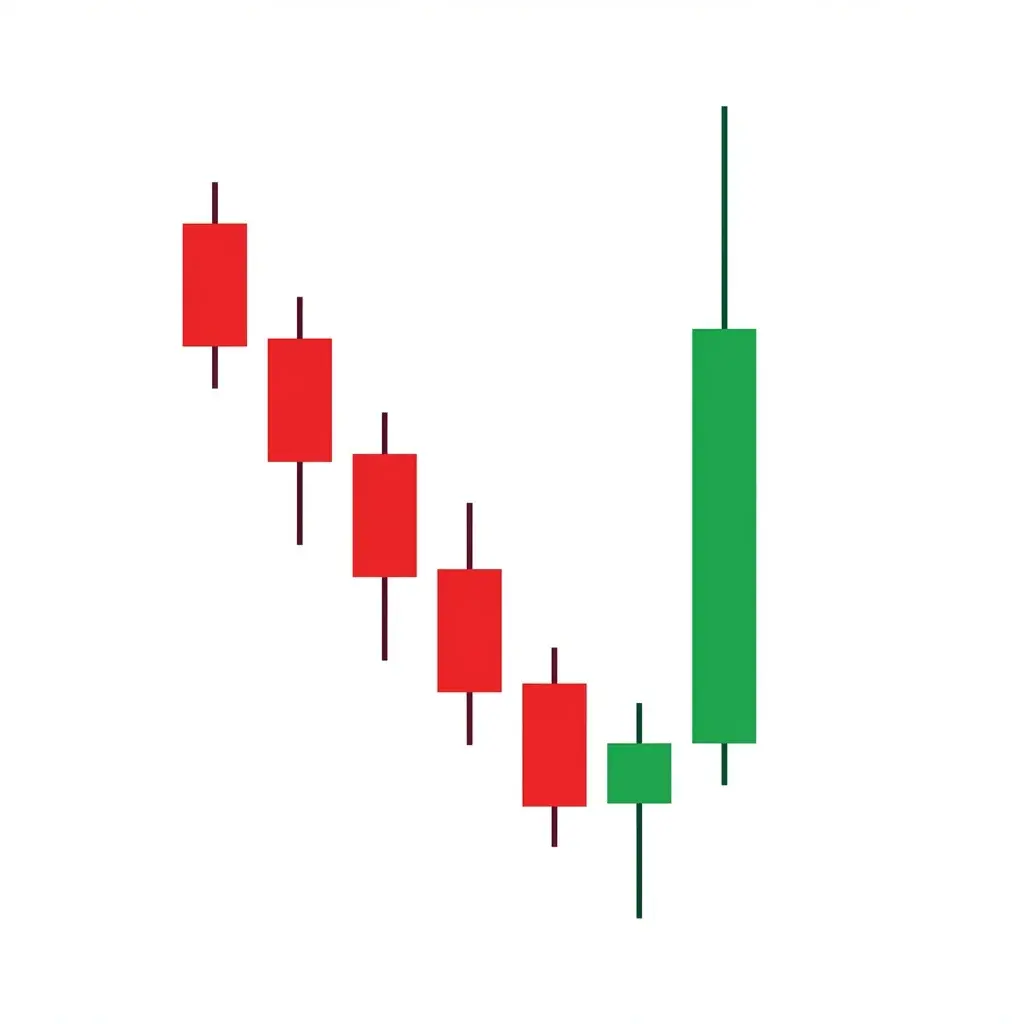
What It Looks Like
Price gaps down sharply at the open, often creating fear and panic selling among retail traders. However, instead of continuing lower, the sell-off quickly finds support and price reverses aggressively back toward the gap level. The reversal candle typically shows a long lower wick (hammer pattern) or a bullish engulfing candle, with volume spiking on the reversal to confirm that real buying interest has entered the market.
What It Signals
The gap down reversal is one of the clearest signs of institutional accumulation at discounted prices. While retail traders panic-sell into the gap down, smart money steps in with aggressive buy orders because they view the drop as an overreaction. The reversal signals that the selling pressure has been fully absorbed and that the institutional bid is strong enough to not only stop the decline but reverse it entirely. These patterns are common near major support zones and after overnight news events that cause temporary dislocations.
How to Trade It
Enter long when price breaks above the first 15-minute candle high after confirming the reversal pattern. Alternatively, enter on the close of a bullish reversal candle (hammer, bullish engulfing) that forms at the gap low. Place your stop loss below the low of the reversal candle or the session low. Target the full gap fill (previous day's close) as the primary objective, with the potential to hold for a move above if momentum is strong.
6. Gap Fill Bounce
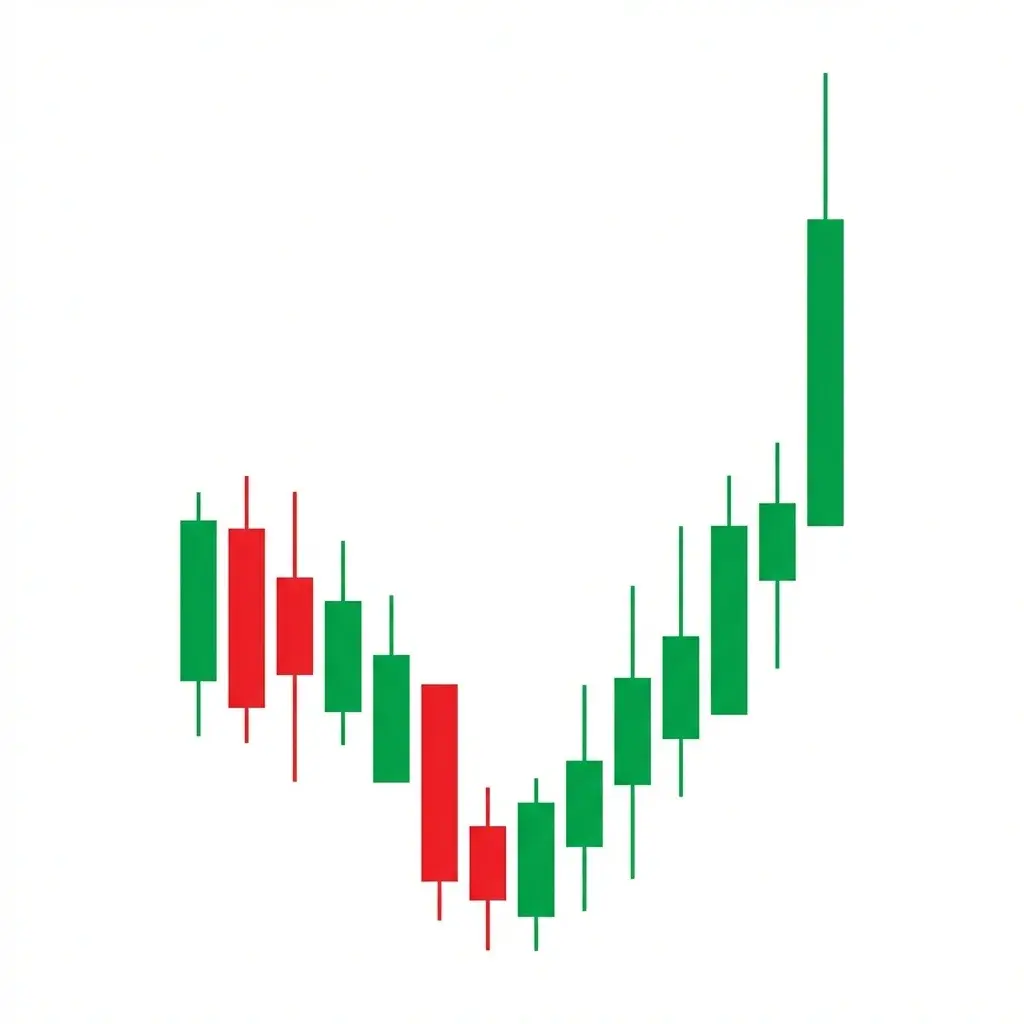
What It Looks Like
After a gap up, price eventually retraces back down to fill the gap over the following sessions. When it reaches the pre-gap close level, instead of continuing through it, price finds support and bounces. You'll see price approach the gap fill level, form a base or reversal candle, and then rally off that level with renewed buying interest. The gap fill level effectively transforms from an open gap into a tested support zone.
What It Signals
The gap fill bounce confirms that the original gap-up move had legitimate institutional backing. When price fills the gap and finds support at that level, it tells you that the same buyers who drove the initial gap are still present and willing to defend their positions. The gap fill effectively retests the breakout level, and the successful hold validates the bullish thesis. This pattern aligns with the concept of "resistance becoming support" and represents institutions re-accumulating at their original entry zone.
How to Trade It
Enter long when price bounces off the gap fill level, confirmed by a bullish reversal candle or a series of higher lows forming at that level. Place your stop loss just below the gap fill zone, giving it 1 to 2 ATR of breathing room. Target the post-gap high as your first objective, with potential for new highs if the broader trend supports it. This is a high-probability setup because you have a clearly defined support level and the institutional context supports continuation.
7. Gap Fill Rejection
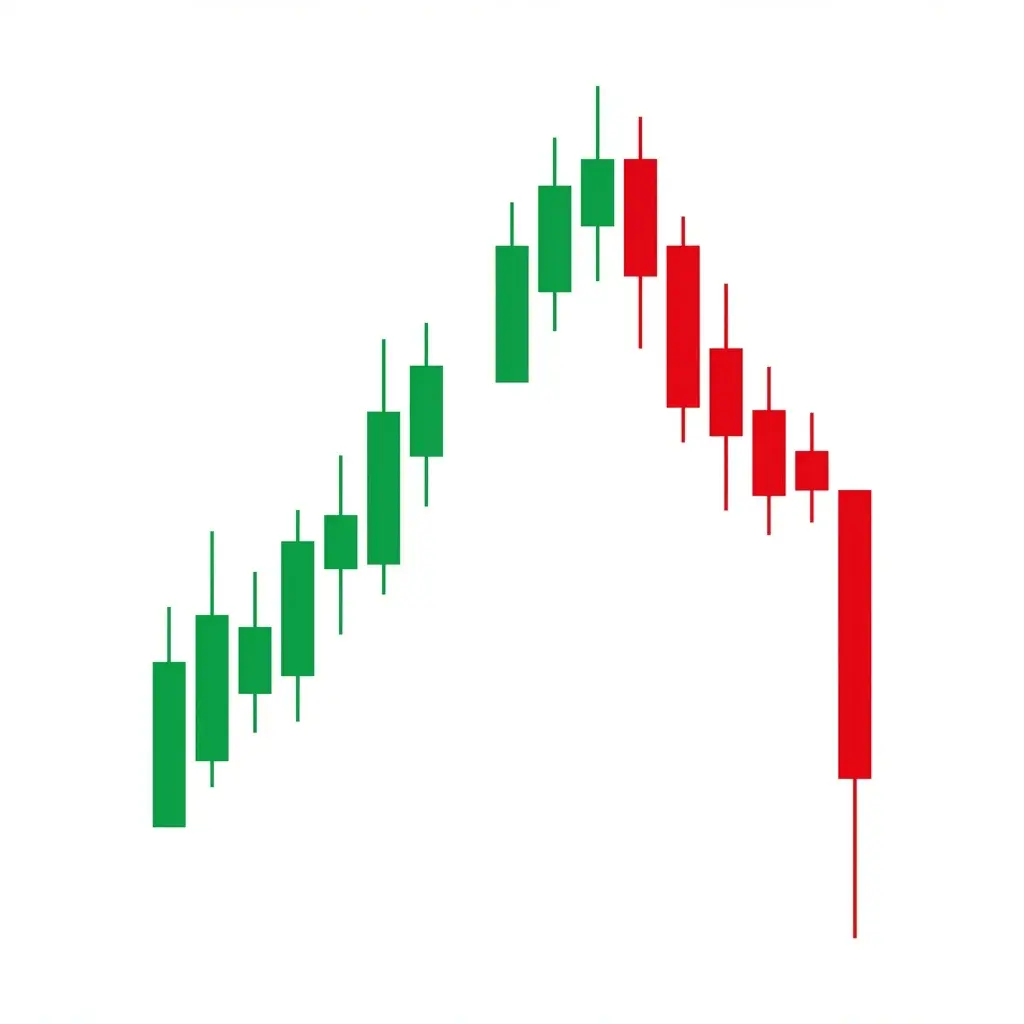
What It Looks Like
After a gap down, price rallies over subsequent sessions attempting to fill the gap. When it reaches the pre-gap close level, sellers emerge aggressively and push price back down. The rejection candle often shows a long upper wick (shooting star) or a bearish engulfing pattern right at the gap fill level. Volume typically spikes at the rejection point, confirming that institutional selling is defending that overhead level.
What It Signals
A gap fill rejection tells you that the sellers who initiated the original gap down are still in control. The attempt to fill the gap was driven by short covering or weak buying, but when price reached the institutional sell zone, smart money used the liquidity to distribute more positions. This pattern confirms that the gap down was not just a one-time event but the beginning of a sustained bearish narrative. The rejection validates that the pre-gap level has now become confirmed resistance.
How to Trade It
Enter short when price gets rejected at the gap fill level, confirmed by a bearish reversal candle (shooting star, evening star, bearish engulfing). Place your stop loss above the gap fill rejection wick or above the pre-gap close. Target the post-gap low and potentially lower if the bearish trend is strong. This pattern provides excellent risk-to-reward because the rejection level offers a tight stop with a wide profit target below.
8. Bullish Gap Momentum
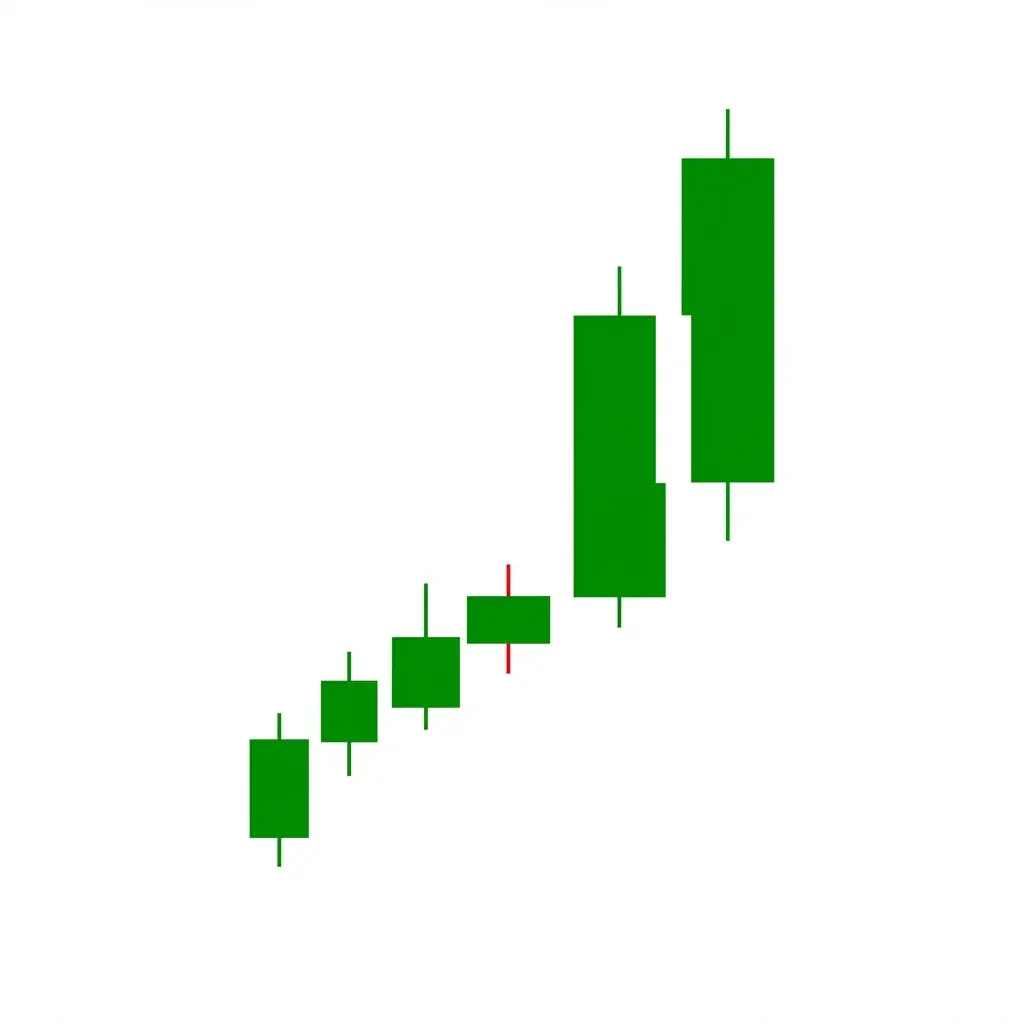
What It Looks Like
Bullish gap momentum features a series of gap-up opens accompanied by strong bullish candles and expanding volume. Each session opens above the prior session's close, and intraday selling fails to fill the gaps. The candles show stacked bullish bodies with minimal upper wicks, indicating that buyers are in complete control from the open through the close. This creates a "staircase" pattern of higher opens and higher closes across multiple sessions.
What It Signals
This pattern reveals sustained institutional accumulation with urgency. When institutions cannot get enough shares or contracts during regular hours, they bid aggressively in pre-market and after-hours, creating the gap-up opens. The fact that each gap holds (no fill) tells you that demand overwhelms supply at every level. This is the type of buying pressure typically seen after transformative news, sector rotation into the asset, or early stages of a major trend reversal that institutions are front-running.
How to Trade It
Enter long on shallow intraday pullbacks during the momentum sequence, using the low of the previous gap as your stop loss. Avoid chasing the gap-up opens; instead, wait for a brief consolidation or pullback within the session before entering. Trail your stop using each successive gap level as the move progresses. Take partial profits at key resistance levels but keep a runner for the trend continuation, as bullish gap momentum can persist for much longer than most traders expect.
9. Bearish Gap Momentum
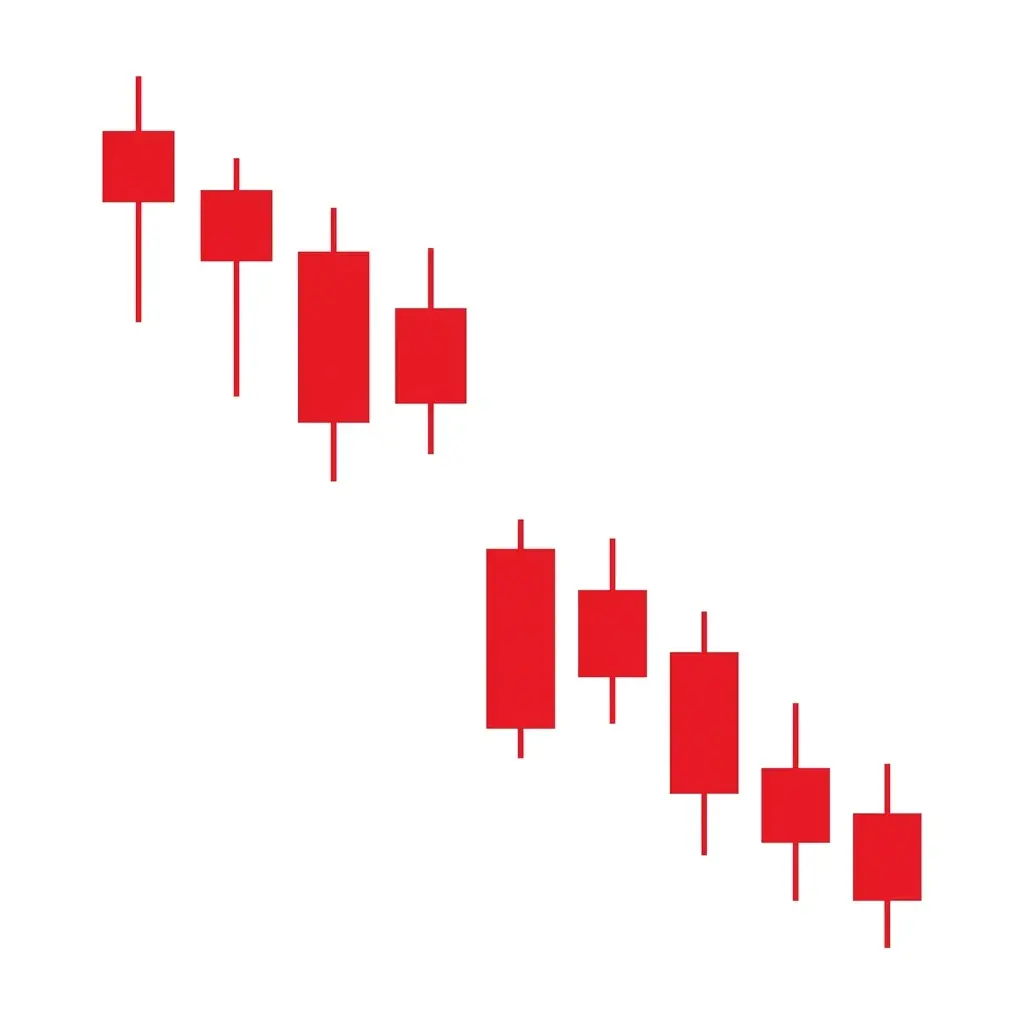
What It Looks Like
The bearish gap momentum pattern shows multiple consecutive sessions opening below the prior close, each with strong bearish candle bodies and increasing sell volume. Intraday rallies fail to close the gaps, and each session closes near or at its low. The chart paints a picture of unrelenting selling pressure with minimal relief rallies, creating a descending staircase of lower opens and lower closes that signals complete seller dominance.
What It Signals
Bearish gap momentum signals aggressive institutional distribution or liquidation. Institutions are selling so urgently that they continue to dump positions in pre-market and after-hours sessions, creating the gap-down opens. The failure to fill any of these gaps confirms that no meaningful buying support exists at these levels. This pattern often appears during earnings disappointments, credit downgrades, sector-wide liquidation events, or when a previously consensus-long position is being unwound by multiple institutional players simultaneously.
How to Trade It
Enter short on intraday rallies that fail near VWAP or the previous session's close. Use the top of the most recent unfilled gap as your stop loss. Avoid trying to buy the dip during active bearish gap momentum as each bounce is typically a bull trap. Trail your stop using each gap-down level as a reference point. Consider increasing position size if volume confirms the selling is institutional rather than retail panic.
10. Exhaustion Gap
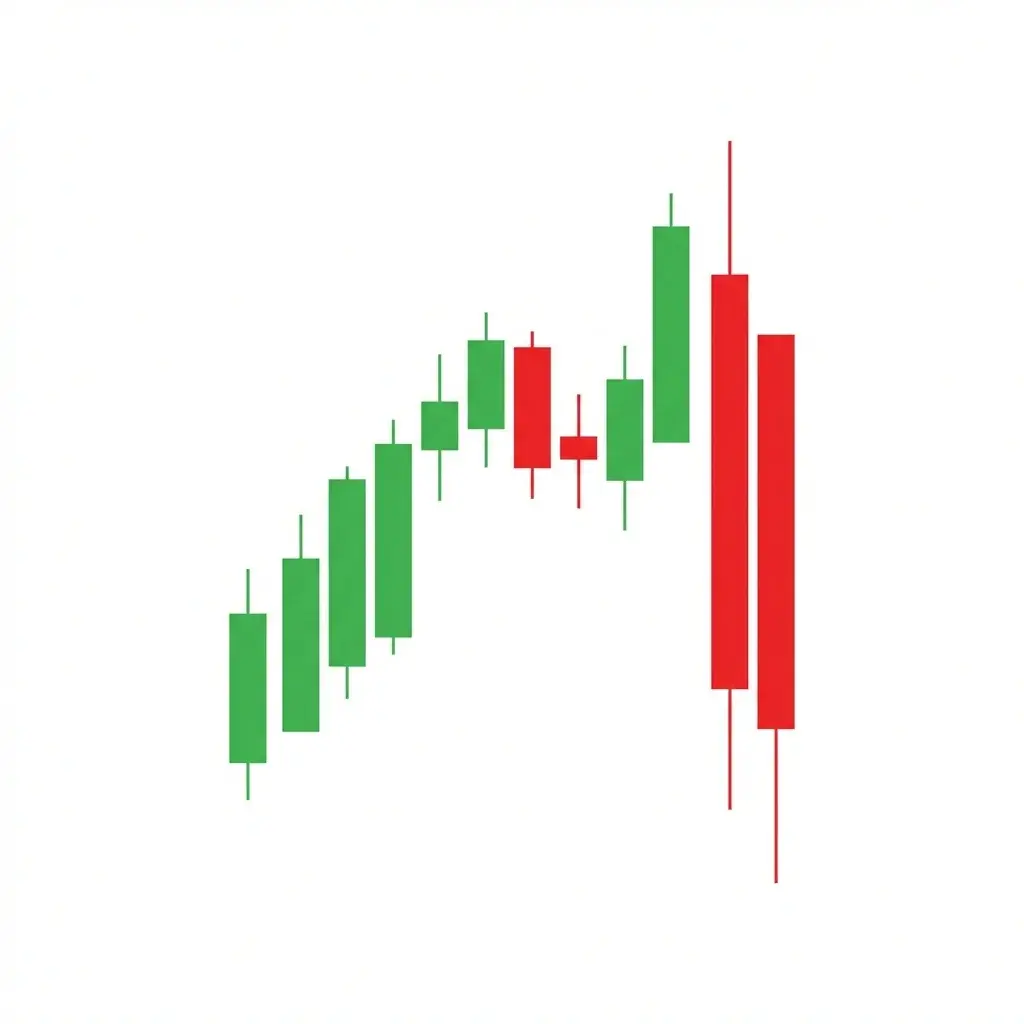
What It Looks Like
The exhaustion gap appears at the end of an extended trend. After a prolonged move in one direction, price gaps in the direction of the trend one final time on climactic volume. However, unlike continuation gaps, the exhaustion gap quickly gets filled within the same or following session. The candle that forms at the gap often shows a reversal pattern: a doji, shooting star (if at the top), or hammer (if at the bottom). The volume spike is crucial, as it represents the last of the late buyers or sellers entering at the worst possible moment.
What It Signals
Exhaustion gaps signal that the prevailing trend has run out of fuel. The final gap represents the last wave of retail FOMO (fear of missing out) traders entering the trend after the smart money has already begun exiting. Institutions use the liquidity provided by these late entrants to close their positions, which is why the gap fills rapidly. The volume climax at the exhaustion gap represents peak participation, after which there are simply no more buyers (in an uptrend) or sellers (in a downtrend) left to push price further.
How to Trade It
Trade the exhaustion gap as a reversal. If the exhaustion gap appears at the top of an uptrend, enter short once the gap begins to fill, confirmed by a bearish reversal candle. Place your stop loss above the high of the exhaustion gap candle. If at the bottom of a downtrend, enter long when the gap fills with bullish reversal confirmation. Target a move back to the pre-trend equilibrium zone or the origin of the most recent momentum leg. Patience is key; wait for the gap to actually start filling before entering.
11. Bullish Runaway Gap
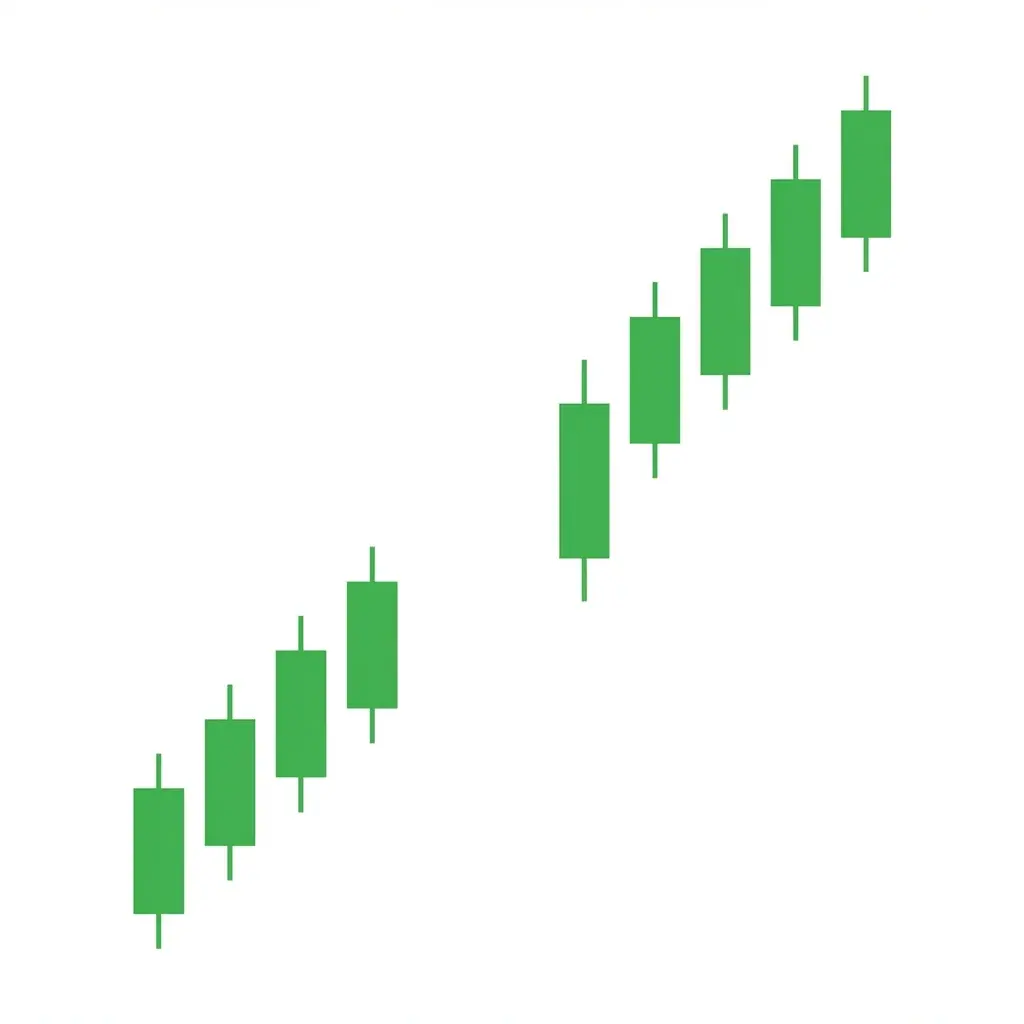
What It Looks Like
The bullish runaway gap (also called a measuring gap or continuation gap) appears in the middle of an established uptrend. Unlike breakaway gaps that initiate trends, the runaway gap occurs after the trend is already confirmed and underway. It gaps up on moderate to strong volume, holds the gap level, and continues higher. The gap typically does not get filled for an extended period. This gap often occurs at the approximate midpoint of the total move, which is why it's also called a measuring gap.
What It Signals
A bullish runaway gap signals that institutional conviction in the trend is accelerating, not fading. New institutional participants are entering the trade, and existing participants are adding to their positions. The gap represents a point where demand was so strong that even overnight there was not enough supply to prevent a gap up. Because this gap appears mid-trend, it confirms that the trend has significant room to run. Institutional algorithms often use runaway gaps as confirmation signals to increase position sizing.
How to Trade It
Enter long at the first intraday pullback after the runaway gap, using the gap level as your stop loss. The measuring property of this gap gives you a built-in target: measure the distance from the trend origin to the gap, then project that same distance above the gap for your profit target. Add to existing long positions if you're already in the trend. The runaway gap level should act as a support zone on any retest, so a retest and hold of this level is another valid entry point for late entries.
12. Bearish Runaway Gap
What It Looks Like
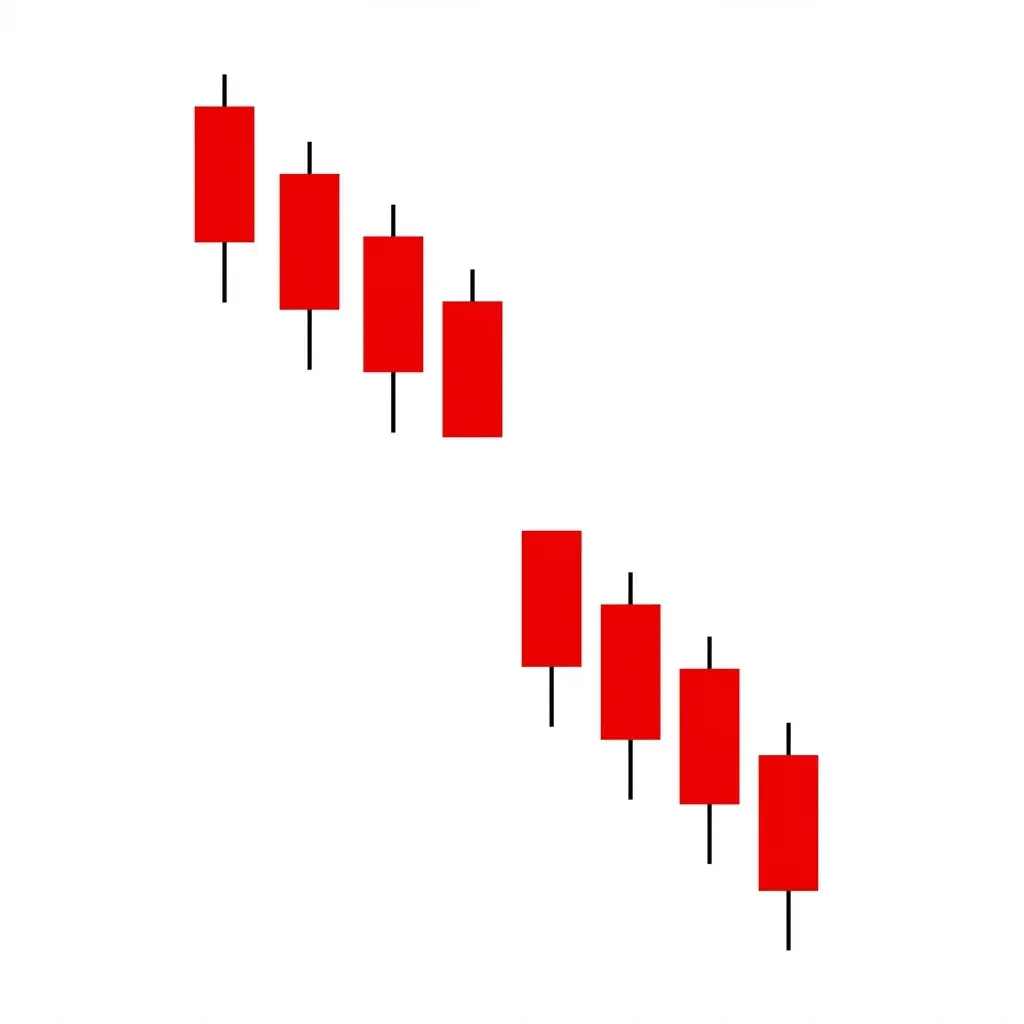
The bearish runaway gap mirrors its bullish counterpart but appears in the middle of an established downtrend. Price gaps down on sustained volume, the gap level holds as resistance on any rally attempts, and the downtrend continues with renewed selling pressure. The gap is clean and decisive, without the climactic volume spike that characterizes exhaustion gaps. This gap typically marks the halfway point of the overall decline, providing a measurable target for the remaining downside.
What It Signals
A bearish runaway gap confirms that the selling is not done and that institutional players continue to press their short positions. Unlike exhaustion gaps that represent the end, runaway gaps tell you that the bears have increased their conviction and are adding to positions. New sellers are joining the trend, fund managers who were waiting on the sidelines are now establishing shorts, and existing longs are throwing in the towel. The fact that the gap does not fill confirms that there are no willing buyers at these levels.
How to Trade It
Enter short on any rally that stalls near the runaway gap level, using a stop loss above the gap as your invalidation. Use the measuring property to project the target: measure the distance from the downtrend origin to the gap, then project that distance below the gap for your downside target. Avoid buying the dip below a bearish runaway gap, as these gaps tend to hold as resistance for weeks or months. If you're already short, the runaway gap is your signal to hold the position and potentially add size.
Types of Gaps Every Trader Should Know
Understanding gap classification is essential for determining how to trade each gap you encounter. Not all gaps are created equal, and the type of gap dictates whether you should trade for continuation, reversal, or a gap fill. Here are the four primary gap types recognized by professional traders and institutional analysts.
Common Gap
Common gaps occur in range-bound or low-volatility environments and are not driven by significant catalysts. They typically get filled within a few sessions because there is no institutional conviction behind the move. Common gaps appear frequently on lower-volume days and near the middle of trading ranges. They are the least tradeable gap type and are best used as mean-reversion opportunities, fading the gap back toward the prior close.
Breakaway Gap
Breakaway gaps mark the beginning of a new trend. They occur when price gaps through a significant support or resistance level, a chart pattern boundary (like a flag, pennant, or wedge), or out of a long consolidation range. They are characterized by a significant increase in volume, confirming institutional participation. Breakaway gaps rarely get filled in the short term and signal that the old trading range is being abandoned in favor of a new price discovery phase.
Runaway Gap (Measuring Gap)
Runaway gaps appear in the middle of a strong trend, confirming that momentum is accelerating rather than fading. They occur on sustained (but not climactic) volume and represent new participants entering the trend while existing participants add to positions. The "measuring" property of this gap is valuable: because it typically appears at the midpoint of a move, you can project the remaining target distance by mirroring the distance already traveled. Runaway gaps rarely fill until the trend fully reverses.
Exhaustion Gap
Exhaustion gaps mark the end of a trend. They appear after an extended move in one direction and are characterized by climactic volume (often the highest volume in the entire trend). The gap represents the final wave of participants entering, typically late retail traders driven by FOMO. Unlike runaway gaps, exhaustion gaps get filled quickly, often within 1 to 3 sessions. When an exhaustion gap forms opposite to the trend direction (e.g., an exhaustion gap down in a downtrend), it can signal the start of a powerful reversal.
Pro tip: The key to classifying gaps correctly is context. A gap that looks identical on a chart can be a breakaway, runaway, or exhaustion gap depending on where it appears in the trend structure, the volume profile, and what catalysts are driving it. Always analyze the gap within the context of the broader market structure and order flow before committing to a trade.
Understanding these gap types transforms how you approach every chart. Combined with smart money concepts like order blocks and liquidity sweeps, gap analysis gives you a complete framework for reading institutional intent on any timeframe. Whether you trade stocks, forex, or crypto, the mechanics of gaps remain consistent because they reflect the universal dynamics of supply, demand, and unfilled orders.
Many of the gap patterns covered in this guide share structural similarities with breakout patterns like flags, pennants, and wedges. A breakaway gap out of a bull flag, for example, combines the power of two high-probability setups into a single trade. Learning to identify where gap patterns intersect with classical chart patterns will significantly improve your edge as a trader.
Frequently Asked Questions
What is a fair value gap in trading?
A fair value gap (FVG) is a three-candle price imbalance where the middle candle moves so aggressively that the wicks of the first and third candles do not overlap. This creates an unfilled zone on the chart representing institutional order flow imbalance. Price tends to revisit these zones before continuing in the original direction, making them powerful areas for trade entries.
How do you trade a gap and go pattern?
To trade a gap and go pattern, wait for a stock or instrument to gap up at the open with strong volume. Confirm that buyers are maintaining the gap by watching for the first 5-minute candle to hold above the pre-market high. Enter long when price breaks above the opening range high, place your stop loss below the gap level, and target 1.5 to 2 times your risk. The key is strong volume confirmation and avoiding gaps that immediately fade.
What is the difference between a runaway gap and an exhaustion gap?
A runaway gap (also called a measuring gap) occurs in the middle of a strong trend and signals continuation with institutional momentum. An exhaustion gap occurs at the end of an extended trend, typically on climactic volume, and signals that the trend is running out of steam. The key difference is context: runaway gaps appear mid-trend with sustained volume, while exhaustion gaps appear after prolonged moves and often get filled quickly as the trend reverses.
Do gaps always get filled in the stock market?
While the common saying is that all gaps get filled, this is not always true in a meaningful timeframe. Common gaps and exhaustion gaps are typically filled within days or weeks. However, breakaway gaps marking the start of a new trend and runaway gaps in strong momentum moves may not fill for months or even years. The probability of a gap fill depends on the gap type, volume characteristics, and the strength of the underlying trend.
How do institutions use fair value gaps for entries?
Institutions use fair value gaps as re-entry zones after aggressive price displacement. When smart money drives price rapidly in one direction, they leave behind unfilled orders in the FVG zone. Rather than chasing price, institutional traders wait for price to retrace into the FVG to fill remaining orders at favorable prices. This is why price often bounces precisely from FVG levels, as large players are actively defending these zones with pending orders.
Once you start marking FVGs on your charts you'll wonder how you ever traded without them. They're everywhere. The tricky part is filtering which ones matter - hint: it's the ones at key structure levels with displacement behind them.
For the bigger picture on how institutions operate, our smart money concepts guide ties all of this together.
Mark FVGs, order blocks, and patterns automatically with ChartSnipe
Try it free