
Why the US Dollar Is So Strong in 2026
The dollar index is back above 100 and pressing its highest levels since May 2025. It did not get there by accident. Three engines are pulling in the same direction — a hawkish Fed, hot inflation, and a safe-haven bid — and a strong dollar reprices everything from gold to EUR/USD to emerging markets. The trade is to stop fighting it.

For most of the last two years the dollar was the trade everyone loved to fade. Twin deficits, a Fed that markets kept insisting was about to cut, and a chorus of “the dollar is finished” takes made shorting it feel like free money. It was not. As of mid-June 2026 the dollar index sits roughly 100.5 to 101, above the psychological 100 line and at its highest since May 2025, and the traders who spent the spring picking its top have the scars to prove it.
Here is the thing about a strong dollar: it is rarely about the dollar in isolation. It is a relative-value verdict — the market deciding that holding dollars beats the alternatives on rates, on inflation-adjusted return, and on safety. Right now all three of those votes are lining up the same way. This piece breaks down the three engines driving the move, what a firm dollar does to gold, EUR/USD and emerging markets, and how to trade with the trend instead of donating to it.
The tool referenced throughout is ChartSnipe — used as a research co-pilot that reads the chart, tracks currency strength, and scores the day's news, while you own the size and the stop.
Key Takeaways
- →DXY is back above 100 (roughly 100.5–101), its highest since May 2025. The move is driven by fundamentals, not just momentum.
- →Engine one is a hawkish Fed. With policy leaning toward holding or hiking rather than cutting, the US rate advantage over peers keeps widening.
- →Engine two is hot inflation running around the low-4% range, which keeps real yields firm and rewards holding dollars.
- →Engine three is a safe-haven bid from geopolitical risk. When the world gets nervous, capital still runs to the dollar.
- →A strong dollar is a headwind for gold, EUR/USD and emerging markets. Trade with the trend, and know the two or three things that could actually break it.
1. DXY back above 100 — what changed
The dollar index measures the greenback against a basket of six major currencies, with the euro carrying more than half the weight. That single detail matters: the DXY is really a bet on the dollar versus Europe, with the yen, pound, Canadian dollar, krona and franc filling out the rest. When you see DXY above 100, the biggest single story inside it is the dollar beating the euro. Keep that in your pocket — it explains most of what the index does.
What changed is that the market stopped pricing a dovish pivot. For a year the consensus was that the Fed would be cutting by now, and the dollar traded with that assumption baked in. As 2026 inflation refused to roll over and the Fed leaned the other way, that assumption got ripped out. The dollar did not need new good news to rally; it just needed the bad-news thesis to be wrong. When a crowded short is forced to cover into a level like 100, the move feeds itself — and that is exactly the kind of breakout the chart below shows.
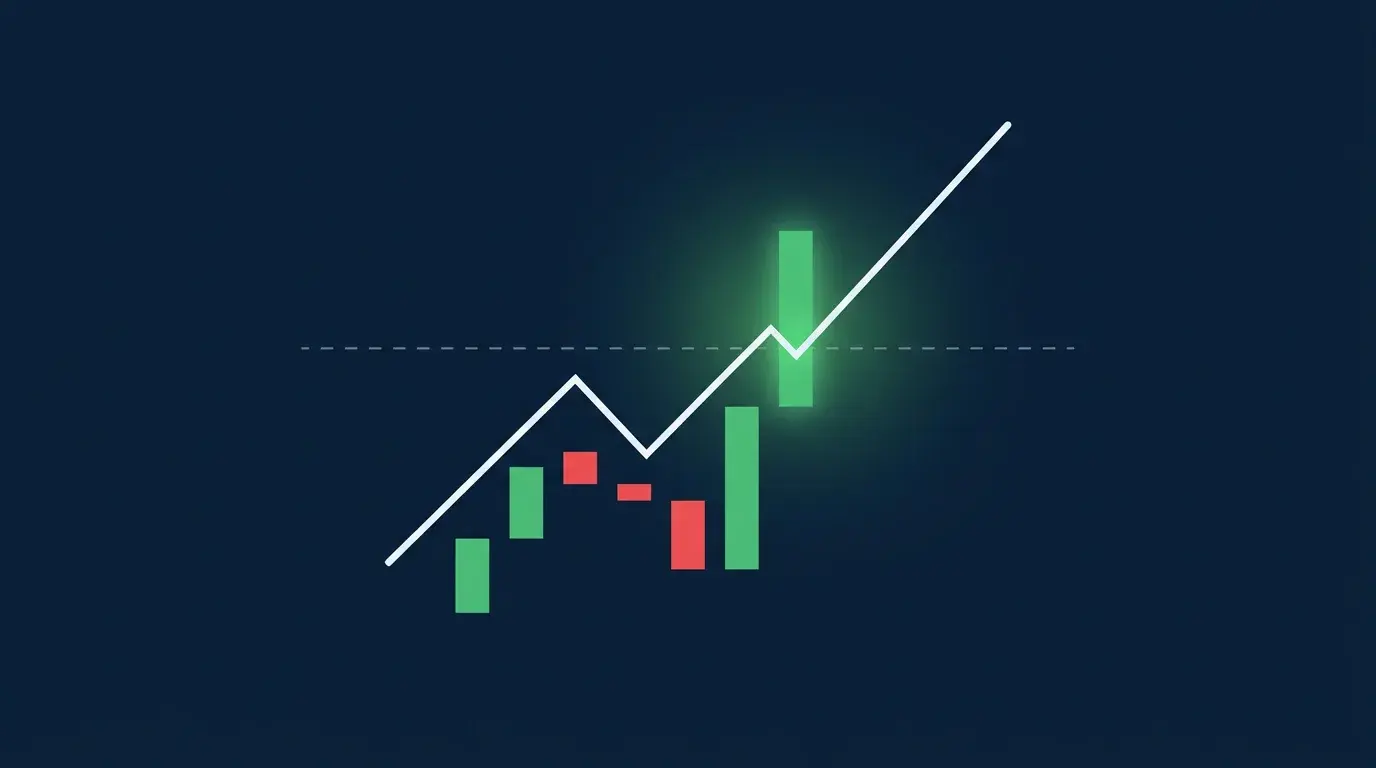
Why the 100 line matters. Round numbers on the DXY are not magic, but they are where option strikes cluster and where narratives flip. Below 100 the story was “the dollar is topping.” A clean hold above it changed the story to “the dollar is trending,” and narratives move flows.
2. The hawkish Fed engine
Currencies are, at bottom, an interest-rate story. Money flows to where it earns the most for the least risk, and in 2026 that is still dollars. The Fed has stayed firmly on the hawkish side of the debate — leaning toward holding, with officials openly discussing hikes rather than the cuts the market spent last year begging for. Every time a Fed speaker pushes back on the idea of easing, the dollar catches a bid, because the market has to reprice a wider, longer-lasting rate advantage for the US.
The mechanism is the rate differential. If the US holds high while the ECB and others sit lower or lean toward easing, the gap between US and foreign yields widens, and that gap is what a carry-seeking investor gets paid to hold dollars. It is not about the absolute level of US rates — it is about the spread versus everyone else. As of mid-June the market is positioned into the June FOMC meeting, and whichever way it lands, the setup going in is a Fed that has been unusually reluctant to blink. The diagram below is the whole thesis in one picture: the US line held above the pack.

This is why chasing the “dollar has peaked” call has been so painful. Shorting the dollar into a hawkish Fed is a bet that policy is about to reverse — and the Fed keeps telling you it is not in a hurry to. Until the rate story turns, the differential is a tailwind, not a headwind. If you want to see how this plays out pair by pair, the currency strength meter guide walks through reading relative strength across the eight majors.
3. Hot inflation and the real-yield story
Here is where a lot of retail traders get the dollar backwards. The instinct is “high inflation debases the currency, so the dollar should fall.” That is true over the very long run and mostly false over the trading horizon. What matters day to day is the real yield — the interest rate minus inflation — and, critically, what the central bank is expected to do about the inflation. In 2026, US headline inflation has run hot, around the low-4% range, and the Fed's response has been to stay tight. That combination keeps real yields firm and the dollar bid.
Think about it from the money's point of view. Hot inflation that a central bank is fighting with high rates is dollar-positive, because the market prices even more tightening. Hot inflation that a central bank is ignoring is dollar-negative, because real returns erode. The US is squarely in the first camp right now. That is the difference between a currency that is strong because of inflation and one that is weak because of it — and it is why the same CPI print can be read two completely different ways depending on the reaction function behind it.
Dollar-positive inflation
- Central bank responds with higher rates.
- Real yields stay firm or rise.
- Market prices more tightening ahead.
- This is the 2026 US setup.
Dollar-negative inflation
- Central bank tolerates the overshoot.
- Real yields fall as prices outrun rates.
- Market prices cuts despite hot prints.
- The classic currency-debasement case.
The practical upshot for a trader: on US inflation days, do not trade the headline number in isolation. Trade the gap between the print and what the Fed is expected to do about it. A hot CPI that reinforces the hawkish path is rocket fuel for the dollar; a hot CPI that the market decides the Fed will look through is not. Reading that reaction function correctly is most of the edge on data days — and it is why the calendar deserves as much attention as the chart, a point the high-impact forex news events guide drills into.
4. The safe-haven bid
The third engine is the one that does not show up in a rate spreadsheet: fear. When geopolitical risk rises — conflict, energy shocks, the threat of something spilling over — global capital does what it has always done and runs to the deepest, most liquid asset it can find. That is US Treasuries, and to buy them you buy dollars. The safe-haven bid is why the dollar can rally even on days when the growth story looks shaky: in a scared market, “return of capital” beats “return on capital,” and nothing says return of capital like the dollar.
This bid is the wildcard of the three because it is event-driven and can switch on in an afternoon. It also stacks awkwardly with the other two engines. Normally a haven bid and a hawkish Fed would not both be firing at once — risk-off usually brings rate-cut expectations forward. In 2026 they are firing together, which is a big part of why the dollar move has been so persistent. Two independent buyers, the carry trader and the frightened one, are leaning on the same currency at the same time.

5. What a strong dollar does to majors, gold and EM
A strong dollar is not a standalone trade — it is a repricing of the entire board, because so much of the world is quoted against it. Start with EUR/USD, the single biggest piece of the DXY. A rising dollar is, almost by definition, a falling EUR/USD, and the pressure compounds when the Fed is hawkish while the ECB leans easier. The same logic runs through the majors: the dollar-strong tape is a headwind for anything measured against it.
Gold is the cleanest inverse of all. It is priced in dollars and pays no yield, so a firmer dollar and firm real yields are a double blow — each dollar buys more gold, and the opportunity cost of holding a zero-yield metal rises. That is a large part of why gold came off its early-2026 highs even with plenty of haven demand around; the dollar and real yields were pulling the other way. We unpacked that tug-of-war in the guide to trading gold volatility.
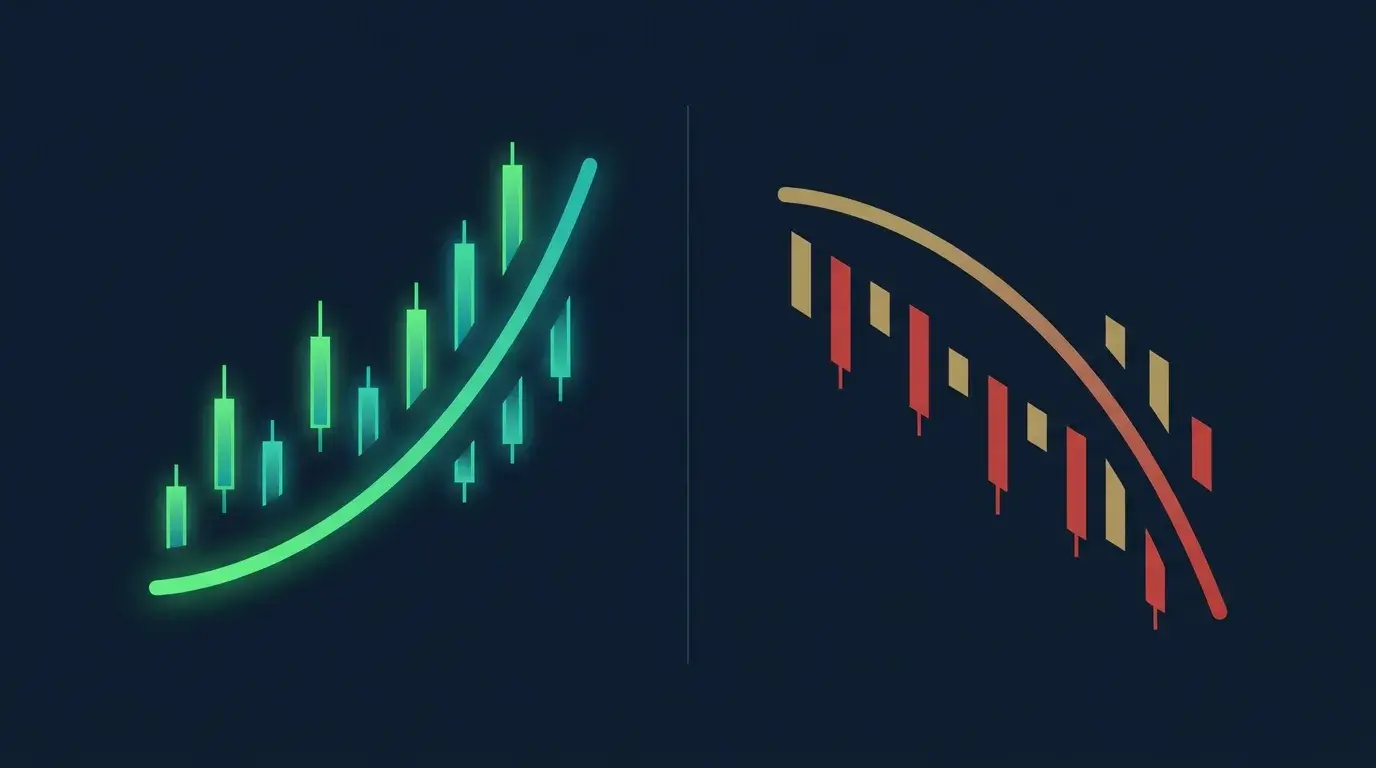
Emerging markets feel it hardest of all. A lot of EM debt is issued in dollars, so when the dollar climbs, the cost of servicing that debt rises in local-currency terms even before any default risk is priced. Capital rotates out of higher-risk EM assets and back toward US safety, EM currencies weaken, and their central banks are often forced to defend or hike into weakness. A strong dollar tightens financial conditions for half the planet — it is why the DXY is watched far outside the FX desk. For the mechanics of how these moves travel between instruments, the forex correlation guide lays out which pairs move together and which move opposite.
6. Trading with the dollar trend, not against it
The single most expensive habit in a trending dollar market is trying to be the hero who calls the top. It feels clever and it pays terribly. Trends persist precisely because the fundamentals underneath them persist, and the dollar's three engines are not the kind that flip overnight. So the base case is simple: align with the dollar. Favour USD longs against the weaker currencies, and be honest about the fact that being long gold or EUR/USD into dollar strength is fighting the tape.
Aligning with the trend does not mean buying dollars blindly at any price. It means expressing the view through the cleanest pair, sizing to a structural stop, and respecting the calendar. A currency strength read shows you where the dollar is strongest — long USD against a currency whose own central bank is easing is a stronger expression than against one that is also hawkish. Then let the trend do the work and take partials into extension rather than flipping to a countertrend short on the first red candle.
Do
- Trade with the dollar until the rate story turns.
- Pick the pair where USD is strongest vs a weak peer.
- Size to structure and lighten into US data.
- Treat “overvalued” as a sizing flag, not a short signal.
Don't
- Try to pick the exact top of a fundamental trend.
- Hold full size through FOMC or CPI on a hunch.
- Fade the dollar just because it “feels” high.
- Be long gold or EUR/USD and call it a hedge.
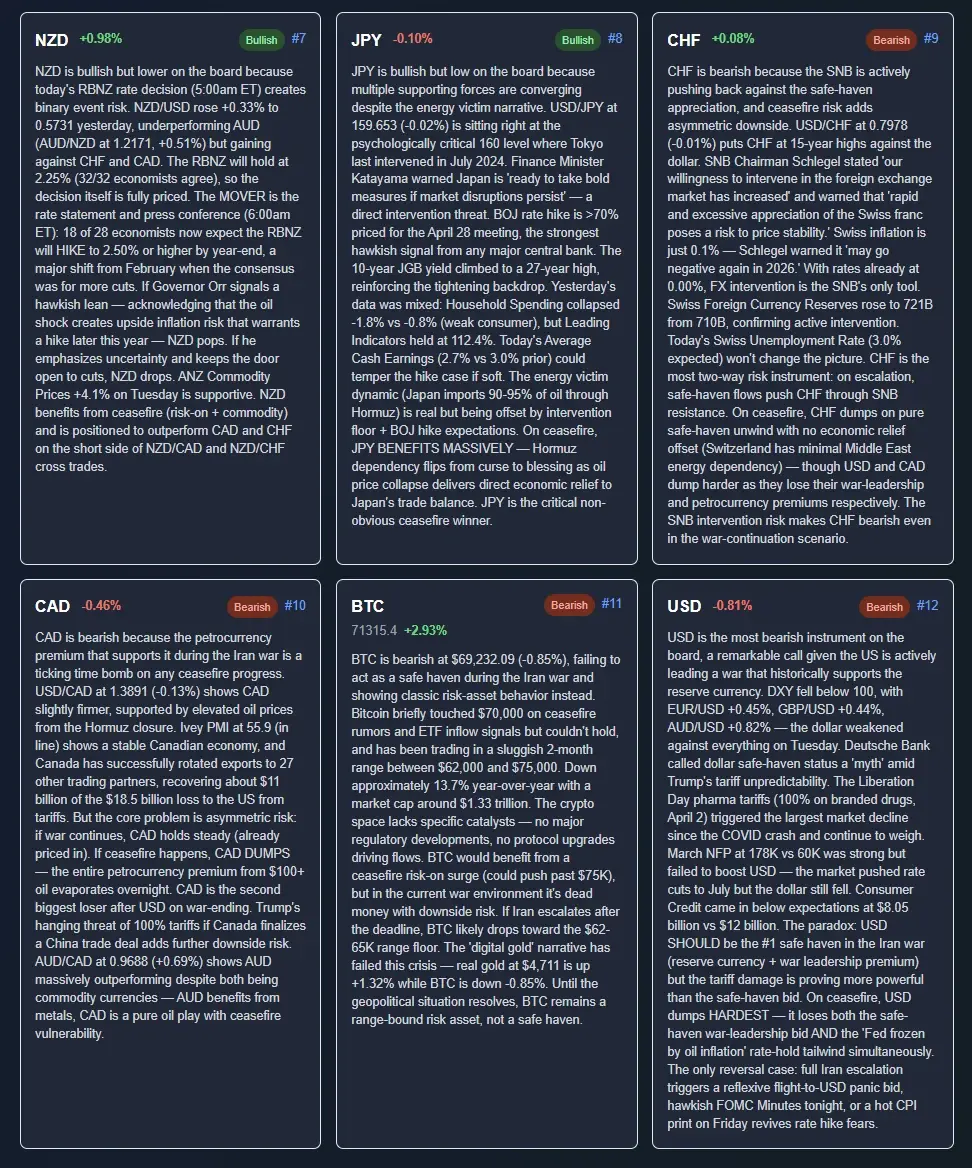
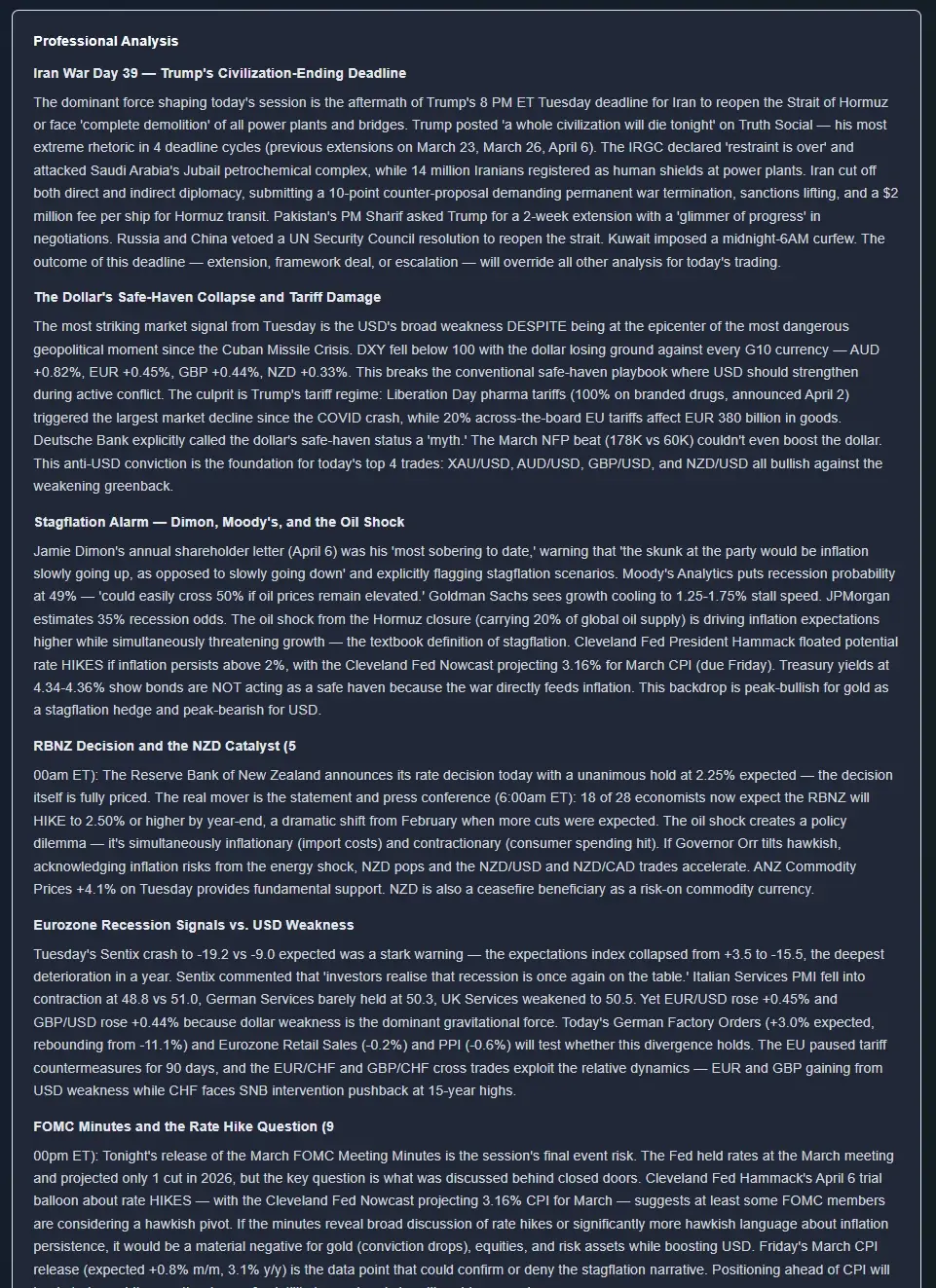
This is where a daily macro read earns its keep. The Daily AI News Impact ranks the dollar and the majors each morning with a conviction score and the specific drivers behind the call, so you start the session knowing whether the dollar is bid or offered into it and which instruments are catching the collateral damage. It is not a signal to click — it is context, so your chart idea is trading with the macro flow instead of blindly into it.
7. What could break the dollar's run
Trading with the trend is not the same as believing it lasts forever. A disciplined dollar bull knows exactly what would invalidate the thesis, and there are really only three or four things that matter. The cleanest is a Fed pivot: if inflation cools convincingly and the Fed shifts from “hold or hike” to “cut,” the rate differential that anchors the whole trade starts to close, and the dollar loses its main support. That is the one to watch above all others.
The second is a US growth scare. High rates plus hot inflation eventually bite; if US data cracks hard enough that the market decides the Fed will be forced to ease regardless of inflation, the dollar can turn even with prices still high. The third is the haven bid fading — if the geopolitical risk that is pulling capital into the dollar calms down, one of the three engines simply switches off. And the fourth is abroad: another major central bank turning aggressively hawkish and closing the rate gap from its side would do to the dollar what the Fed does not have to.
The positioning risk. Some analysts already think the dollar is stretched and overvalued, and a crowded long is fragile by nature. When everyone is on the same side, it does not take a pivot to spark a sharp unwind — an ordinary disappointment can do it. That is a reason to size sensibly and keep stops honest, not a reason to pre-emptively short a trend that is still working.
None of these has clearly triggered as of mid-June 2026. The market is positioned into the June FOMC with the Fed still leaning hawkish, inflation still hot, and the haven bid still live. So the honest read on the dxy forecast 2026 is a firm-to-higher bias that stays intact as long as those engines keep running — with a clear, pre-defined list of what would tell you to step aside. Trade the trend in front of you; do not marry it.
Frequently asked questions
Why is the US dollar so strong in 2026?
Three drivers are stacking up. The Fed is hawkish and leaning toward holding or hiking rather than cutting, keeping US rates high versus peers. US inflation has run hot, around the low-4% range, so real yields stay firm. And geopolitical risk has pulled a safe-haven bid into the currency. Together they have pushed the DXY back above 100 to its highest since May 2025.
What is the DXY forecast for 2026?
As of mid-June the dollar index is roughly 100.5–101, its strongest in about a year, and the path of least resistance is higher while the Fed stays hawkish and inflation stays sticky. Some analysts argue it is stretched and overvalued, so the honest read is a firm-to-higher bias that holds only while the rate and inflation story does. Forecasts are not signals — trade the trend and respect the level that breaks it.
Why does a strong dollar hurt gold and EUR/USD?
Gold is priced in dollars and pays no yield, so a rising dollar with firm real yields gets it sold — the two are broadly inverse. EUR/USD is a direct ratio, so a stronger dollar is a lower EUR/USD almost by definition, and a hawkish Fed against a more dovish ECB widens that pressure. Same force, different instruments.
How do you trade a strong dollar trend?
Stop fighting it. Favour USD longs against weaker currencies, be cautious being long gold or EUR/USD into dollar strength, and let the trend work. Use a currency strength read to find the cleanest pair, size to a structural stop, and lighten up into scheduled US events where the dollar reprices hardest.
What could break the dollar's run?
A Fed pivot to cuts is the clearest catalyst, and it would need inflation to cool convincingly. A sharp US growth scare, a fading of the geopolitical risk feeding the haven bid, or another central bank turning aggressively hawkish would also take pressure off. Positioning matters too — a stretched, crowded long can unwind hard on an ordinary disappointment.
Is the dollar overvalued right now?
Some analysts think so, and on longer-run valuation measures it looks rich. But overvalued is not the same as about to fall — an expensive currency can stay expensive while the rate and inflation story supports it. Treat overvaluation as a risk flag for sizing, not a timing signal to short.
Sources & further reading
Trade the dollar with the macro read in front of you
Live pricing across 28 FX pairs plus gold, a currency strength index for all eight majors, a daily AI news-impact score, and screenshot chart analysis. Two free snipes to test it on your own chart.