
Why the Yen Keeps Falling in 2026
The Bank of Japan is finally lifting rates, and the yen keeps falling anyway. USD/JPY is grinding toward the 160 handle for one stubborn reason — the rate gap between the US and Japan is still enormous, and money follows yield. Here is why the slide continues, where it can break, and the one thing that still puts a floor under the yen.

There is a version of the yen story that says a currency falls because its economy is broken. That is not what is happening here. Japan is growing, wages are rising, and the Bank of Japan has started lifting interest rates off the floor for the first time in a generation. On paper, that is a recipe for a stronger yen. Instead USD/JPY has spent 2026 grinding higher and is now pressing toward the 160 handle. The currency is weak not because Japan is failing, but because everyone else pays you more to hold their money.
That is the whole thesis, and it is worth stating plainly before we get into mechanics: the yen's slide is a relative-yield problem. US rates sit far above Japanese ones, the dollar is broadly bid, and capital does the obvious thing — it leaves the currency that pays nothing for the one that pays real interest. Until that gap closes, the path of least resistance for USD/JPY is up. The only reliable interruptions are Japanese intervention near the highs and the occasional genuine risk-off scare, and both tend to be temporary.
This piece lays out the rate-differential engine, the carry trade that turns it into relentless yen selling, the Ministry of Finance wildcard, and how to actually trade the pair without getting run over. The tool referenced throughout is ChartSnipe — a research co-pilot for reading the chart and scoring the day's macro flow, not a signal service.
Key Takeaways
- →The yen is weak because of the rate gap, not a weak economy. US rates near 3.50–3.75% tower over Japan's, and money follows yield.
- →The BoJ is tightening, but far too slowly to matter. Inching rates up from near zero barely dents a gap this wide.
- →The carry trade turns the differential into constant yen selling — and quietly builds up positioning that can unwind violently.
- →Intervention risk clusters near the highs around 160. It spikes the yen but rarely reverses the trend on its own.
- →Trade with the trend, respect intervention near 160, and remember the yen still catches a bid in true risk-off.
1. The yen's structural problem
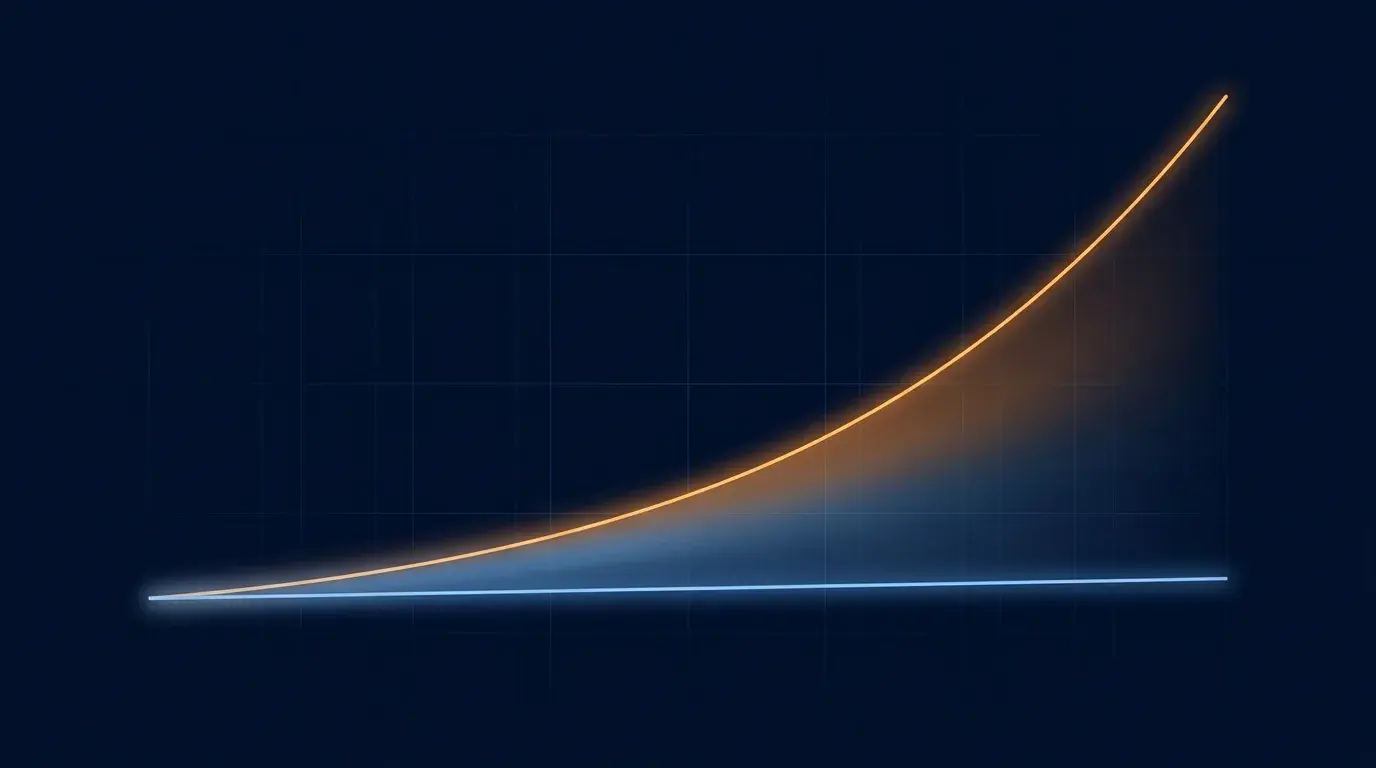
Currencies are priced against each other, and the single biggest lever is relative interest rates. If you can earn well over 3% holding dollars and next to nothing holding yen, the dollar is simply the better place to park cash — before you even have a view on either economy. That is the yen's problem in one sentence. US policy rates sit around 3.50–3.75% in mid-2026, with a Fed that is leaning toward more hikes rather than cuts, while the Bank of Japan is still crawling up from the zero bound. The gap is one of the widest in the developed world.
A wide differential does two things at once. It pays you to be short yen through the interest you collect, and it signals that the dollar side of the trade has genuine yield support underneath it. That combination is why USD/JPY does not need fresh bad news about Japan to keep rising. It rises on the absence of change — every day the gap stays open is another day the flow runs one direction. A trader used to fading extended moves has to respect that this is a fundamentally-driven grind, not a stretched technical that snaps back.
The dollar leg matters too. This is not only a yen story; it is a strong-dollar era. When the greenback is broadly bid against the whole major complex, the currency with the lowest yield takes the most damage, and that is the yen. If you want the other half of this trade, the pairs that smart money actually trades breakdown shows why USD/JPY sits at the center of so many desks' books right now.
2. Why the BoJ's slow tightening hasn't rescued it
The obvious objection is: hasn't the Bank of Japan started hiking? It has. After years pinned at the zero bound, the BoJ has begun nudging its policy rate up. The problem is one of scale and pace. Lifting a rate from near zero to a still-tiny number does not close a gap measured against US rates north of 3.5%. You can move in the right direction and still be losing the race by a wide margin, and that is exactly where the yen sits.
There are good reasons the BoJ is reluctant to move faster. Japan carries an enormous public debt load, so every increment of higher rates raises the government's interest bill. Years of fighting deflation have made policymakers cautious about choking off the inflation they finally wanted. And the domestic economy, while improving, is not running hot enough to demand aggressive tightening. So the central bank tightens in cautious, well-telegraphed steps — and cautious, well-telegraphed steps are precisely what the market can shrug off.
For a currency trader the lesson is about second derivatives. What moves FX is not the level of rates but the expected change relative to the other side. As long as the BoJ is expected to crawl while the Fed holds high or even hikes, the differential is not narrowing fast enough to flip the trade. Markets price the path, and the priced path still favors the dollar. That is why every incremental BoJ move so far has produced a brief yen pop that fades within days.
What would actually help the yen
- A faster, surprise BoJ hiking path.
- The Fed pivoting toward cuts, narrowing the gap.
- A genuine global risk-off unwind.
- The dollar rolling over across the board.
What keeps it falling
- A wide rate gap that barely moves.
- A BoJ that tightens slowly and reluctantly.
- A firm dollar and a hawkish-leaning Fed.
- Calm markets that reward the carry trade.
3. The carry trade, explained simply
The rate gap does not just sit there as a fact. It gets weaponized through the carry trade, and the carry trade is what turns a differential into relentless, mechanical yen selling. The idea is simple: borrow money in the currency that costs almost nothing to borrow — the yen — and use it to hold something that pays more, like dollar deposits, US Treasuries, or higher-yielding assets around the world. You pocket the difference in yield, and if the funding currency also falls while you hold the trade, you make money on that too.
Here is the self-reinforcing part. To put on the trade, you have to sell yen. Millions of these positions across hedge funds, corporates, and retail add up to a persistent, structural supply of yen hitting the market every day. That selling pushes USD/JPY higher, which makes the trade look even better, which draws in more of it. As long as volatility stays low and the yen keeps drifting down, the carry trade is a money machine and it feeds on itself.
The catch — and it is a big one — is that the carry trade is short volatility. It works beautifully in calm markets and blows up in violent ones. When a real shock hits and prices lurch, everyone holding the trade rushes to buy back the yen they borrowed at the same time, and the pair can drop several figures in a session. That is the coiled spring under this whole move, and it is why the yen's decline is not a smooth line but a grind punctuated by sharp, scary snaps back. We come back to that in the risk-off section.

4. Intervention — the Ministry of Finance wildcard
Rates are the BoJ's job. The exchange rate is the Ministry of Finance's, and when the yen falls too far too fast, the MoF steps into the market and buys yen directly. This is the single biggest tactical risk in trading USD/JPY right now. Intervention does not announce itself. It arrives as a sudden, vertical drop of several figures — the kind of candle that vaporizes a leveraged long that was sitting comfortably in profit a minute earlier.
Two things about it matter for a trader. First, it clusters near the highs. As USD/JPY approaches and clears the 160 area, the odds of official pushback climb, because that is the zone where Japanese officials start warning about “excessive” and “one-sided” moves. Verbal warnings usually come first; actual yen buying follows if the jawboning is ignored. Second, intervention treats the symptom, not the disease. It can buy time and shake out weak longs, but it does nothing to close the rate gap. Historically these spikes have faded and the underlying uptrend has reasserted itself once the shock wears off.
So you neither ignore it nor let it scare you out of the whole trade. You manage it: smaller size as price grinds into 160+, stops placed with enough room that a jawboning wick does not clip you out of an otherwise-good position, and a healthy respect for holding leveraged longs overnight when the pair is stretched near the highs. This is exactly the kind of event-driven risk the high-impact news events guide teaches you to size around.
5. Trading USD/JPY with the trend
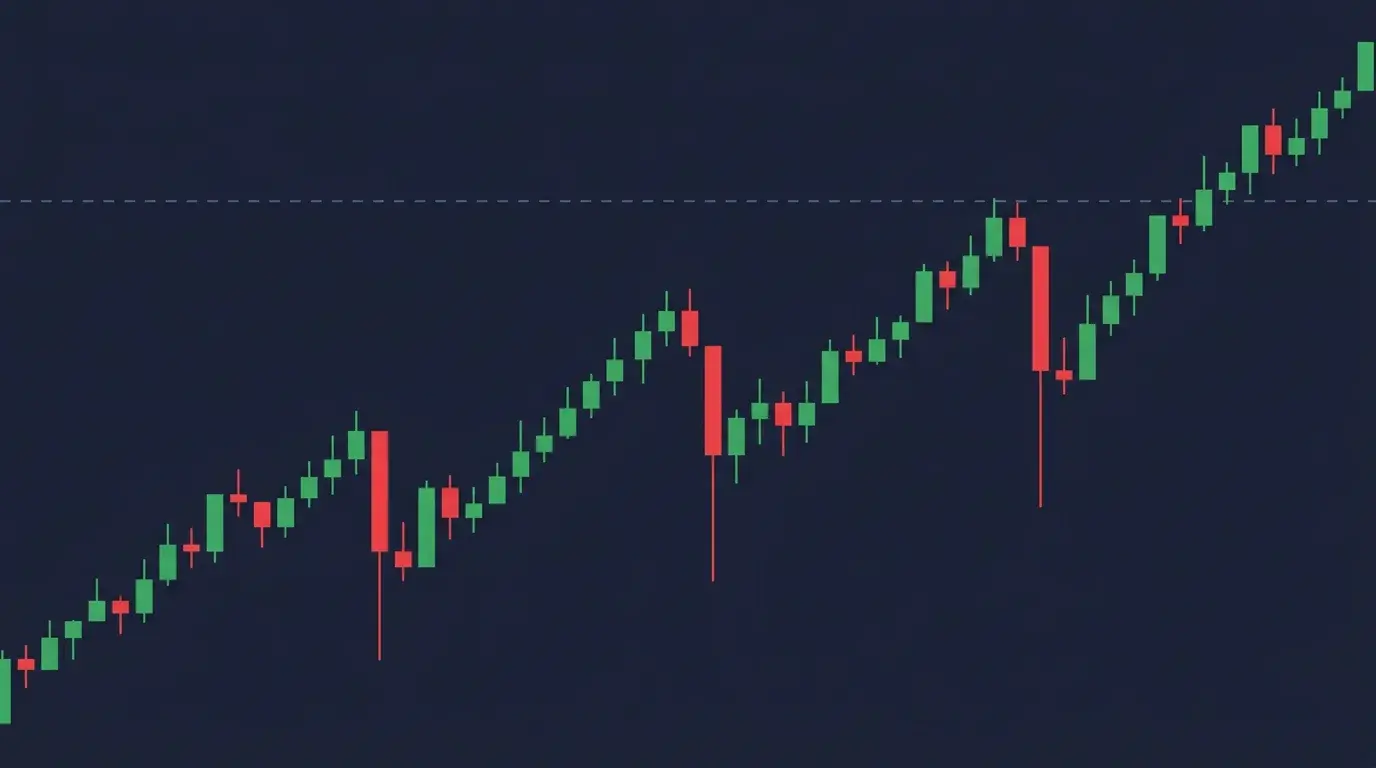
When a pair has this strong a fundamental tailwind, the highest-probability approach is embarrassingly simple: trade with the trend and buy pullbacks rather than trying to be a hero and pick the top. USD/JPY has spent 2026 making higher highs and higher lows. Every retest of a prior breakout level or a rising moving average has, so far, been a buying opportunity rather than the start of a reversal. Fighting that with short after short is how carry-era traders bleed out.
That does not mean chasing. Buying a vertical extension into 160 right before a potential intervention is a bad trade even if the direction is right. The better entries come on the dips — a pullback into support, a shallow retest of a broken level, a reset after an overbought stretch — where your stop can sit below a structural swing and your risk is defined. The wider the pair has run, the more you let it come to you. Desks that watch this pair have flagged scope toward 165 over time if the differential holds, but “over time” is doing real work in that sentence; the path there will be choppy.
Position sizing is the whole game near the highs. As USD/JPY presses into the 160 zone, cut size, not conviction. You can stay bullish and trade smaller at the same time — in fact that is precisely the correct posture when the trend is intact but the tail risk of a sharp reversal is elevated. Understanding how USD/JPY moves alongside the dollar index and other yen crosses also keeps you from doubling the same bet without realizing it; the correlation guide covers how to avoid stacking correlated risk.
The trend is your friend until 160. With the pair stretched into the intervention zone, treat every leveraged long as a smaller, tighter-managed trade. The differential says up; the Ministry of Finance says not too fast. Both can be true, and your sizing is how you hold both ideas at once.

6. The risk-off exception (yen as safe haven)
Here is the part that keeps the smart shorts humble. Despite everything above, the yen is still a safe-haven currency, and in a genuine risk-off event it can rip higher fast enough to hurt anyone who was short and complacent. The mechanism is the carry trade running in reverse. When markets panic — a credit shock, a geopolitical rupture, an equity crash — the calm that made carry profitable evaporates. Everyone who borrowed yen to fund riskier bets scrambles to close those positions, which means buying yen back all at once.
That unwind is why USD/JPY tends to fall hardest exactly when equities are falling hardest. The pair is, in effect, a risk-sentiment barometer wearing an interest-rate costume. On a quiet day the rate differential dominates and the yen drips lower. On a truly bad day the haven flows and the carry unwind dominate, and the yen is suddenly the strongest currency on the board. Both regimes are real; the mistake is assuming the calm one lasts forever.
Practically, this is the reason you never short the yen with reckless size and no stop, however obvious the trend looks. The bull case for USD/JPY is a bet that markets stay orderly. That is usually a good bet — markets are calm far more often than they are in crisis — but when it is wrong it is wrong all at once. The yen's haven bid is the one saving grace in an otherwise structurally weak currency, and it is a permanent asterisk on every bearish yen thesis.
7. Reading it with currency strength + an AI news score
The trap with USD/JPY is confusing a yen story with a dollar story. If the pair is up, is that broad yen weakness, or is it just the dollar bid against everything? The answer changes the trade. Broad yen weakness means you can express the view through several yen crosses; a pure dollar move means you are really trading the greenback and should be watching the dollar index for your signal. A currency-strength gauge settles it in a glance by ranking all eight majors against each other, so you see whether the yen is the weakest currency on the board or just weaker than a strong dollar.
ChartSnipe's currency strength meter is built for exactly this — it plots USD, EUR, GBP, JPY, CHF, AUD, CAD and NZD side by side so you can separate the yen leg from the dollar leg before you commit. Pair a weak-yen reading with a strong-dollar reading and you have a clean USD/JPY long thesis. See the yen weak but the dollar also soft, and the better trade might be a yen cross instead.
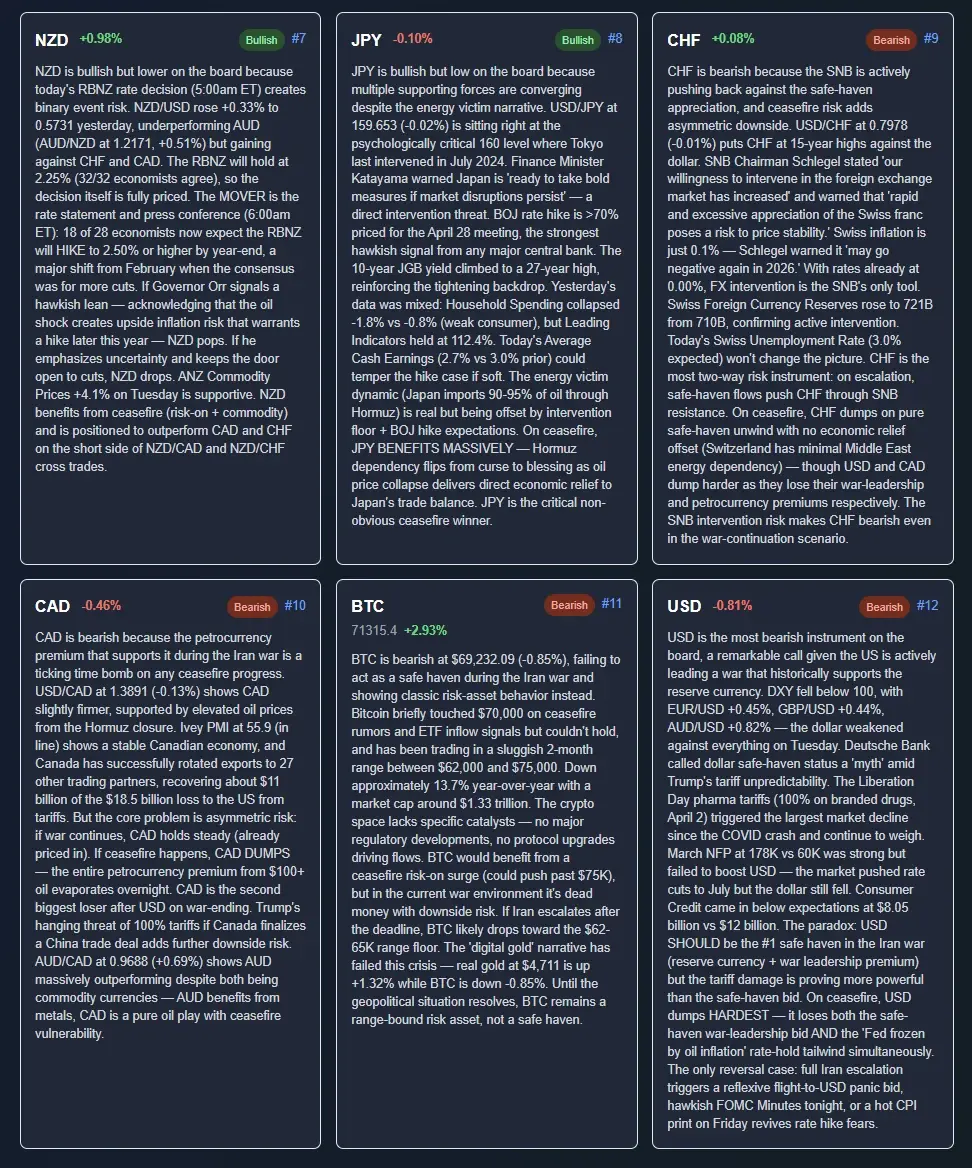
The second half of the read is the day's macro flow. USD/JPY is a headline-sensitive pair — a hot US inflation print, a hawkish Fed line, or a fresh intervention warning out of Tokyo can flip the intraday tape in minutes. The Daily AI News Impact ranks the yen and the dollar alongside the rest of the majors each morning with a conviction score and the specific drivers behind the call, so you enter the session knowing whether the day's flow backs your trend-long or warns you an intervention scare is brewing.
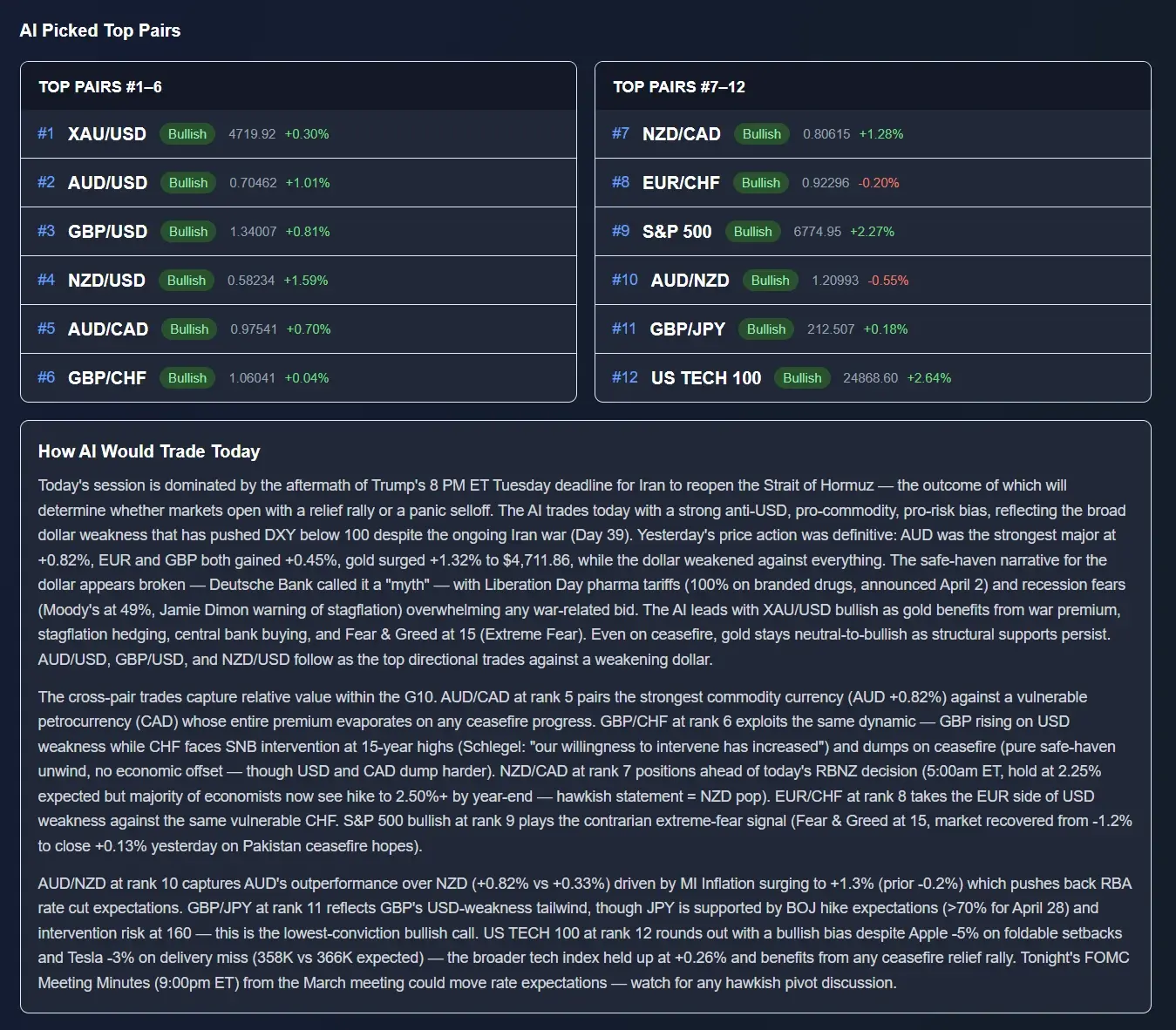
None of this is a signal to click. It is context that keeps you on the right side of a strong trend and out of the way of its sharpest reversals. When you are ready to work an actual chart, the chart analysis tool reads a USD/JPY screenshot and hands back the pattern, the levels, and a structured plan grounded in the price action in front of you — you still own the size and the stop.
Frequently asked questions
Why is the Japanese yen so weak in 2026?
The core reason is the interest-rate differential. US policy rates sit in the 3.50–3.75% range while the Bank of Japan is still only inching rates up from near zero. Yen deposits earn almost nothing; dollar deposits earn a real yield. As long as that gap is this wide and the dollar is bid, capital keeps rotating out of yen and USD/JPY keeps grinding higher.
What is the USD/JPY forecast for 2026?
As of early June 2026, USD/JPY is grinding higher and pressing toward the 160 area. With the rate gap intact and the BoJ tightening only reluctantly, many desks see scope toward 165 over time. The main obstacle is Japanese Ministry of Finance intervention, which clusters near the highs around 160 and can force sharp but usually temporary pullbacks.
What is the carry trade and how does it hurt the yen?
The carry trade means borrowing in a low-yield currency and holding a high-yield one to pocket the difference. With Japanese rates near zero and US rates well above 3%, traders borrow yen and buy dollar assets. Selling yen to fund those positions is itself a constant source of yen supply, which pushes USD/JPY higher and feeds on itself as long as volatility stays low.
Will Japan intervene to support the yen?
Japan has a track record of stepping in when the yen falls too fast, and intervention risk rises sharply as USD/JPY approaches and clears the 160 area. Intervention can spike the yen higher by several figures in minutes, but it treats the symptom, not the cause. Unless the rate differential narrows, those spikes tend to fade and the uptrend resumes. Traders respect the risk by trimming size and widening stops near the highs.
Is the yen still a safe-haven currency?
Yes, but mainly in genuine risk-off. When a real shock hits and global markets sell off hard, the carry trade unwinds — traders buy back the yen they borrowed — and USD/JPY can drop fast. That haven bid is the yen's one saving grace and the reason shorting it blindly is dangerous. In calm or risk-on tapes, though, the rate differential dominates and the yen drifts lower again.
How should I trade USD/JPY in this environment?
The base case is to trade with the uptrend — buy pullbacks to support rather than pick tops — while keeping intervention risk front of mind near 160. Size down as price nears the highs, use structural stops wide enough to survive noise, and check the day's macro read before entering. A currency-strength gauge plus an AI news-impact score tells you whether yen weakness is broad or just a dollar story before you commit.
Sources & further reading
Get the USD/JPY read before you size the trade
Live USD/JPY pricing, a currency-strength gauge that separates the yen leg from the dollar leg, a daily AI news-impact score, and screenshot chart analysis. Two free snipes to test it on your own chart.