
Triple Candlestick Patterns That Signal Strong Moves
Master 12 powerful three-candle formations that professional traders rely on for high-conviction entries, from Three White Soldiers to Three Line Strike.
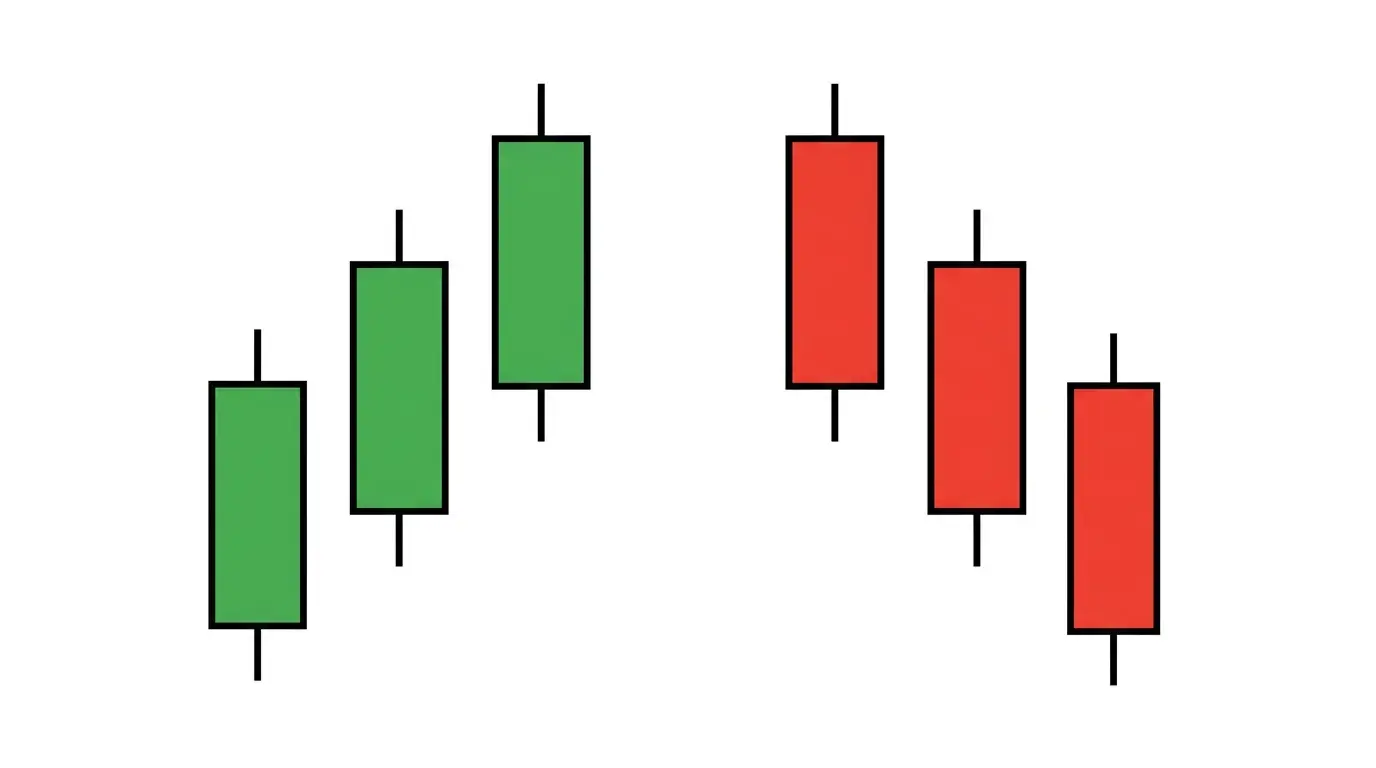
Single-candle patterns like hammers and dojis get all the attention, but experienced traders know the real edge comes from multi-candle formations. A lone candle can be noise. Three candles telling the same story is a conviction signal. Triple candlestick patterns give you what single candles cannot: confirmation that a genuine shift in market control is underway.
Whether you trade forex, stocks, or crypto, three-candle patterns remain among the most dependable signals in technical analysis. Each candle in the sequence adds a layer of proof -- buyers or sellers aren't just testing the waters, they are committing capital across multiple sessions. In this guide, we break down 12 triple candlestick patterns that professional traders use to identify high-probability trend reversals and continuations.
If you are looking for single-candle reversal setups, check out our guides on bullish reversal candlestick patterns and bearish reversal candlestick patterns. This article focuses exclusively on the power of three.
1. Three White Soldiers Pattern

What It Looks Like
Three White Soldiers consists of three consecutive long-bodied bullish candles, each opening within the body of the previous candle and closing at or near its high. The pattern appears after a defined downtrend or consolidation period. The wicks on all three candles should be small, indicating that buyers controlled the session from open to close with minimal resistance.
What It Signals
This is one of the strongest bullish reversal signals in candlestick analysis. Each successive candle demonstrates that sellers are unable to push price back down, and fresh buyers are entering at progressively higher levels. The psychology is decisive: the market has rejected the downtrend and institutions are building positions. Volume typically increases across the three candles, confirming genuine accumulation rather than short covering.
How to Trade It
Enter long on the close of the third candle or on a small pullback to the third candle's midpoint. Place your stop loss below the low of the first soldier candle -- this gives the pattern room to breathe without excessive risk. Target the next significant resistance level or use a 2:1 reward-to-risk ratio. Be cautious if the three candles are excessively large, as this could indicate an exhaustion move rather than the start of a sustained trend.
2. Three Black Crows Pattern
What It Looks Like
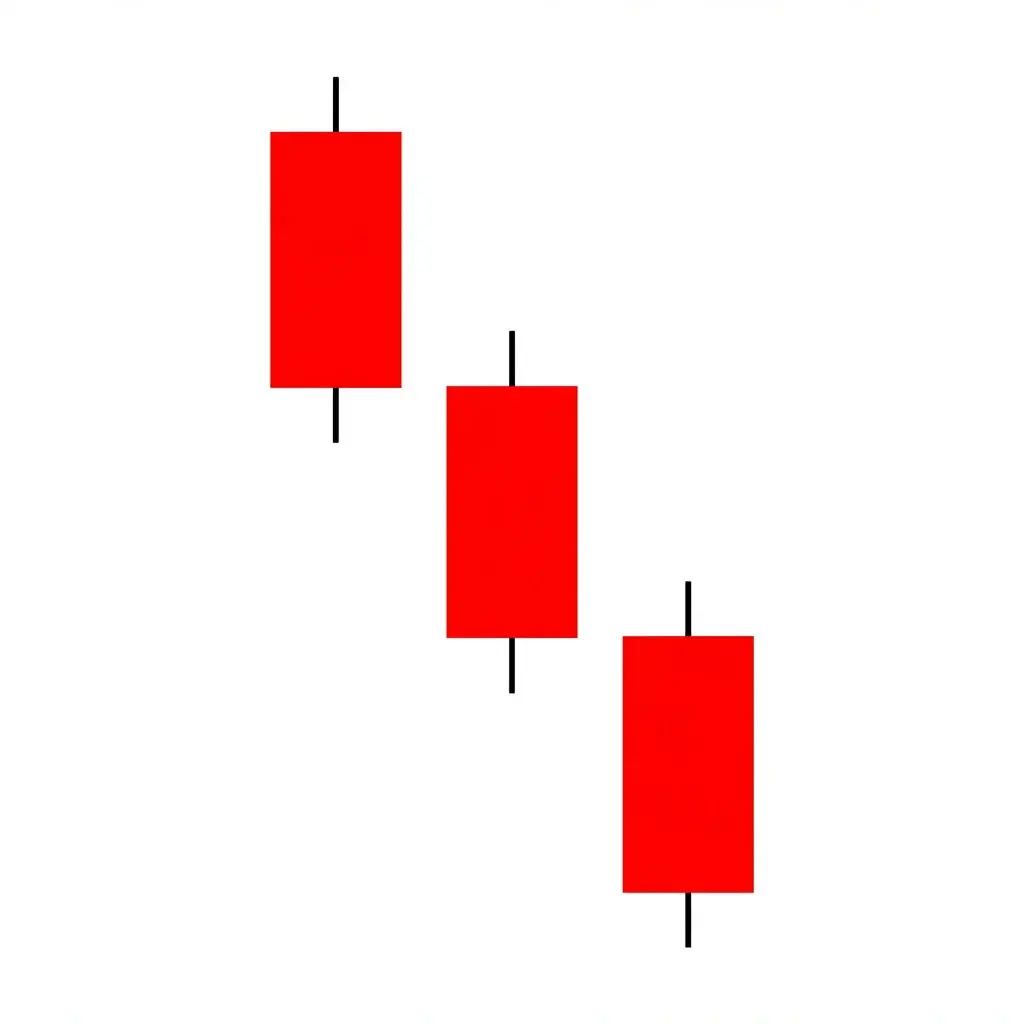
Three Black Crows is the bearish counterpart to Three White Soldiers. It features three consecutive long-bodied bearish candles, each opening within the body of the prior candle and closing at or near its session low. The pattern emerges at the top of an uptrend or after a rally into resistance. Small lower wicks confirm that sellers dominated each session without meaningful pushback from buyers.
What It Signals
Three Black Crows communicates a decisive shift from bullish to bearish sentiment. Buyers who were previously in control are now absent, and each session closes lower than the last. Institutional players are likely distributing positions, and retail longs are getting trapped. When this pattern forms after an extended uptrend, it frequently marks the beginning of a sustained decline rather than a simple pullback.
How to Trade It
Enter short on the close of the third crow candle. Place your stop loss above the high of the first candle in the sequence. Target the next support level or the base of the prior rally. In forex, this pattern is particularly effective when it forms on the daily chart near a major resistance zone. For stock traders, check that volume is increasing on each successive candle to confirm distribution.
3. Three Inside Up Pattern
What It Looks Like
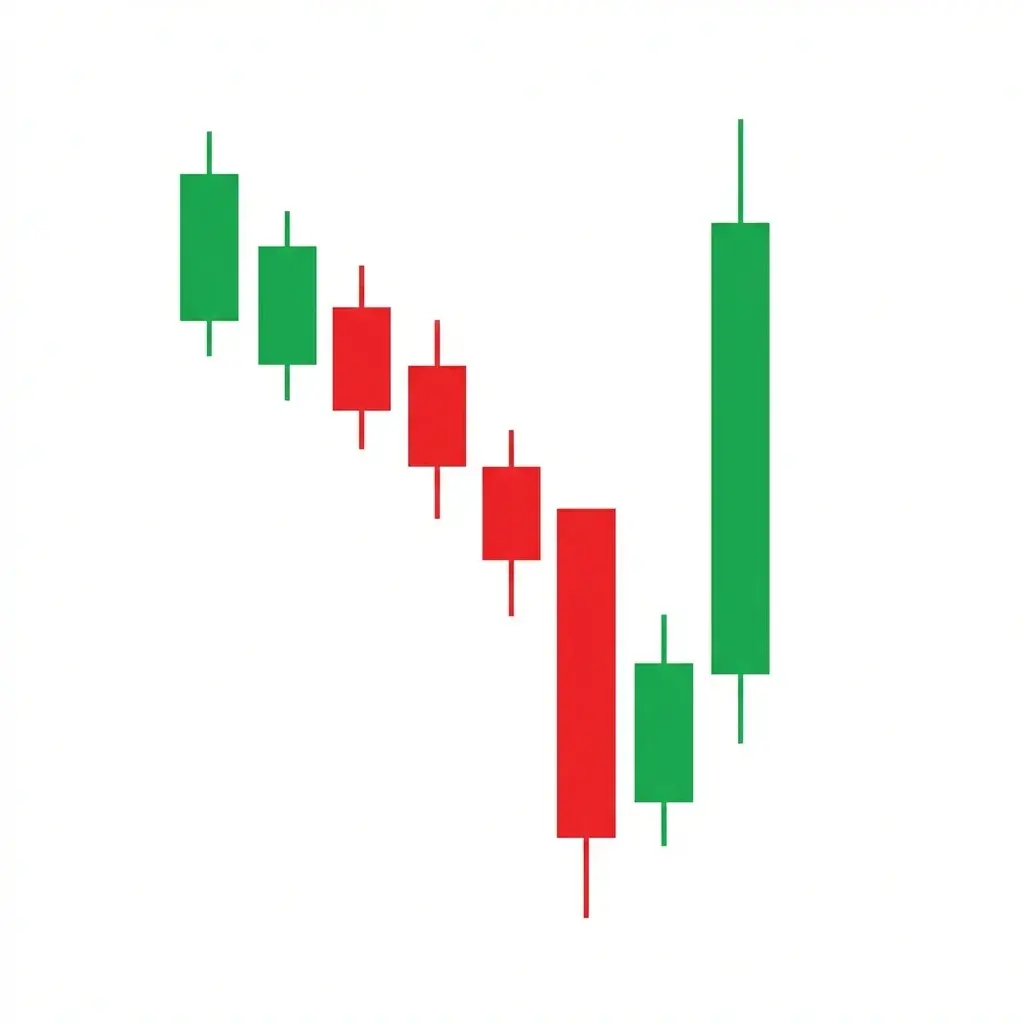
The Three Inside Up pattern starts with a large bearish candle, followed by a smaller bullish candle that is completely contained within the body of the first candle (forming a bullish harami). The third candle is a bullish candle that closes above the high of the first candle, confirming the reversal. The key requirement is that the second candle must not exceed the body boundaries of the first.
What It Signals
This pattern reveals a gradual shift in power. The first candle represents the final push from sellers. The small second candle shows that selling pressure has dried up and buyers are cautiously stepping in. The third candle confirms buyers have gained full control by pushing price above the prior bearish candle's high. Think of it as a two-step confirmation: first hesitation, then conviction.
How to Trade It
Enter long on the close of the third candle or on a break above its high. Set your stop loss below the low of the entire pattern. The Three Inside Up works best at established support zones or after a prolonged downtrend where sellers are exhausted. Combine with RSI divergence for a higher-probability setup. Targets should be at least 1.5 times the height of the pattern measured from the breakout point.
4. Three Inside Down Pattern

What It Looks Like
The Three Inside Down is the bearish mirror of the Three Inside Up. It begins with a strong bullish candle, followed by a smaller bearish candle that trades within the first candle's body (a bearish harami). The third candle closes below the low of the first candle, sealing the reversal. The second candle's contained range is critical -- it must not break out of the first candle's body.
What It Signals
Buyers make a final strong push on the first candle, but the reduced range on the second candle reveals that upside momentum is fading. The third candle delivers the verdict: sellers have overwhelmed remaining buyers and driven price below the pattern's starting point. This transition from bullish strength to bearish confirmation across three sessions leaves no ambiguity about who controls the market.
How to Trade It
Enter short on the close of the third candle. Place a stop loss above the high of the first candle. This pattern is most effective at resistance levels, prior swing highs, or near overbought RSI readings. In the forex market, the Three Inside Down frequently appears before central bank announcements when the market has already priced in a bullish outcome that fails to materialize.
5. Three Outside Up Pattern

What It Looks Like
The Three Outside Up begins with a small bearish candle, followed by a large bullish candle that completely engulfs the first candle's body (forming a bullish engulfing). The third candle is another bullish candle that closes higher than the second, confirming the reversal. Unlike the Three Inside Up, this pattern starts aggressively with the engulfing candle rather than building gradually.
What It Signals
The Three Outside Up is a more forceful reversal signal than the Three Inside Up because the engulfing candle represents an immediate and aggressive takeover by buyers. The small first candle shows that sellers are running out of steam, and the engulfing candle proves that buyers are willing to step in with size. The third candle removes any doubt by continuing higher. This pattern often marks the exact session where institutional buyers initiated positions.
How to Trade It
Enter long on the close of the third candle. Stop loss goes below the low of the engulfing candle. Because this pattern carries strong initial momentum, trailing stops work well to capture extended moves. Look for this pattern at the bottom of a range, at demand zones, or after a liquidation wick. In stocks, the Three Outside Up combined with above-average volume on the engulfing candle has one of the highest win rates among all candlestick patterns.
6. Three Outside Down Pattern

What It Looks Like
The Three Outside Down starts with a small bullish candle, followed by a large bearish candle that engulfs the first candle's entire body. The third candle closes below the second candle's close, confirming bearish continuation. The pattern forms at the top of an uptrend and is essentially a bearish engulfing pattern with an extra candle of confirmation.
What It Signals
The small bullish first candle represents the last gasp of buying pressure. The engulfing bearish candle shows that sellers have arrived in force and are prepared to absorb all remaining buy orders. The third candle validates the reversal and often triggers a wave of stop-loss selling from traders who were long. This pattern is particularly dangerous for bulls because the aggressive engulfing action tends to trap late buyers who entered on the first candle.
How to Trade It
Enter short on the close of the third candle or on a retest of the engulfing candle's midpoint. Stop loss above the high of the engulfing candle. This pattern delivers the best results when it forms at a significant resistance level or a Fibonacci extension. In crypto markets, Three Outside Down at all-time highs or round-number psychological levels frequently precedes multi-day corrections.
7. Bullish Three Line Strike Pattern

What It Looks Like
The Bullish Three Line Strike is a four-candle pattern, but its core logic centers on three bullish candles. Three consecutive bullish candles form in an uptrend, each closing higher than the last. The fourth candle opens above the third candle's close but then drops sharply, closing below the first candle's open. This single bearish candle "strikes through" all three bullish candles, erasing their gains in one session.
What It Signals
Despite the dramatic bearish fourth candle, this is actually a bullish continuation pattern. The strike candle represents profit-taking and a temporary shakeout of weak hands, not a genuine reversal. Institutional players use this pullback to add to positions at lower prices. Think of the fourth candle as a controlled reset within a strong uptrend. Research by Thomas Bulkowski found that the Bullish Three Line Strike has an 84% success rate as a continuation pattern when properly identified.
How to Trade It
Enter long at the close of the strike candle or on the next session's open. Place your stop loss just below the strike candle's low. The target is the high of the third bullish candle and beyond, as the uptrend is expected to resume. Confirm the setup by verifying that the prior trend is strong and that volume on the strike candle is lower than on the preceding bullish candles -- this indicates the selloff lacks conviction.
8. Bearish Three Line Strike Pattern
What It Looks Like
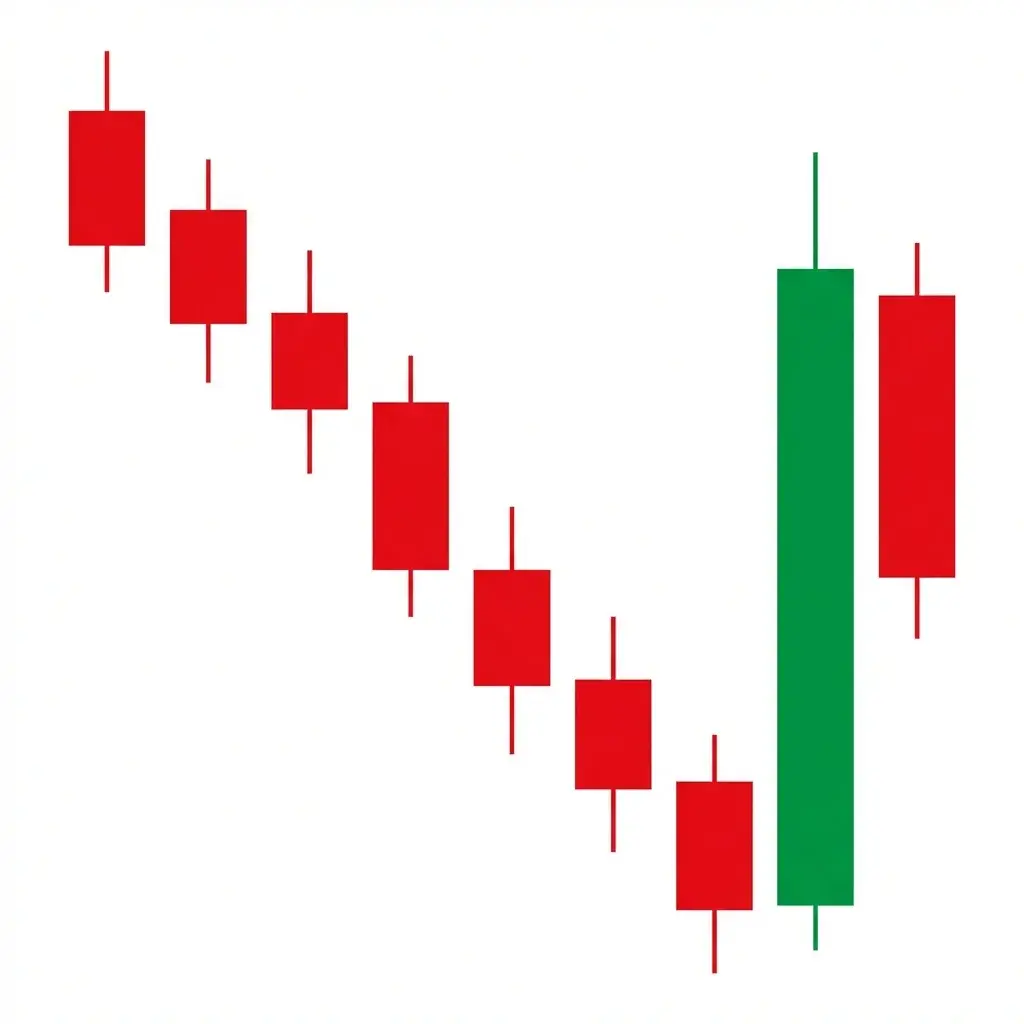
The Bearish Three Line Strike mirrors its bullish counterpart. Three consecutive bearish candles form in a downtrend, each closing lower than the last. The fourth candle opens below the third candle's close and rallies sharply, closing above the first candle's open. This single bullish candle erases all three sessions of selling, creating what appears to be a dramatic reversal.
What It Signals
Like the bullish version, this pattern is counter-intuitive. The bullish strike candle looks like a reversal but is actually a short squeeze or dead cat bounce within a prevailing downtrend. Shorts covering and bargain hunters create the temporary rally, but the underlying selling pressure remains intact. The key insight is that the strike candle represents a liquidity event, not a change in market structure.
How to Trade It
Enter short at the close of the strike candle or wait for a bearish candle on the following session to confirm. Stop loss above the strike candle's high. Target the low of the third bearish candle and beyond. This pattern is powerful in forex pairs during strong trends driven by central bank divergence, where temporary rallies get sold into aggressively. Always confirm the broader downtrend is intact before trading.
9. Three Stars South Pattern
What It Looks Like
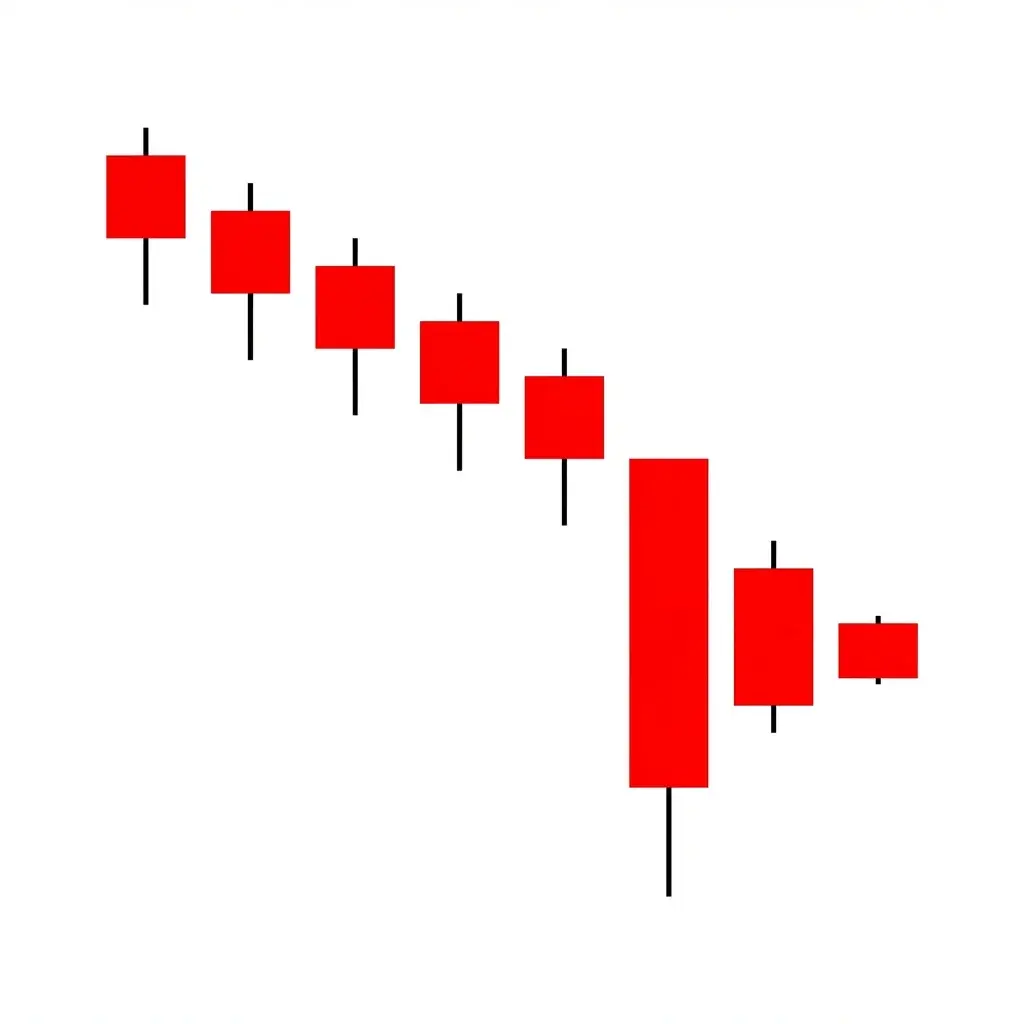
Three Stars South is a rare but meaningful bullish reversal pattern. It consists of three bearish candles within a downtrend, but each successive candle has a progressively smaller body and shorter lower shadow. The first candle is a long bearish candle with a prominent lower wick. The second candle is smaller with a shorter lower wick, and the third is smaller still, often resembling a spinning top or short-bodied candle.
What It Signals
The progressively smaller candles tell a clear story: sellers are losing conviction with each session. The shrinking lower shadows show that bears can no longer push price to new lows with the same force. It is a visual representation of bearish exhaustion. While the market has not yet turned bullish, the selling pressure is clearly dissipating, and a reversal is likely imminent once buyers recognize the opportunity.
How to Trade It
Because Three Stars South signals exhaustion rather than immediate reversal, wait for a bullish confirmation candle after the pattern completes before entering long. Stop loss below the lowest low of the three candles. This pattern is most effective at key support levels, moving average confluences, or when accompanied by bullish divergence on the MACD or RSI. It is rarer than other patterns on this list, so when it appears, pay attention.
10. Three River Bottom Pattern
What It Looks Like
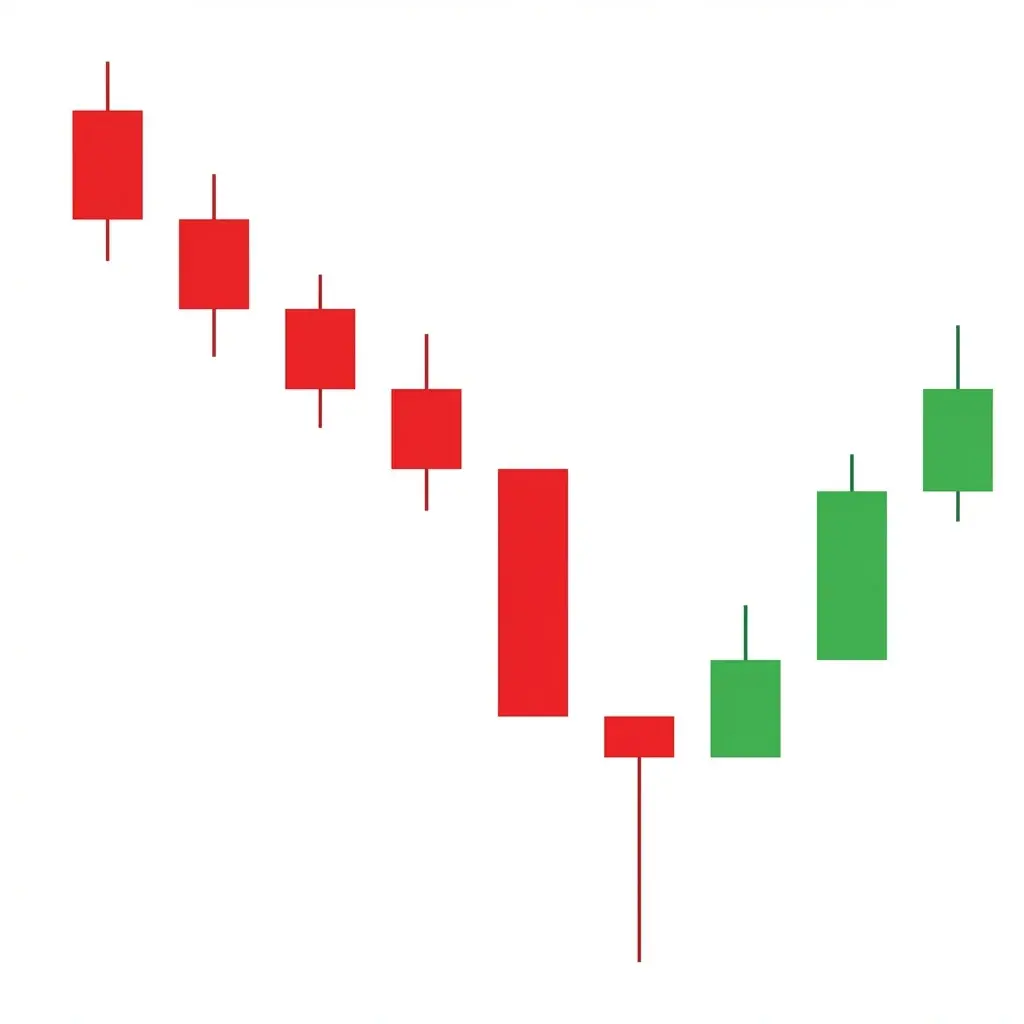
The Unique Three River Bottom (sometimes called simply Three River Bottom) is a three-candle bullish reversal pattern. The first candle is a long bearish candle in a downtrend. The second candle is a harami-type candle with a long lower shadow that trades below the first candle's low but closes within its body. The third candle is a small bullish candle that closes near or above the second candle's close but remains below the first candle's open.
What It Signals
This pattern shows the market testing lower prices and finding aggressive buying support. The second candle's long lower shadow is the key element -- sellers pushed price to new lows but were overwhelmed by buyers who drove price back up before the close. The small third candle consolidates above the low, confirming that the bottom-fishing on the second candle was genuine. It suggests smart money is accumulating at depressed levels.
How to Trade It
Enter long on a break above the third candle's high with a stop loss below the second candle's lower shadow. This pattern appears rarely, but when it does form at a significant support level or demand zone, the reversal that follows can be substantial. Combine with volume analysis -- rising volume on the second candle's recovery and the third candle strengthens the signal considerably. Target the first candle's open as the initial objective.
11. Identical Three Crows Pattern

What It Looks Like
Identical Three Crows is a variation of Three Black Crows with one critical distinction: each candle opens at or very near the previous candle's closing price. There are no gaps between sessions. This creates a tight, staircase-like descent where each open picks up exactly where the prior close left off. All three candles are roughly the same size with small wicks, demonstrating consistent and methodical selling pressure.
What It Signals
The identical opening prices signal that there is zero overnight buying interest. In standard Three Black Crows, each candle may gap down or open slightly higher before selling off. With Identical Three Crows, the absence of any recovery attempt between sessions reveals absolute seller domination. This is a market where even overnight or weekend buyers are absent, and the path of least resistance is unambiguously lower.
How to Trade It
Enter short on the close of the third candle. Stop loss above the high of the first candle. Because the pattern shows relentless selling with no bounce attempts, the trend is likely to continue with conviction. Consider wider targets than standard Three Black Crows trades, as the complete absence of buying pressure suggests the decline may accelerate. In forex, this pattern is most common in pairs experiencing central bank policy divergence.
12. Identical Three Whites Pattern

What It Looks Like
Identical Three Whites is the bullish counterpart to Identical Three Crows. Three consecutive bullish candles form with each opening at or very near the previous candle's close. There are no gap-ups or pullbacks between sessions. The candles are approximately the same size with small upper wicks, demonstrating steady, controlled buying pressure across three consecutive sessions.
What It Signals
The absence of gaps between candles shows that buyers are not panicking or chasing -- they are methodically accumulating. Each session opens at the prior close, meaning sellers cannot even create a minor pullback. This disciplined buying behavior is characteristic of institutional accumulation where large players are building positions over multiple sessions. The pattern signals sustained bullish momentum that is unlikely to reverse quickly.
How to Trade It
Enter long on the close of the third candle or on a pullback to the third candle's midpoint. Place your stop loss below the low of the first candle. Use a trailing stop to capture extended moves, as the methodical nature of this pattern often leads to trends that persist well beyond the initial three candles. In stock markets, Identical Three Whites frequently appears at the start of sector rotations or after earnings catalysts that shift the fundamental outlook.
Why Three-Candle Patterns Are More Reliable
If you have been trading for any length of time, you have likely been burned by single-candle signals that turned out to be false. A hammer at support that breaks down the next day. A shooting star that gets absorbed by buyers. Single candles capture one moment of market sentiment, and one moment is often not enough.
Three-candle patterns solve this fundamental limitation through what traders call progressive confirmation. Here is why they work:
Multiple Sessions of Proof
A single candle shows what happened in one session. Three candles prove that the same thesis held across three separate sessions, absorbing overnight gaps, news events, and time for participants to reassess their positions.
Institutional Footprint
Large players cannot build or exit positions in a single candle without excessive slippage. Three-candle patterns often represent the footprint of institutional activity spread across multiple sessions, making them harder to fake than single-candle reversals.
Filtered Noise
A single long-bodied candle could be caused by a flash crash, a fat-finger trade, or a liquidity vacuum. Three consecutive candles confirming the same direction filter out random noise and reveal genuine market intent.
Clearer Risk Definition
Three-candle patterns provide natural stop-loss levels at the pattern extremes. The defined structure gives you a precise invalidation point, making position sizing and risk management more straightforward.
The tradeoff, of course, is that three-candle patterns appear less frequently than single-candle signals. But quality over quantity is a principle that separates profitable traders from those who overtrade. If you combine these patterns with key support and resistance levels, trend direction, and volume analysis, the win rate improves significantly compared to acting on a lone candle.
For a deeper dive into how individual candles set the stage for multi-candle formations, revisit our bullish reversal candlestick patterns guide and the companion piece on bearish reversal patterns.
Pro tip: The most reliable triple candlestick signals occur on the daily timeframe and above. Intraday charts produce more noise, and the "three-session confirmation" principle loses its strength when each "session" is only a five-minute bar. Stick to the 4-hour, daily, and weekly charts for the highest-quality signals.
Frequently Asked Questions
What are triple candlestick patterns?
Triple candlestick patterns are chart formations made up of three consecutive candles that signal a potential trend reversal or continuation. Common examples include Three White Soldiers, Three Black Crows, Three Inside Up, and Three Line Strike. They are considered more reliable than single-candle signals because each successive candle confirms the conviction behind the move.
Are Three White Soldiers a reliable bullish signal?
Yes, Three White Soldiers is one of the most reliable bullish reversal patterns. It consists of three consecutive long-bodied bullish candles, each opening within the previous candle body and closing near its high. The pattern signals that buyers have taken decisive control after a downtrend, and it is especially reliable when accompanied by rising volume on each successive candle.
What is the difference between Three Inside Up and Three Outside Up?
Three Inside Up begins with a large bearish candle followed by a smaller bullish candle contained within the first candle's body (a harami), then a third bullish candle closing above the first candle's high. Three Outside Up starts with a small bearish candle, followed by a large bullish candle that engulfs the first (an engulfing), then a third bullish candle closing higher. The Outside Up pattern often carries stronger momentum because the engulfing candle represents a more aggressive shift in control.
How do you trade the Three Line Strike pattern?
The Three Line Strike is a continuation pattern. In a bullish Three Line Strike, three consecutive bullish candles are followed by a single large bearish candle that opens above the third close and closes below the first candle's open. Despite looking bearish, this fourth candle is a temporary pullback within the prevailing uptrend. Traders enter long after the strike candle closes, place a stop loss below the strike candle low, and target the next resistance level.
Why are multi-candle patterns more reliable than single candle patterns?
Multi-candle patterns are more reliable because each additional candle adds a layer of confirmation. A single doji or hammer shows indecision or potential reversal at one moment in time, but three consecutive candles proving the same thesis demonstrate sustained commitment from buyers or sellers. Three candles also give the market time to absorb the move, reducing the likelihood of a false signal compared to reacting to a single candle.
Quick Recap
Three-candle patterns work because one candle can lie to you but three in a row usually don't. The soldiers and crows are the heavy hitters. The inside/outside variations are great for tighter risk. The line strikes look counterintuitive but they work surprisingly well when you get the context right.
Next up: single and double candle reversal patterns for when you want faster signals.
Scanning for three-candle setups across 20+ pairs gets old fast.
Let ChartSnipe do it for you