
Bearish Reversal Candlestick Patterns to Spot the Top
Master the 12 most powerful bearish reversal patterns that warn you when buyers are losing control and sellers are about to take over.
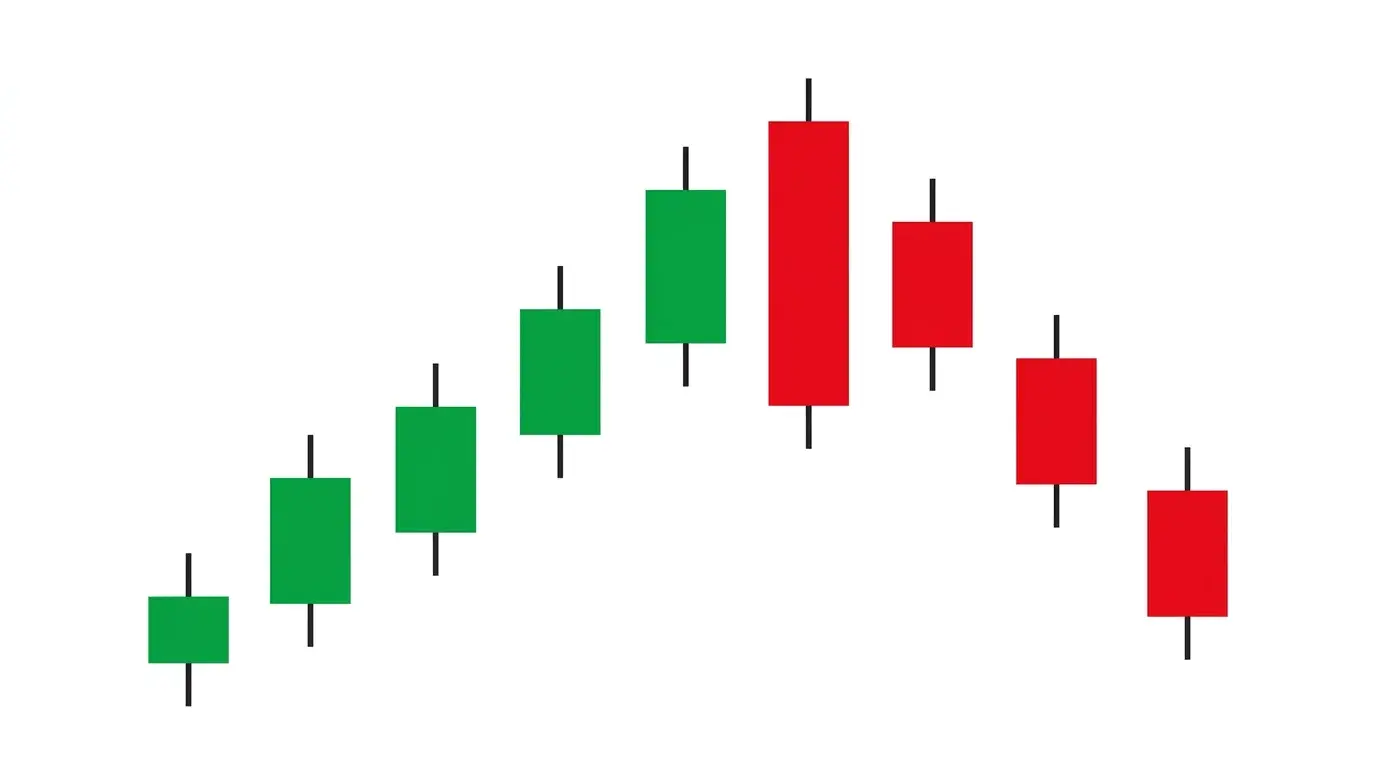
Every market top leaves footprints before the crash. The trick is learning to read them. Bearish reversal candlestick patterns are the earliest warning signs that buying pressure is exhausting and distribution is beginning. While most traders are still celebrating new highs, these patterns tell you smart money is heading for the exits.
In this guide, we break down 12 bearish reversal candlestick patterns every trader needs to recognize. For each pattern, you will learn what it looks like, the market psychology behind it, and exactly how to trade it with clear entries, stop losses, and targets. If you have already studied the bullish reversal patterns, this is the other side of the coin.
Understanding bearish reversals is not just about shorting. Even if you only trade long, these patterns tell you when to tighten stops, take profits, or stay out entirely. Combine them with key resistance levels, chart patterns like double tops and head and shoulders, and volume analysis, and you have a powerful framework for avoiding drawdowns and protecting capital.
Why Spotting Market Tops Matters
Markets fall faster than they rise. A rally that took weeks to build can unravel in days once sellers take control. This asymmetry means that recognizing bearish reversal patterns is not optional - it is a survival skill. Whether you are trading forex, stocks, crypto, or commodities, the same candlestick formations appear at tops because they reflect universal human psychology: greed turning to fear.
Bearish reversal patterns work because they capture the exact moment when buyers who drove the uptrend begin losing conviction. Institutional traders start distributing their positions, and the candlestick formations record this shift in real time on your chart. A bearish engulfing at a key resistance level is not just a pattern - it is a visual record of sellers overwhelming buyers in a single session.
Pro tip: The best bearish reversal signals appear after extended uptrends, at known resistance levels, and with above-average volume. A pattern in isolation is information. A pattern with context is a trade setup.
1. Bearish Engulfing Pattern
What It Looks Like
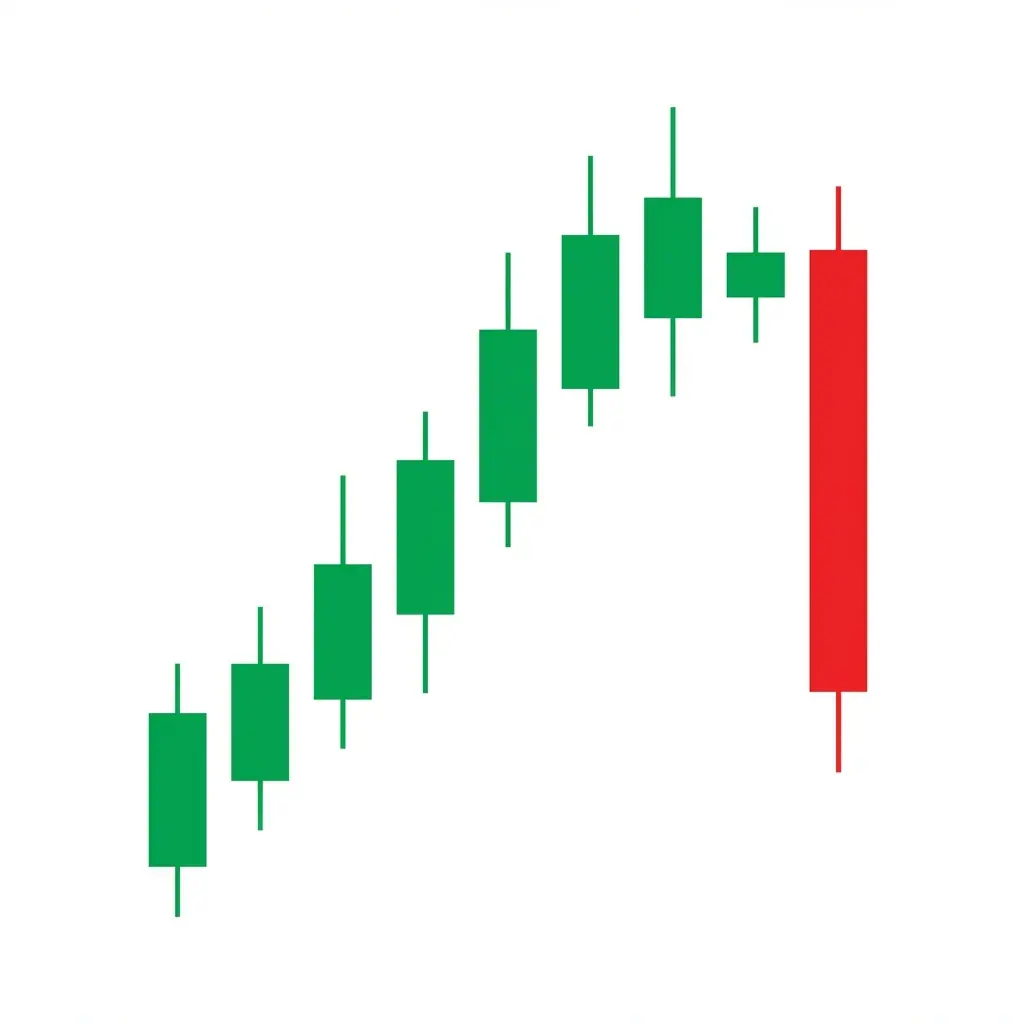
The bearish engulfing is a two-candle pattern. The first candle is a relatively small bullish (green) candle that continues the uptrend. The second candle opens above the first candle's close and sells off hard, closing below the first candle's open. The red body completely "engulfs" the green body. The bigger the second candle relative to the first, the more significant the signal.
What It Signals
This pattern represents a dramatic power shift. Bulls opened the session with confidence, pushing price above the prior close. But sellers stepped in aggressively, driving price down through the entire previous range and beyond. The psychology here is clear: what looked like a continuation of the uptrend was actually an exhaustion point. Smart money used the higher open as an opportunity to distribute positions, and by the close, bears were firmly in control.
How to Trade It
Enter short on the next candle after confirming the close below the engulfing candle's midpoint. Place your stop loss above the high of the engulfing candle. Target the nearest support level or use a 1:2 risk-reward ratio. The pattern is most reliable when it forms at a resistance zone with volume expansion on the bearish candle - that volume spike confirms institutional participation rather than just retail panic.
2. Evening Star Pattern
What It Looks Like
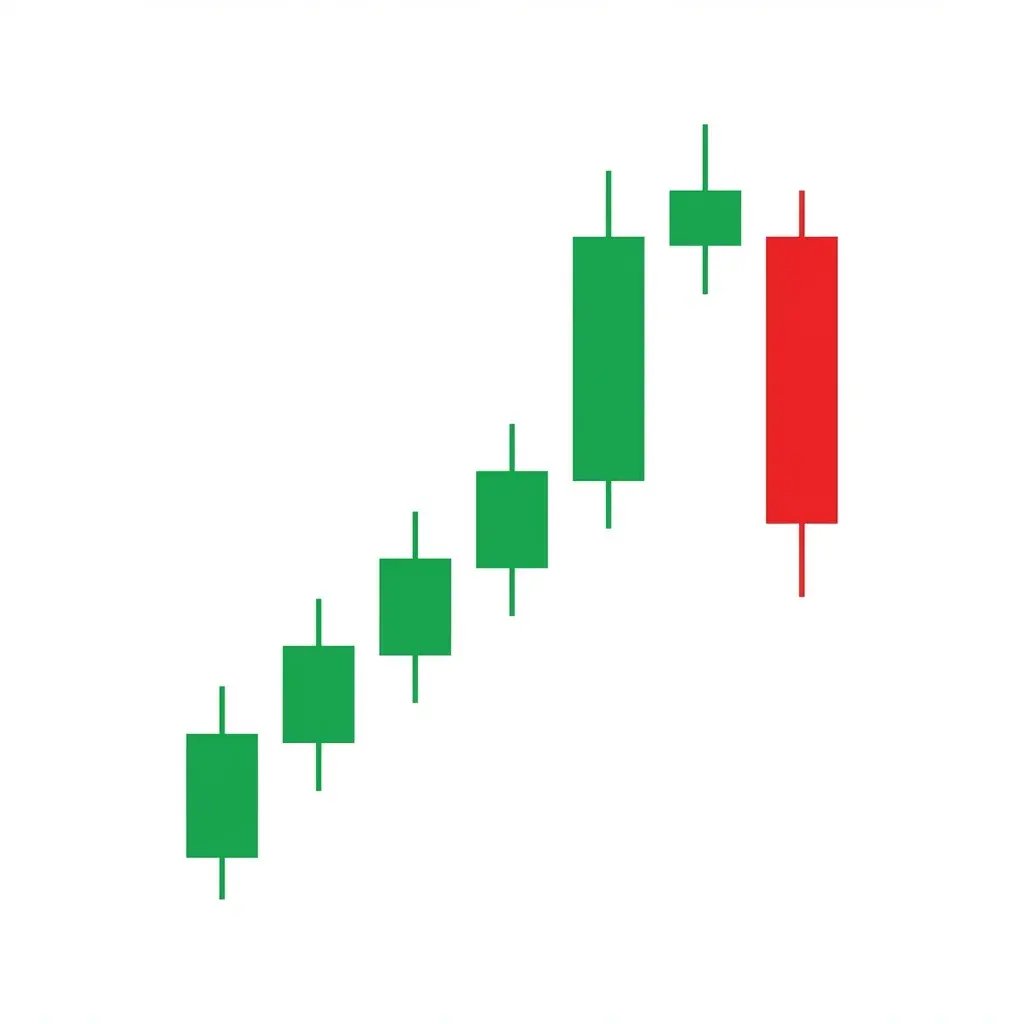
The evening star is a three-candle formation. First, a strong bullish candle pushes price higher. Second, a small-bodied candle (either color) gaps up from the first candle, showing indecision at the highs. Third, a bearish candle gaps down from the star and closes deep into the first candle's body, ideally past the midpoint. The "star" in the middle represents the moment momentum stalled.
What It Signals
The evening star tells a three-act story of a market top. Act one: bulls are confident and driving price higher. Act two: buying pressure exhausts itself - the gap up looks bullish but the small body reveals that buyers could not sustain momentum. Act three: sellers capitalize on the stall and drive price back down aggressively. This pattern is considered one of the most reliable bearish reversals because it gives you a complete narrative of how sentiment shifted from greed to fear.
How to Trade It
Enter short once the third candle closes, confirming the formation. Your stop loss goes above the high of the star (middle candle), which marks the peak of buying enthusiasm. Target the next support zone or the origin of the rally that preceded the pattern. The evening star works best on daily and weekly charts where the gaps between sessions carry more significance. In forex and crypto where true gaps are less common, focus on the body positioning rather than strict gap requirements.
3. Evening Doji Star Pattern
What It Looks Like
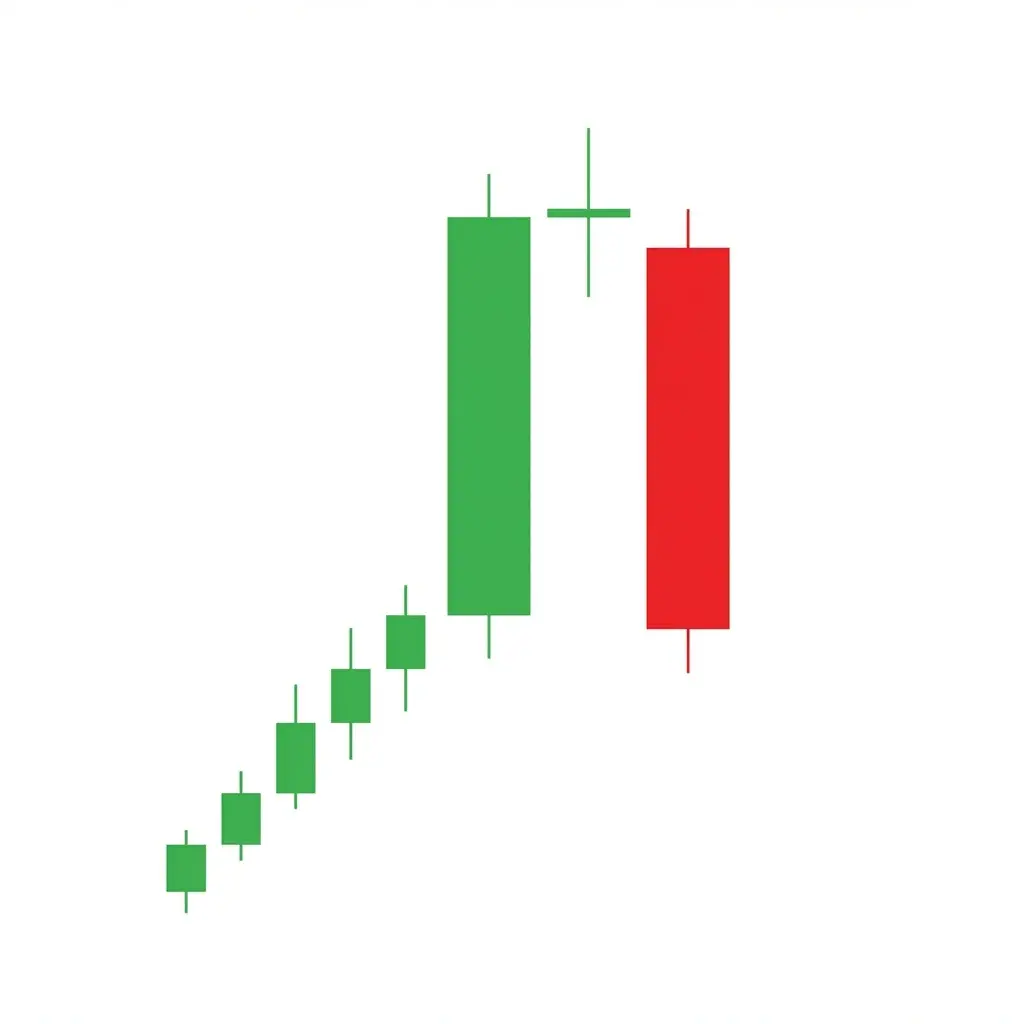
The evening doji star is an enhanced version of the evening star where the middle candle is a doji - a candle with virtually no body, meaning the open and close are nearly identical. The doji gaps above the first bullish candle, and the third bearish candle gaps down and closes well into the first candle's body. The doji makes this variation even more powerful because it represents complete indecision at the peak.
What It Signals
When the middle candle is a doji instead of a small-bodied candle, it tells you that buying and selling pressure reached perfect equilibrium at the highs. The market literally could not decide which way to go. This equilibrium after a strong uptrend is extremely bearish because it means buyers could not follow through despite gapping up. When the third candle resolves that indecision to the downside, it carries extra conviction because the market had every opportunity to continue higher and chose not to.
How to Trade It
Trade this identically to the evening star but with higher confidence. Enter short on the close of the third candle. Stop loss above the doji high. Because the doji star variant is statistically more reliable, you can consider slightly larger position sizes compared to a regular evening star, assuming your risk management rules allow it. Target the first major support level below or use a measured move based on the height of the preceding rally.
4. Dark Cloud Cover Pattern
What It Looks Like
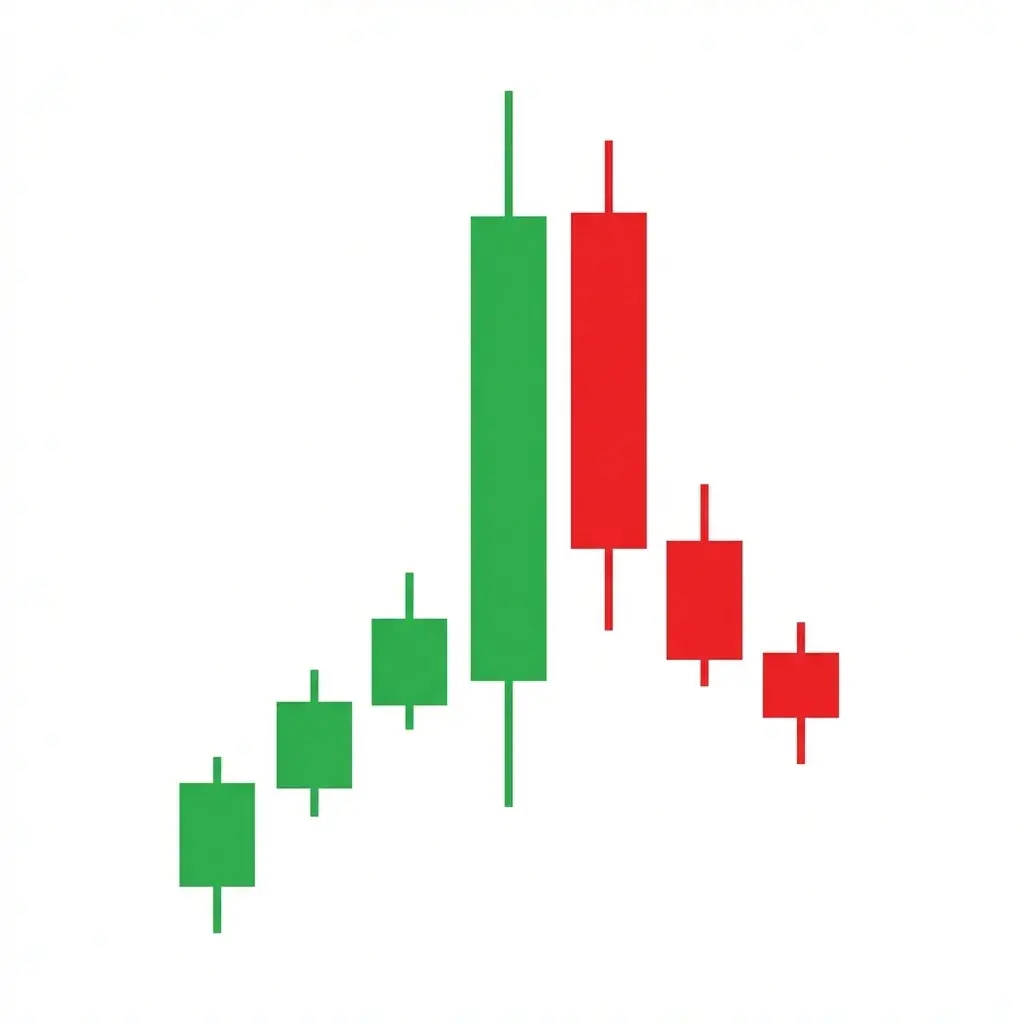
Dark cloud cover is a two-candle pattern. The first is a strong bullish candle. The second candle opens above the first candle's high (gap up) but reverses sharply and closes below the midpoint of the first candle's body. It does not fully engulf the first candle - that would make it a bearish engulfing instead. The key requirement is that the second candle penetrates at least halfway into the first candle's body.
What It Signals
Dark cloud cover reveals a failed breakout attempt. Bulls opened the session with enough enthusiasm to gap above the prior high, but they could not hold those gains. Sellers used the higher prices as a distribution opportunity, driving the close below the midpoint of the previous session. This is a classic trap: late buyers who chased the gap up are now underwater, and their stop losses below become fuel for further selling. The pattern gets its name from the dark cloud that rolls over the bullish trend.
How to Trade It
Enter short on the next candle open after the dark cloud cover completes. Stop loss above the high of the second candle (the bearish one). Target support or use the height of the first candle as your measured move. The deeper the second candle penetrates into the first, the stronger the signal. If it closes below the first candle's open, you effectively have a bearish engulfing, which is an even stronger signal.
5. Shooting Star Candlestick
What It Looks Like
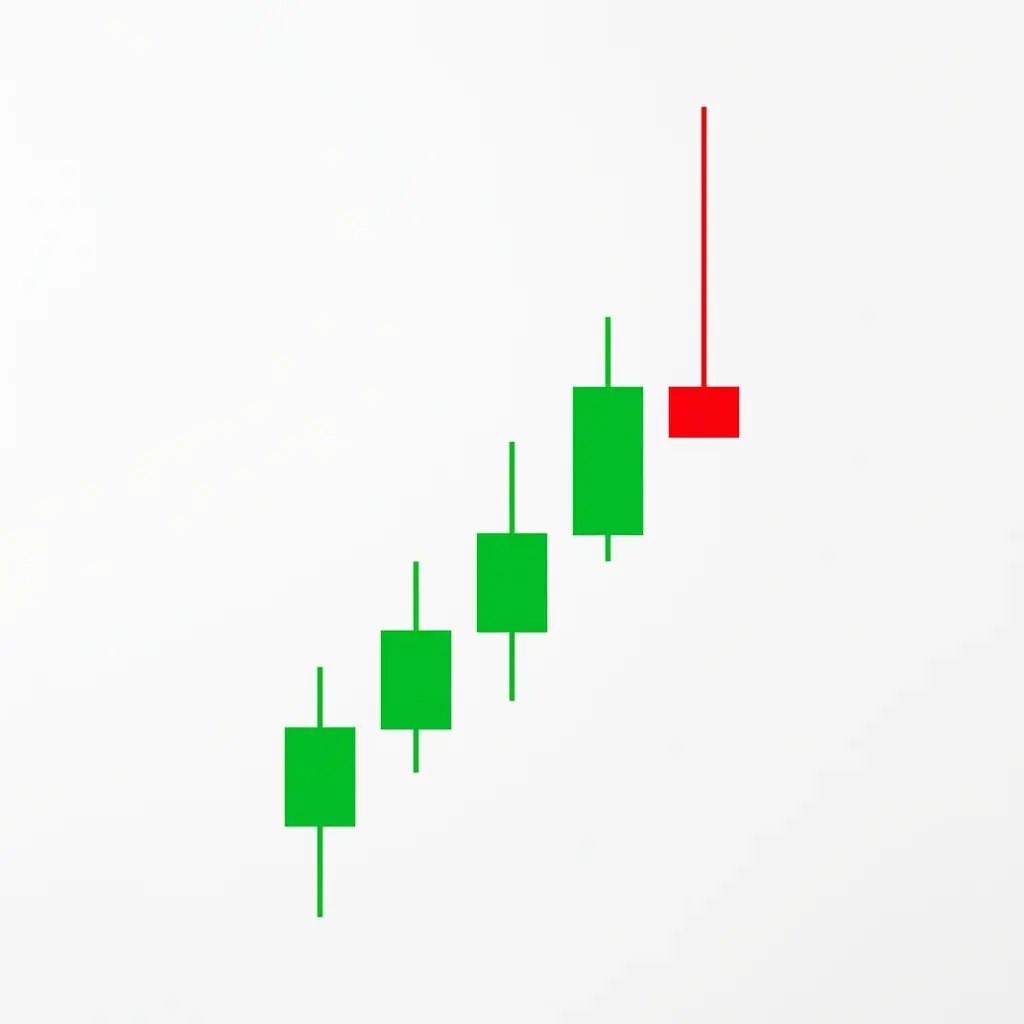
The shooting star is a single-candle pattern with a small body near the bottom of the candle range and a long upper shadow at least twice the length of the body. It has little to no lower shadow. The candle color does not matter much, but a red (bearish) body adds extra weight. It must appear after an uptrend or at the top of a rally to qualify as a reversal signal.
What It Signals
The shooting star is a rejection candle. During the session, buyers pushed price significantly higher - the long upper shadow shows they were confident enough to test new territory. But sellers stepped in at those elevated levels and hammered price all the way back down to near the open. That long upper wick is a visual representation of supply overwhelming demand. When you see a shooting star at resistance, it means the market tested a level and was firmly rejected.
How to Trade It
Wait for the next candle to close below the shooting star's low for confirmation. Enter short on that confirmed close. Stop loss goes above the shooting star's high (the tip of the upper shadow). Because shooting stars have such well-defined risk levels, they often provide excellent risk-reward ratios. The longer the upper shadow, the more aggressive the rejection, and the more likely the reversal will follow through.
6. Hanging Man Pattern
What It Looks Like
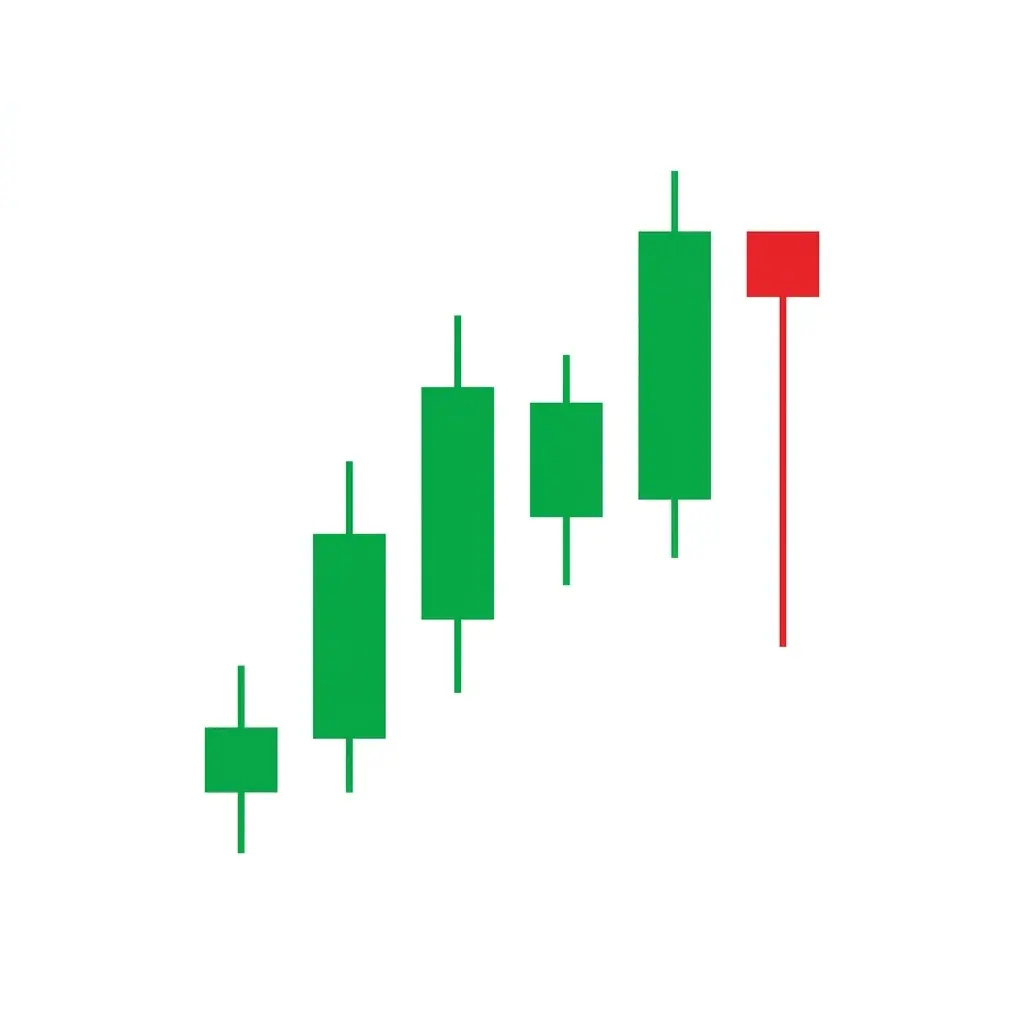
The hanging man has a small body near the top of the candle range with a long lower shadow at least twice the body length. It has little to no upper shadow. Visually, it looks identical to a hammer, but context is everything: a hammer appears at the bottom of a downtrend (bullish), while a hanging man appears at the top of an uptrend (bearish). The candle color is less important than the position in the trend.
What It Signals
The hanging man is a warning shot. During the session, sellers were strong enough to drive price significantly lower - that long lower shadow shows real selling pressure existed. Although buyers managed to recover the close near the high, the damage is done psychologically. The market now knows that sellers are present and willing to act at these levels. It is like a building that survived an earthquake: the structure is still standing, but the foundation has been cracked. The next tremor may bring it down.
How to Trade It
The hanging man requires confirmation more than most patterns because the close was bullish. Wait for the next candle to close below the hanging man's body. Enter short on that confirmation. Stop loss above the hanging man's high. The hanging man works best as a signal to tighten existing long positions rather than as an aggressive short entry on its own. Pair it with a resistance level or bearish divergence on RSI for a higher-probability setup.
7. Gravestone Doji Pattern
What It Looks Like
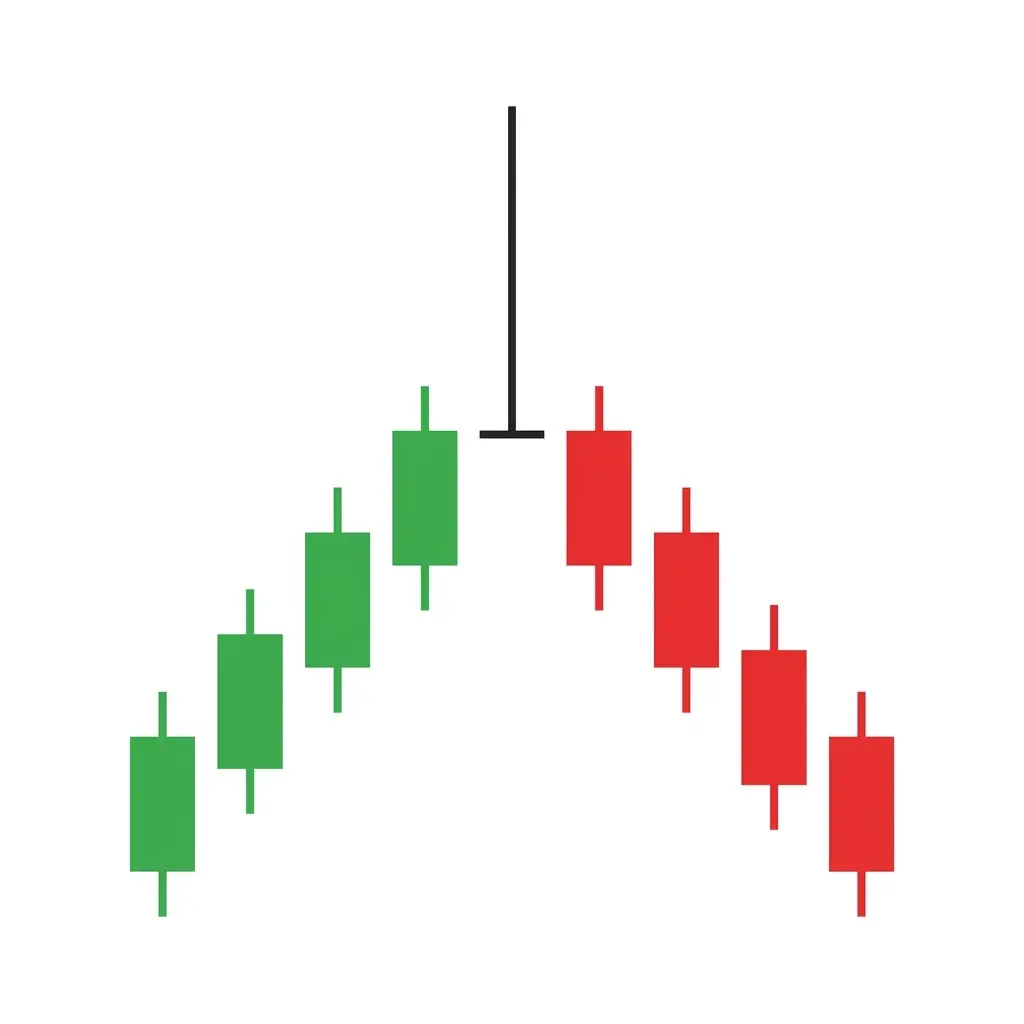
The gravestone doji has its open and close at or very near the low of the session, with a long upper shadow extending upward. It looks like an inverted "T" shape. There is no lower shadow or only a tiny one. The open and close are virtually identical, making the body a thin line at the bottom of the candle range. It gets its ominous name because the shape resembles a gravestone.
What It Signals
The gravestone doji is the most extreme form of rejection candle. Buyers pushed price significantly higher during the session, but sellers drove it all the way back to the open by the close. Every single gain from the session was erased. This tells you that supply is overwhelming at higher prices and the market has no interest in staying up there. When this forms at a resistance level after a rally, it is one of the most convincing single-candle bearish signals you can find. The long upper wick acts like a gravestone marking the death of the uptrend.
How to Trade It
Enter short on a confirmed close below the gravestone doji low on the following candle. Stop loss above the high of the upper shadow. The gravestone doji provides excellent risk-reward because the stop is clearly defined at the shadow high and the entry is near the candle low. Target the origin of the preceding rally or the first support zone below. In practice, this pattern is particularly effective at the retest of a broken support level that has become resistance.
8. Bearish Harami Pattern
What It Looks Like
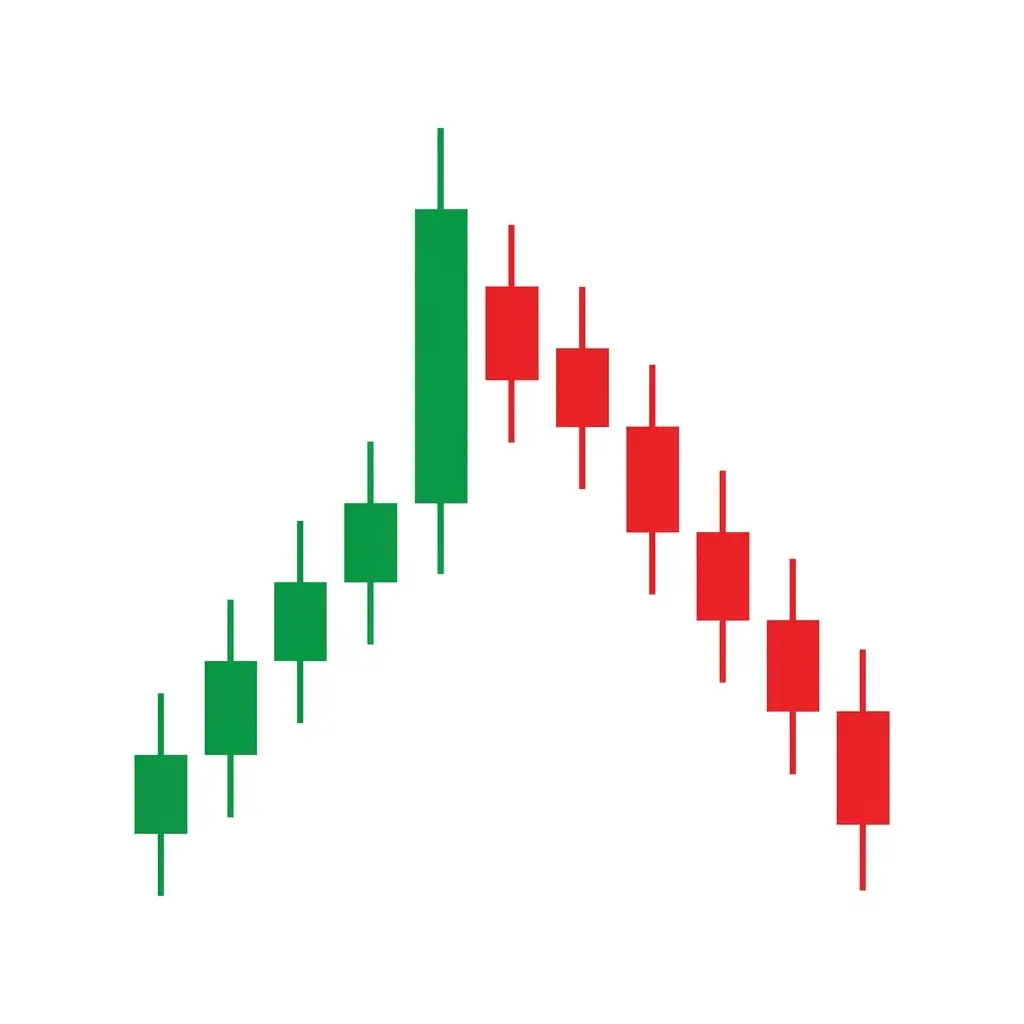
The bearish harami is a two-candle pattern and the inverse of the bearish engulfing. A large bullish candle is followed by a small bearish candle whose body is completely contained within the body of the first candle. The word "harami" comes from Japanese and means "pregnant," referring to the visual appearance of the small candle being held inside the larger one. The smaller the second candle relative to the first, the more significant the indecision.
What It Signals
After a strong bullish candle, you would expect a follow-through day with equal or greater buying pressure. Instead, the harami shows a dramatic contraction in range. Buyers who were aggressive yesterday are suddenly hesitant. This loss of momentum is the first cue that the trend may be tiring. It does not mean an immediate reversal is guaranteed, but it tells you the easy money in the uptrend is likely over. Think of it as the market catching its breath at altitude - and sometimes that breath is the last one before the descent.
How to Trade It
The bearish harami is a moderate-strength signal that benefits from confirmation. Wait for a third candle to close below the harami candle's low before entering short. Stop loss above the high of the large bullish candle (first candle). The harami is best used as a warning to tighten stops on longs rather than an aggressive standalone short signal. When it appears at significant resistance or after an extended rally with overbought RSI readings, the probability of follow-through increases substantially.
9. Bearish Harami Cross Pattern
What It Looks Like
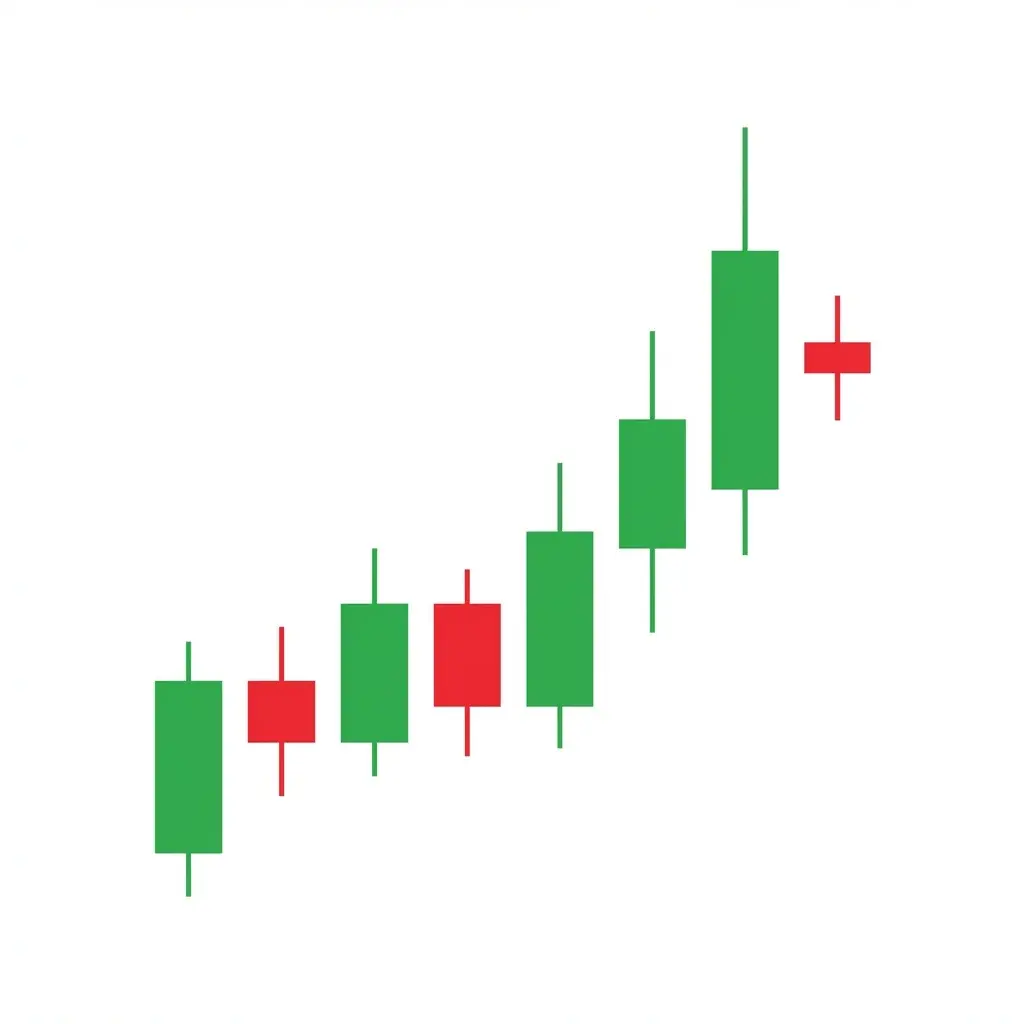
The bearish harami cross is a variation of the bearish harami where the second candle is a doji rather than a small-bodied candle. A large bullish candle is followed by a doji whose entire range (including shadows) is contained within the first candle's body. The doji shows that the open and close were nearly identical, representing complete indecision after a strong trending move.
What It Signals
The harami cross is a stronger version of the regular harami because the doji represents a more extreme form of indecision than a small candle. After a powerful bullish day that showed clear buyer dominance, the market goes completely flat. The doji says the market cannot make up its mind at all. This total loss of directional conviction after strong momentum is highly bearish. It suggests that for every buyer at these prices, there is now an equally committed seller. The equilibrium will eventually break, and after an extended uptrend, it most often breaks to the downside.
How to Trade It
Wait for a bearish confirmation candle that closes below the doji low. Enter short on that confirmation. Stop loss above the doji high or the high of the first candle for a wider stop. The harami cross carries more weight than a standard harami, so you can treat it as a more reliable signal. Look for this pattern at round numbers, at option strike prices with heavy open interest, and at previous swing highs where sellers are likely to be waiting.
10. Bearish Kicker Pattern
What It Looks Like
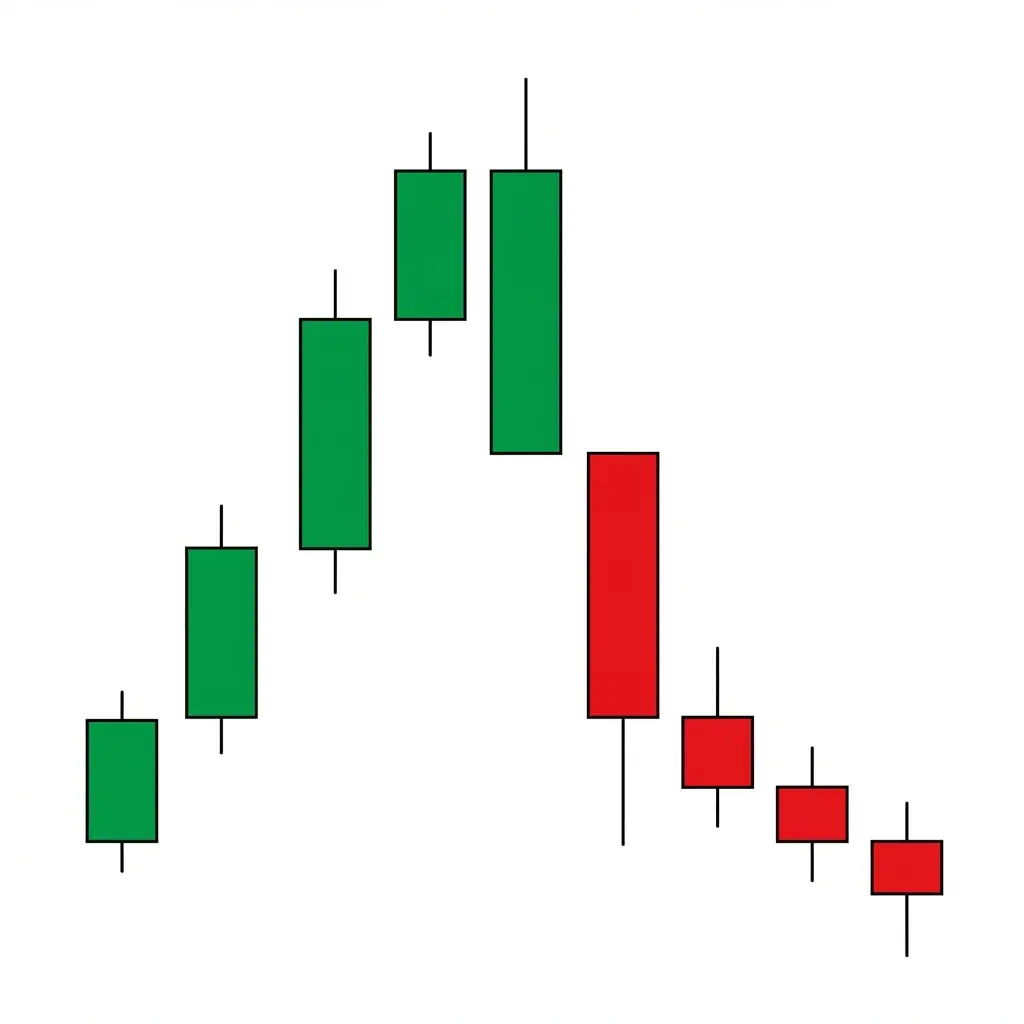
The bearish kicker is one of the most dramatic reversal patterns. A bullish candle is followed by a bearish candle that opens at or below the first candle's open - a gap down that completely invalidates the prior session's gains. The second candle then continues lower, closing well below its open. There is no overlap between the bodies of the two candles, and the gap between them is the defining characteristic.
What It Signals
The bearish kicker represents a seismic shift in sentiment, often triggered by overnight news - an earnings miss, a geopolitical shock, a surprise policy decision. The gap down tells you that between the sessions, something fundamentally changed the market's assessment of value. Every buyer from the previous session is now holding a losing position with no opportunity to exit at their entry price. This trapped-long dynamic creates cascading selling pressure as stops are triggered and margin calls force liquidation. The kicker is considered one of the most reliable bearish signals precisely because of this trapped-buyer mechanics.
How to Trade It
Enter short immediately on the kicker formation or on a pullback to the gap fill zone. Stop loss above the high of the bullish candle (first candle). Target a measured move equal to the combined range of both candles projected downward. Because the kicker often comes with a fundamental catalyst, the follow-through tends to be aggressive. Do not try to fade this pattern by buying the dip - the gap signals that the market has repriced and the old levels are likely gone for good.
11. Bearish Abandoned Baby Pattern
What It Looks Like
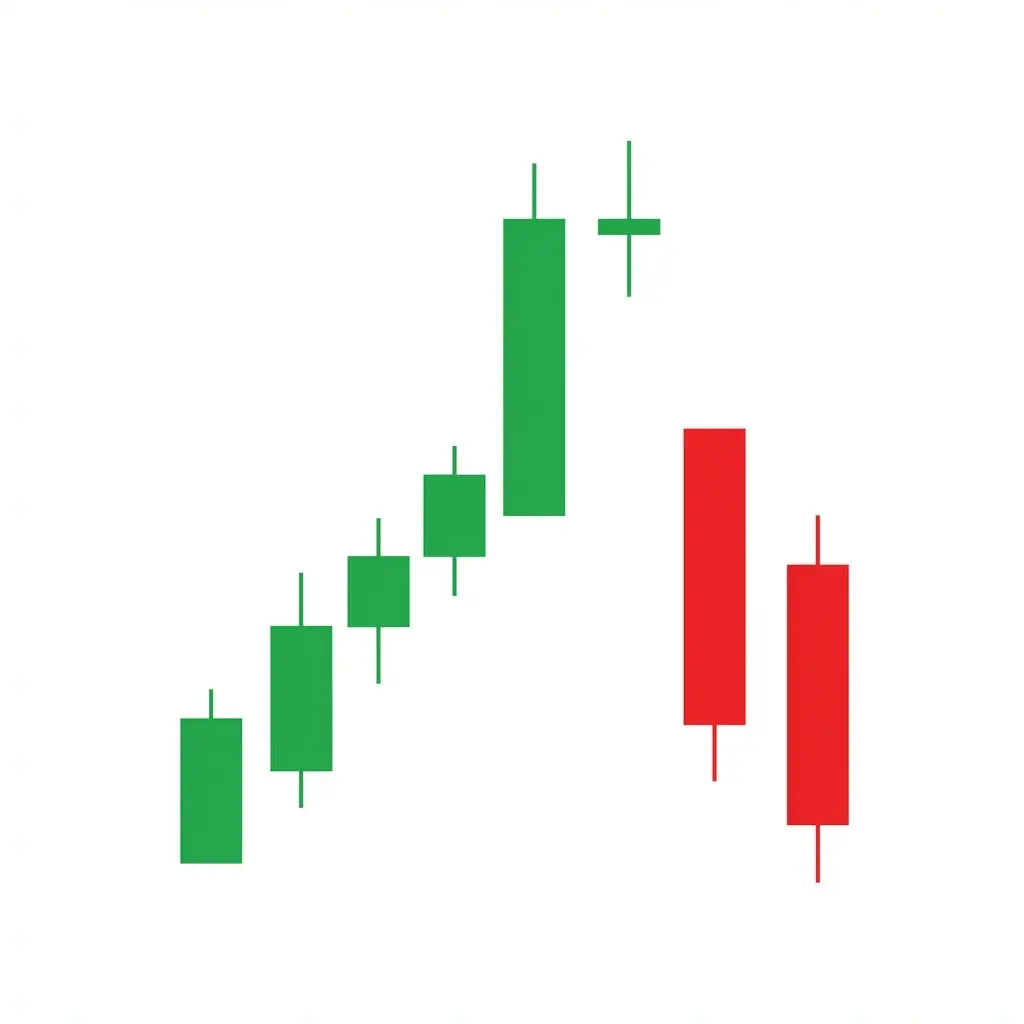
The bearish abandoned baby is a rare and powerful three-candle pattern. First, a bullish candle continues the uptrend. Second, a doji gaps up from the first candle - critically, even the shadows do not overlap with the first candle. Third, a bearish candle gaps down from the doji, again with no shadow overlap. The doji sits alone, "abandoned" between two gaps, isolated from the candles on either side.
What It Signals
This is the ultimate exhaustion pattern. The first gap up shows extreme bullish euphoria pushing price to a level completely disconnected from the prior range. The doji shows that at these euphoric levels, buyers and sellers are perfectly matched - no one can gain an edge. Then the gap down says the market looked at those levels and collectively decided they were unsustainable. The abandoned doji is a price level that the market visited once and never wants to return to. Because this pattern is rare and requires two unfilled gaps, it carries exceptional reliability when it does appear.
How to Trade It
Enter short on the close of the third candle. Stop loss above the doji high. The rarity of this pattern means you should trade it with conviction when you see it - the follow-through rate is among the highest of all candlestick formations. Target a full retracement back to the origin of the rally. Because the two gaps create a clear island of price action, any revisit to the doji level would invalidate the pattern and serve as your exit signal.
12. Bearish Belt Hold Pattern
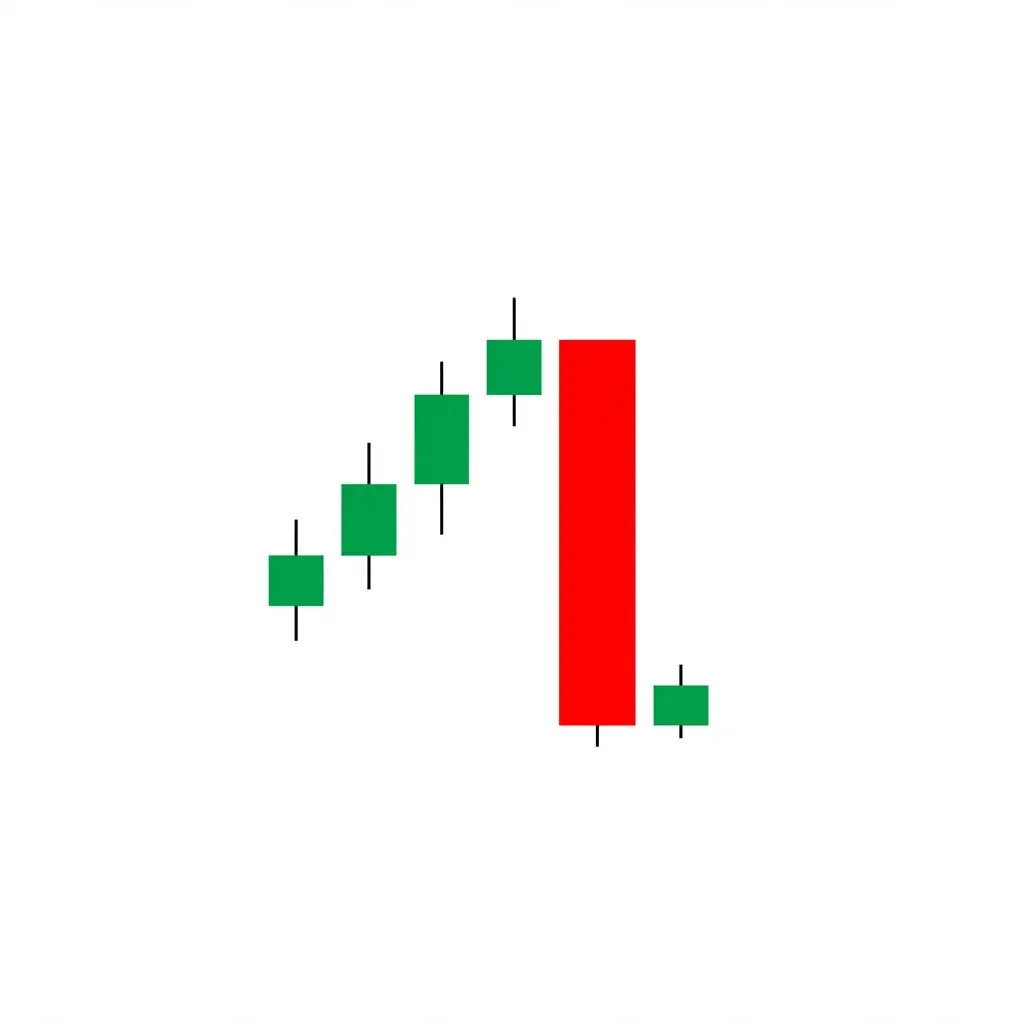
What It Looks Like
The bearish belt hold is a single long bearish candle that opens at or near the high of the session and closes near the low. It has no upper shadow (or only a very small one), meaning the open was the highest price of the session. The candle body should be significantly longer than the average candle in the preceding uptrend. It appears after an uptrend or at resistance, and the opening at the high with immediate selling throughout the session is the key feature.
What It Signals
The belt hold tells you that sellers controlled the session from the very first tick. There was no early bullish attempt, no period of indecision - just relentless selling from open to close. This is significant because it means sellers were not reacting to a failed rally; they were proactively driving prices lower. In Japanese candlestick terminology, this is called "yorikiri," a sumo wrestling term meaning pushing your opponent out of the ring. The lack of an upper shadow is what separates this from a normal bearish candle and makes it a legitimate reversal signal.
How to Trade It
Enter short on a break below the belt hold candle low, or on the next candle open for a more aggressive entry. Stop loss above the belt hold open (session high). The belt hold is a moderate-strength signal on its own but becomes powerful at resistance levels, at the top of channels, or when combined with other bearish indicators. Target the nearest support level or use the belt hold candle's range as a measured move. Pay attention to volume - a belt hold on the highest volume of the move adds significant conviction to the reversal thesis.
Tips for Trading Bearish Reversals
Recognizing patterns is only half the battle. Trading them profitably requires context, discipline, and a set of rules that keep you out of low-probability setups. Here are the principles that separate traders who profit from bearish reversals from those who just see them everywhere.
Always Require Context
A bearish engulfing in the middle of a range is noise. The same pattern at a multi-month resistance level after an extended rally is a high-probability trade. Context - location in the trend, proximity to key levels, and market structure - is what transforms a pattern into a setup.
Use Volume as Confirmation
A bearish reversal on above-average volume tells you that institutions are participating in the reversal, not just retail traders. Volume validates the signal. A shooting star on thin volume is unreliable; the same pattern on 2x average volume is actionable.
Higher Timeframes Win
A bearish engulfing on a weekly chart carries far more weight than one on a 15-minute chart. Higher timeframes represent larger pools of capital and more deliberate decision-making. Use daily and weekly patterns for direction, then drop to lower timeframes for precise entries.
Wait for Confirmation
With the exception of extremely strong patterns like the bearish kicker, most bearish reversal patterns benefit from waiting for the next candle to confirm. This means a close below the pattern low. Yes, you give up some of the move, but you dramatically reduce false signals and whipsaws.
Combine with Indicators
A bearish reversal pattern combined with bearish divergence on RSI or MACD is significantly more reliable than the pattern alone. When price makes a new high but the indicator makes a lower high, the underlying momentum is already weakening before the candle pattern confirms it.
Manage Risk First
Every bearish reversal pattern gives you a natural stop loss level: the pattern high. Never move your stop further away once the trade is on. If you get stopped out, the pattern has failed and the uptrend is likely continuing. Accept the loss and wait for the next setup. Risk management is more important than pattern recognition.
To quickly identify these bearish reversal patterns and get AI-powered analysis on your charts, try ChartSnipe's pattern recognition. Upload any chart screenshot and get instant identification of candlestick patterns, support and resistance levels, and trading recommendations.
Frequently Asked Questions
What is the most reliable bearish reversal candlestick pattern?
The bearish engulfing pattern is widely considered the most reliable bearish reversal candlestick pattern. It forms when a large red candle completely engulfs the previous green candle at the top of an uptrend, signaling that sellers have overwhelmed buyers and a reversal is likely. The pattern is strongest when it appears at a known resistance level with above-average volume.
How do you confirm a bearish reversal pattern?
Confirm a bearish reversal pattern by waiting for the next candle to close below the pattern low. Additional confirmation comes from increasing volume on the bearish candle, the pattern forming at a key resistance level, bearish divergence on RSI or MACD, and the pattern appearing after an extended uptrend rather than a shallow pullback.
What is the difference between a shooting star and a hanging man?
Both are single-candle bearish reversal patterns, but they look different and signal different things. A shooting star has a long upper shadow and a small body near the low, showing that buyers pushed higher but were rejected. A hanging man has a long lower shadow and a small body near the high, showing that sellers tested lower prices during the session but buyers recovered. Both warn of potential reversals at the top of uptrends, but the shooting star shows rejection of higher prices while the hanging man reveals that selling pressure is emerging.
Where should you place a stop loss on a bearish reversal pattern?
Place your stop loss above the high of the bearish reversal pattern. For single-candle patterns like the shooting star, set the stop above that candle's high. For multi-candle patterns like the evening star, place it above the highest point of the entire formation. A common approach is to add a small buffer of 1-2 ATR above the pattern high to avoid getting stopped out by normal volatility.
Can bearish reversal patterns be used on any timeframe?
Yes, bearish reversal patterns work on all timeframes from 1-minute charts to monthly charts. However, patterns on higher timeframes such as daily, weekly, and monthly carry significantly more weight because they reflect larger pools of market participants. A bearish engulfing on a daily chart is far more meaningful than the same pattern on a 5-minute chart. Many professional traders use higher timeframe patterns for direction and lower timeframe patterns for precise entries.
That's the full bearish reversal playbook. Honestly if you just nail the engulfing and the evening star, you're ahead of most people. The rare ones like the abandoned baby and kicker - you might see those a handful of times a year but when they show up, they hit hard.
Want to catch these patterns without staring at screens for hours?
Check out ChartSnipeRelated reads: